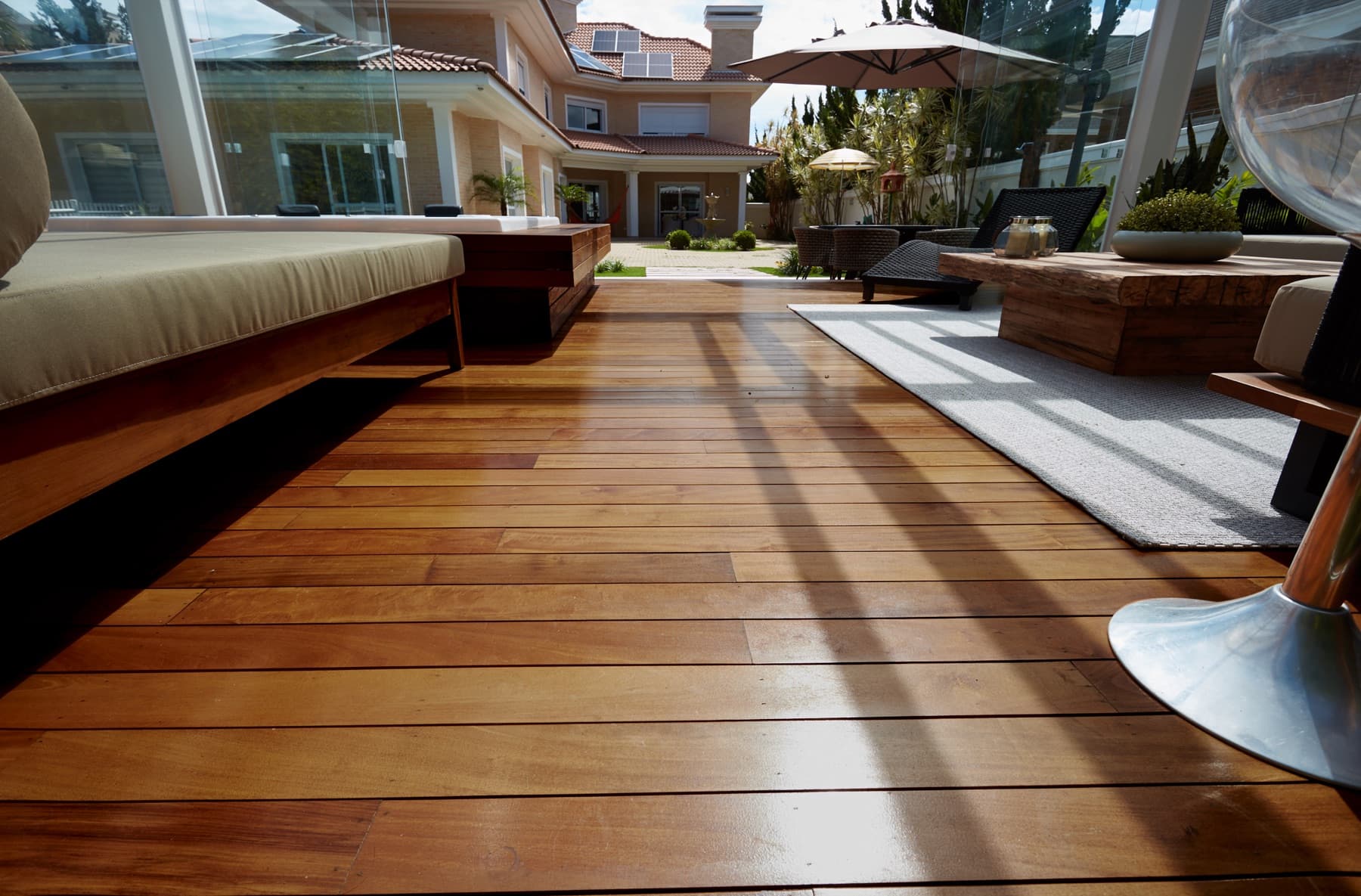
Evaluating Your Existing Deck Frame
Before selecting any new decking material, a comprehensive evaluation of your existing deck frame is paramount. The structural integrity of the joists, beams, and support posts must be sound and capable of supporting the new decking. Hardwood, being denser and heavier than many other decking options, may require a stronger subframe. Check for any signs of rot, insect damage, or excessive deflection in the existing lumber. Any compromised components should be replaced or reinforced.
Consider the spacing of your existing joists. Most hardwood decking requires specific joist spacing to prevent sagging and ensure proper ventilation. If your current joist spacing is wider, you may need to add additional joists or select a thicker decking profile to ensure adequate support. This is a critical step that impacts both the safety and longevity of your renovated deck.
Selecting Hardwood Species for Coastal Resilience
For Nantucket's coastal environment, choosing a hardwood species known for its resilience against salt air, moisture, and temperature fluctuations is key. Ipe and Cumaru are two prominent Brazilian hardwoods often specified for such demanding conditions.
Ipe, also known as Brazilian walnut, is a dense and durable hardwood native to South America. Its color ranges from reddish-brown to olive-brown, offering a rich, luxurious appearance. Ipe is frequently chosen for marine-grade applications like docks and boardwalks due to its robust nature. With proper care, Ipe decking can last for many decades. If left untreated, Ipe will weather to a silvery-gray patina; applying a UV-blocking sealer can help preserve its original color.
Cumaru is another very durable tropical hardwood, resistant to termites and weather changes. Cumaru also offers natural resistance to insects, rot, and fungi. Like Ipe, it performs well in coastal environments and can be maintained with occasional cleaning and sealing to retain its color, or allowed to weather to a gray tone.
Both Ipe and Cumaru are considered low maintenance, requiring a wash once a year. An annual oil application is optional if you prefer to maintain their original rich brown hues; otherwise, they will naturally silver to a driftwood gray without structural impact.
Other hardwood species like Garapa or Tigerwood offer distinct aesthetics and durability levels. Garapa is a value pick with a golden tone, while Tigerwood presents a dramatic figure. Each has varying degrees of density and resistance, which should be weighed against the specific demands of a Nantucket coastal renovation.
Hardwood Decking Profiles and Dimensions
Hardwood decking is available in various profiles and dimensions, which can influence both the aesthetics and structural performance of your renovated deck. Common profiles include standard decking boards with eased edges. When planning your renovation, consider the dimensions of the boards in relation to your deck's size and desired layout.
Ipe, for example, is available in dimensions ranging from 1"x2" to 6"x6" and lengths from 3 to 24 feet. This range allows for flexibility in design, whether you prefer narrower boards for a classic look or wider boards for a more contemporary feel. Confirming the specific profiles and lengths currently available is important, as stock can vary. Custom milling options may also be available for unique project requirements.
The thickness of the decking boards should also be considered in conjunction with your joist spacing. Thicker boards offer greater rigidity and may be suitable for wider joist spans, provided the existing frame can support the additional weight. Ensure that the chosen profile is compatible with your preferred fastening method, whether face-fastened or using hidden fasteners.
Planning Your Deck Layout and Fasteners
The layout of your hardwood decking boards can significantly impact the final appearance. Common layout options include straight runs, diagonal patterns, or picture-frame borders. When renovating, consider how the new layout will integrate with existing structures or design elements. For diagonal patterns, you may need to adjust joist spacing or add blocking to ensure proper support for the board ends.
Fastening methods are another important consideration. Hardwood decking can be installed using either face fasteners (screws visible on the surface) or hidden fasteners (clips or systems that secure boards from the sides, creating a clean, unblemished surface). Hidden fasteners are popular for their aesthetic appeal but require precise installation and specific board profiles. Face fastening, while visible, offers a robust and secure attachment. Always use stainless steel fasteners to prevent corrosion, especially in a coastal environment where salt exposure can accelerate degradation of other metals.
Worked Example: Renovating a 10' x 12' Nantucket Deck
Let's consider a hypothetical renovation of a 10-foot by 12-foot deck in Nantucket, replacing old decking with Ipe. We plan to use 1x6 Ipe decking boards, which are nominally 5.5 inches wide for actual coverage.
For the 10-foot width, we would need approximately 10 feet / (5.5 inches / 12 inches/foot) = 21.8 boards. Rounding up, we'd need 22 boards across the 10-foot dimension. For the 12-foot length, if we are laying boards parallel to the 12-foot side, we would need 12-foot lengths. Therefore, for a straight run, we would need 22 boards, each 12 feet long. Total lineal footage: 22 boards * 12 feet/board = 264 lineal feet.
To account for cuts, waste, and potential board imperfections, it is common practice to add a waste factor, typically 10-15%. For this example, let's use a 10% waste factor: 264 lineal feet * 1.10 = 290.4 lineal feet. So, approximately 291 lineal feet of 1x6 Ipe boards, in 12-foot lengths, would be a reasonable initial estimate. If shorter lengths are more readily available or more economical, a staggered butt joint layout would be planned, potentially requiring more cuts and careful management of offcuts.
This calculation provides an area-equivalent coverage. However, actual purchase quantity will depend on available lengths. If 12-foot lengths are not available, and only 10-foot and 8-foot lengths are, a more complex cut plan would be needed. For instance, using 10-foot boards with a 2-foot piece to complete the 12-foot run would result in more waste if the 2-foot offcut is not reusable elsewhere. Always confirm available lengths before finalizing your material list.
Before you order
- Assess existing deck frame for rot, damage, and joist spacing.
- Determine if the existing frame can support the weight of hardwood decking.
- Choose a hardwood species suitable for coastal exposure (e.g., Ipe, Cumaru).
- Select appropriate decking profiles and dimensions compatible with joist spacing.
- Decide on face fastening or hidden fastening system (use stainless steel fasteners).
- Plan your deck layout, considering board direction and any borders.
- Calculate lineal footage needed, adding a waste factor.
- Confirm current availability of desired species, profiles, and lengths.
- Plan for proper ventilation beneath the deck to prevent moisture buildup.
- Consider the desired finished appearance: natural weathering or sealed color.
Confirm installation details, approved uses and warranty terms in the current instructions for the exact product and profile. Your installer should verify the substrate, structure and applicable project requirements.
This is a planning guide for projects in Nantucket, MA. Ask our team to confirm availability, delivery to your ZIP code and which branch can support your order.
Questions to help you decide
How do I know if my existing deck frame is strong enough for hardwood?
A qualified contractor or structural engineer should inspect your existing frame for rot, insect damage, and overall integrity. Hardwood is denser than many other decking materials, so joist spacing and the condition of beams and posts are critical.
Does hardwood decking require special maintenance in a coastal area like Nantucket?
Hardwood species like Ipe and Cumaru are naturally resistant to the challenges of coastal environments, including salt air and moisture. Annual cleaning with a deck cleaner is generally sufficient. If you wish to retain the original rich color, a UV-blocking sealer can be applied annually or bi-annually. Otherwise, the wood will naturally weather to a silvery-gray patina without affecting its structural integrity.
What lengths of hardwood decking are typically available?
Hardwood decking, such as Ipe, is often available in a range of lengths, from 3 feet up to 24 feet. However, specific availability can vary. It's important to confirm the current profiles and lengths with your supplier based on your project's dimensions to optimize material use and minimize waste.
Ready to Plan Your Hardwood Deck Renovation?
Request a material quote with your project dimensions, exact profile preferences, and ZIP code to confirm current availability and service options. Our team can help you select the ideal hardwood decking for your Nantucket project.
Request a material quote →