Defining Your Compact Outdoor Space
A compact outdoor space in Nantucket might be a narrow side yard, a small balcony overlooking the harbor, or a cozy courtyard. Before selecting any material, clearly define the boundaries and primary purpose of this area. Is it for a small bistro set, a reading nook, or simply a decorative transition? Understanding its intended use will guide your choices in board width, color, and even the direction of your deck boards.
Consider the existing elements: are there planters, an outdoor shower, or access points that need to be integrated or worked around? These details inform the overall design and help determine if a specific composite decking collection's dimensions or installation requirements are suitable.
Optimizing Space with Board Width and Layout
In a compact area, the width of your composite decking boards can significantly influence the perceived size and visual flow. Wider boards can sometimes make a small space feel more expansive by reducing the number of visible seams. Conversely, narrower boards might create a more intricate pattern or a sense of detailed craftsmanship, depending on the overall design.
The layout direction also matters. Running boards parallel to the longest dimension of a rectangular space can enhance its length, while a diagonal layout might add visual interest and break up a confined area. For very small or irregular spaces, a picture-frame border can define the area clearly and provide a neat edge, especially when butting against other surfaces.
Composite decking from manufacturers like Trex, TimberTech, and Fiberon comes in various board widths and profiles, offering flexibility in design. It is crucial to check the specific product specifications for available dimensions and recommended installation methods to ensure they align with your space and design goals.
Color and Finish Choices for Visual Impact
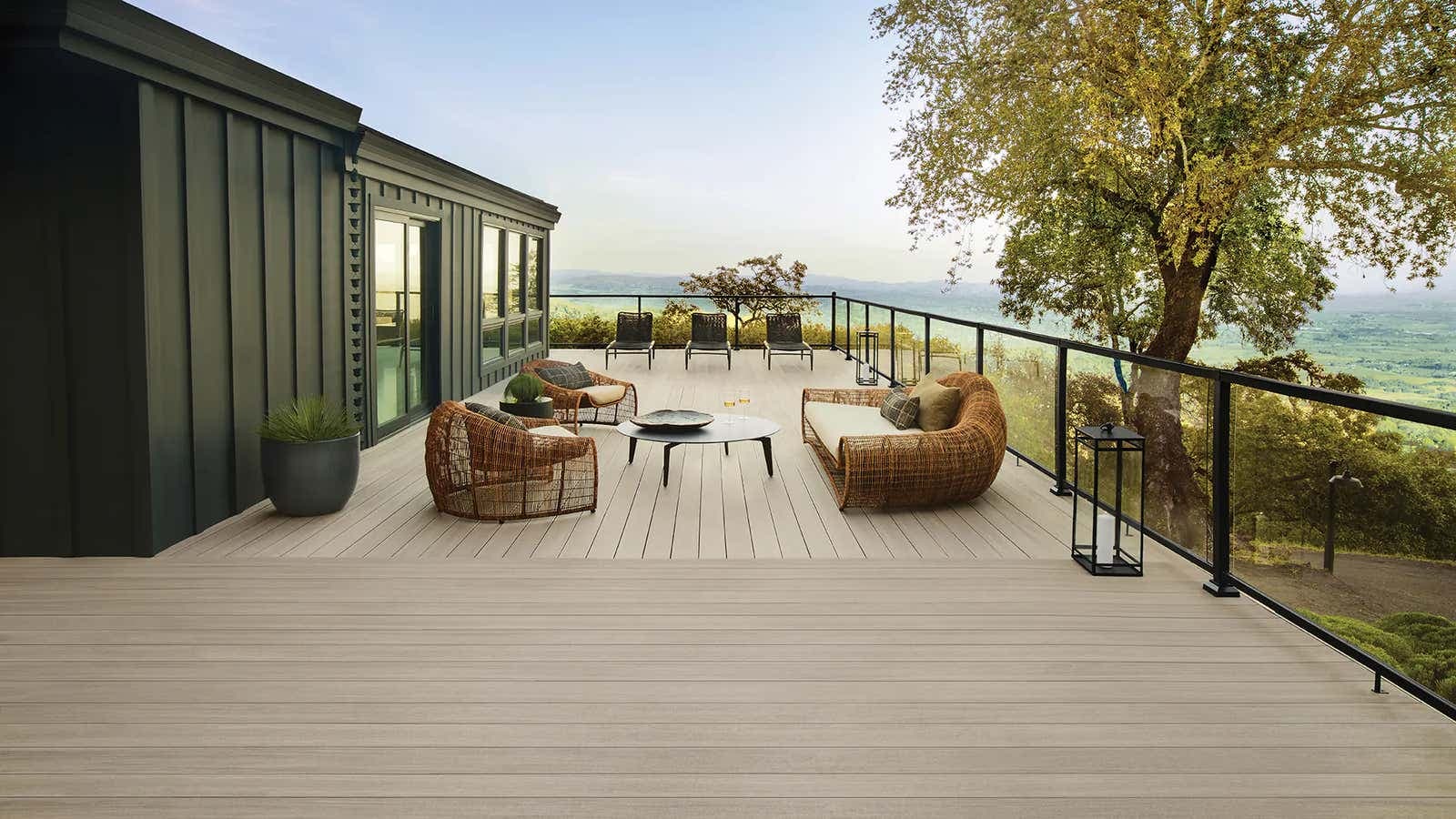
The color and finish of your composite decking play a critical role in how a compact space feels. Lighter colors can make a small area appear larger and more open, reflecting light and creating an airy atmosphere. They can also help keep the deck surface cooler underfoot, which is a consideration for sun-exposed areas. Darker colors, while potentially absorbing more heat, can create a sense of intimacy and depth, making a small space feel cozier and more defined.
Many composite decking lines offer consistent color and grain, board after board, ensuring a uniform look without surprises. Some collections also feature cooler-underfoot options or capped shells designed to shrug off humidity and maintain their appearance, which can be beneficial in coastal environments.
Consider how the decking color will interact with surrounding elements like house siding, landscaping, and outdoor furniture. A cohesive color palette can help integrate the compact deck seamlessly into the overall property.
Durability and Maintenance in Coastal Environments
Nantucket's coastal environment presents specific challenges, including salt air and humidity. Composite decking is engineered to withstand these conditions, offering a durable alternative to traditional wood. Its composition, often including recycled content like sawdust and plastic film, provides resistance to rot, splinting, and insect damage.
One of the key advantages of composite decking is its low maintenance. Unlike wood, it typically requires only a soap-and-water wash, with no need for oiling, sanding, or staining. This can be a significant benefit in a compact space where extensive maintenance might be cumbersome. Manufacturers often provide written fade and stain warranties, offering peace of mind regarding the material's long-term appearance.
While composite decking is generally robust, it's important to choose a collection known for its performance in marine-grade conditions. Dense boards that stay solid in salt air are often a good choice for coastal properties.
Planning for Access and Installation Logistics
For compact outdoor spaces, especially those with limited access, planning installation logistics is crucial. Consider how materials will be brought to the site. If the space is on an upper floor, a narrow side alley, or has tight gate access, board lengths and delivery methods need careful consideration. Some composite boards are available in various lengths, which can help minimize cuts and waste.
The substructure is also vital. While composite decking is the visible surface, it requires a robust and properly spaced support system. Ensure that the chosen composite collection's joist spacing requirements are met, as this impacts both stability and warranty validity. Proper ventilation beneath the deck is also essential, particularly in humid coastal climates, to prevent moisture buildup.
Always confirm the specific installation guidelines for your chosen composite decking product. These instructions will detail recommended fastening methods, gapping, and support requirements, all of which are critical for a successful project.
Before you order
- What is the primary function of your compact outdoor space?
- What are the exact dimensions and any irregular shapes of the area?
- Are there existing obstacles (e.g., planters, stairs, utilities) to work around?
- Which composite decking board width (e.g., standard, wide) best suits the visual scale of your space?
- What color and finish will complement your home and surrounding landscape while optimizing the perception of space?
- Does the chosen composite collection offer specific features beneficial for coastal conditions (e.g., capped shells, density)?
- What are the maintenance requirements for the selected composite decking, and do they fit your lifestyle?
- How will materials be delivered to and handled on your specific project site?
- Have you reviewed the manufacturer's installation guidelines for board spacing and substructure requirements?
Confirm installation details, approved uses and warranty terms in the current instructions for the exact product and profile. Your installer should verify the substrate, structure and applicable project requirements.
This is a planning guide for projects in Nantucket, MA. Ask our team to confirm availability, delivery to your ZIP code and which branch can support your order.
Questions to help you decide
Can composite decking be installed over an existing concrete patio in a compact space?
Installing composite decking over an existing concrete patio is possible, but it requires careful planning. You will need to build a substructure (sleepers or joists) on top of the concrete to provide proper ventilation and drainage, as well as a secure fastening surface for the deck boards. Ensure there is adequate height clearance and that the concrete slab drains away from the house. Always follow the specific manufacturer's guidelines for your chosen composite decking product regarding installation over concrete or other solid surfaces.
How do I choose between different composite decking brands for a small Nantucket project?
When choosing between brands like Trex, TimberTech, and Fiberon for a compact Nantucket project, consider several factors. Evaluate the available collections for board widths, colors, and finishes that best suit your design vision. Compare their warranties for fade and stain resistance, which is important for coastal exposure. Look into specific features like cooler-underfoot technology or enhanced moisture resistance. Finally, verify the material's availability and delivery options to Nantucket, as this can impact your project timeline. Requesting samples can help you visualize the material in your specific space.
What is the best way to estimate the amount of composite decking I need for a compact area?
To estimate the amount of composite decking for a compact area, first measure the length and width of your space accurately. Multiply these to get the total square footage. Then, consider the dimensions of the composite boards you plan to use. Since boards come in specific lengths (e.g., 12, 16, or 20 feet), you'll need to calculate how many full boards are required to cover your area, accounting for cuts and potential waste. It's often recommended to add 5-10% for waste, especially for layouts with angles or complex cuts in a compact space. For example, an 8-foot by 5-foot space (40 square feet) using 12-foot long, 5.5-inch wide boards might require 12 boards to allow for efficient cutting and minimize unusable offcuts, even if the area itself suggests fewer. Always consult a professional or use a material calculator provided by the manufacturer or supplier for precise quantities.
Ready to Plan Your Nantucket Composite Decking Project?
Request a material quote for your compact outdoor space. Provide your project dimensions, desired composite decking profile, and project ZIP code to confirm current availability and service options.
Request a material quote →