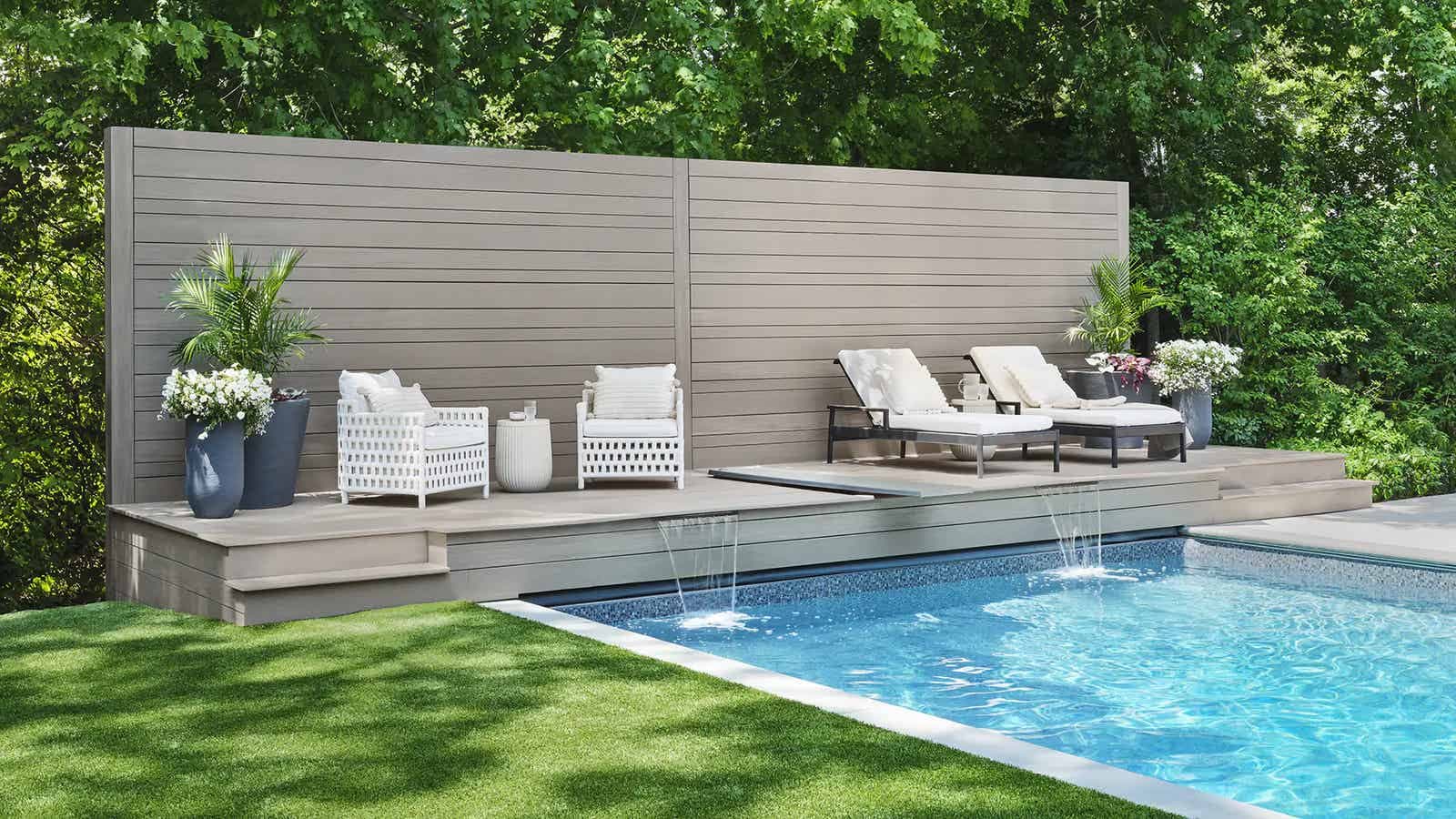
Why PVC Decking for a West Palm Beach Pool Terrace?
PVC decking is a 100% synthetic material, meaning it contains no wood fibers. This composition is crucial for pool surrounds where constant exposure to water, chlorine, and salt spray is common. Unlike wood or composite materials, PVC boards are waterproof to the core, which prevents swelling, staining, or rot that can occur with moisture absorption.
The inherent water resistance of PVC makes it a robust choice for 'wet zones' like pool decks. This characteristic is particularly beneficial in a climate like West Palm Beach, where humidity and potential for heavy rainfall also contribute to moisture exposure. Additionally, PVC decking often features advanced capping that helps shed grease and wine, simplifying cleanup around a pool where spills are common.
PVC decking is also recognized for its lighter weight compared to hardwood and even some composite options. This can contribute to faster handling and installation, which might be a consideration for certain project timelines or structural requirements. Manufacturers like Azek and TimberTech Azek offer PVC decking known for these properties, often backed by warranties that cover fade and stain performance.
Key Performance Attributes for Poolside Use
The primary advantage of PVC decking for a pool terrace is its complete impermeability. Since there is no wood fiber, standing water, splash zones, and even salt spray from a nearby coastal environment or saltwater pool system will not cause the material to swell, stain, or rot. This makes it a 'default spec where boards live wet,' including pool surrounds.
Beyond water resistance, modern PVC decking is designed with low maintenance in mind. Its capped polymer surface is engineered to be easy to clean, typically requiring only soap and water to wipe away common poolside messes. Many PVC decking options also offer heat-mitigating color choices, which can be an important consideration for comfort underfoot during warm West Palm Beach summers.
While specific slip resistance data should always be confirmed with the manufacturer's product specifications, the textured surfaces of many PVC decking lines are designed to provide traction. It is important to review the exact product details for any specific safety requirements related to wet conditions.
Aesthetic Choices for Your Poolside Design
PVC decking is available in a range of collections that emulate the look of natural wood, offering deep wood grain patterns and varied color palettes. Collections like TimberTech Azek's Vintage, Landmark, and Harvest lines provide options for achieving a sophisticated aesthetic around your pool.
When selecting colors, consider how they will complement your home's exterior and landscaping. Lighter shades may offer better heat reflection, contributing to a cooler surface underfoot, while darker tones can create a striking contrast. The consistent appearance and color stability of PVC decking ensure that your pool terrace will maintain its intended look over time, even with sun exposure.
The availability of various board widths and lengths allows for flexible design layouts, from traditional straight patterns to more intricate designs with picture-frame borders. Coordinating fascia and trim boards are also available to create a cohesive finished edge around the pool and steps.
Planning for Installation and Substructure
While PVC decking is lightweight and can facilitate easier handling, proper installation still requires a robust substructure. The framing underneath your PVC deck boards must be designed to meet local building codes and support the intended loads, including furniture, people, and any heavy planters or features.
Ventilation beneath the deck is also crucial, especially in humid environments like West Palm Beach. Adequate airflow helps prevent moisture buildup and ensures the longevity of the entire deck system. Consult the manufacturer's specific installation guidelines for recommended joist spacing, fastening methods (hidden fasteners are common for a clean look), and ventilation requirements.
When planning around the pool's edge, consider how the decking will meet coping stones or other pool surrounds. Precision in cutting and finishing is essential for a seamless and safe transition. Always follow manufacturer guidelines for board spacing to allow for thermal expansion and contraction.
Example: Calculating PVC Decking for a Rectangular Pool Terrace
Let's consider a hypothetical rectangular pool terrace in West Palm Beach, FL, measuring 20 feet by 15 feet. We plan to use PVC decking boards that are 12 feet long and 5.5 inches wide, with a nominal coverage of 0.4583 square feet per linear foot (5.5 inches / 12 inches per foot * 1 foot length).
First, calculate the total area: 20 ft * 15 ft = 300 square feet. Next, determine how many 12-foot boards are needed for the 20-foot dimension. To cover 20 feet with 5.5-inch wide boards, you'd need approximately 20 ft / (5.5 in / 12 in/ft) = 20 ft / 0.4583 ft/board = 43.64 boards. Since you can't buy partial boards, you would need 44 boards to cover the width, assuming a straight layout.
For the 15-foot length, each 12-foot board will need one cut, leaving a 3-foot offcut. If these offcuts are reusable for other sections, they can contribute to overall coverage. However, for initial material ordering, it's safer to assume a full board is used for each 15-foot run. To cover the 20-foot width, you'd lay 44 boards parallel to the 15-foot dimension. Each board is 12 feet long, but you need 15 feet. This means each 15-foot run requires two 12-foot boards with cuts and seams.
A simpler approach for material estimation: total area is 300 sq ft. If a 12-foot board (5.5 inches wide) covers 12 ft * (5.5/12) ft = 5.5 sq ft, then you would nominally need 300 sq ft / 5.5 sq ft/board = 54.55 boards. Rounding up, you would purchase 55 boards. Always add a waste factor (typically 5-10%) for cuts and potential errors. For this example, 55 boards * 1.05 (5% waste) = 57.75, so you would order 58 boards.
This calculation is a starting point. A detailed cut plan is essential to optimize material use and minimize waste, especially for non-rectangular areas or complex layouts. Always confirm board dimensions and coverage with the specific product you intend to purchase.
Before you order
- Confirm the specific PVC decking product's suitability for continuous wet exposure and chemical resistance (chlorine/salt).
- Review available color options and heat-mitigating properties for comfort in the West Palm Beach sun.
- Verify manufacturer's installation guidelines for substructure, joist spacing, and ventilation requirements for humid climates.
- Plan for edge detailing around the pool coping and any steps or transitions.
- Determine the number of boards needed, including a waste factor, based on your pool terrace dimensions and chosen board lengths.
- Investigate compatible fastening systems (hidden vs. face fasteners) and ensure they are suitable for poolside use.
- Consider the long-term maintenance requirements and recommended cleaning products for the specific PVC decking chosen.
Confirm installation details, approved uses and warranty terms in the current instructions for the exact product and profile. Your installer should verify the substrate, structure and applicable project requirements.
This is a planning guide for projects in West Palm Beach, FL. Ask our team to confirm availability, delivery to your ZIP code and which branch can support your order.
Questions to help you decide
Is PVC decking slippery when wet?
Many PVC decking products are designed with textured surfaces to provide traction, even when wet. However, specific slip resistance can vary by product line and finish. It is important to review the manufacturer's specifications for the exact product you are considering to ensure it meets your expectations for poolside safety.
How do I clean PVC decking around a pool?
PVC decking is generally low-maintenance. Most manufacturers recommend cleaning with mild soap and water to remove dirt, grime, and common poolside spills like sunscreen or food. For specific stains, always refer to the manufacturer's cleaning guide for approved products and methods to avoid damaging the surface.
Does PVC decking get hot in the sun?
Like many outdoor materials, PVC decking can absorb heat. However, many PVC decking lines offer 'heat-mitigating' or lighter color options that are designed to stay cooler underfoot compared to darker shades. When planning your West Palm Beach pool terrace, consider selecting lighter colors if surface temperature is a primary concern.
Ready to Plan Your PVC Decking Pool Terrace?
Request a material quote for your project. Provide your project dimensions, desired PVC decking profile, and ZIP code to confirm current availability and service options for your West Palm Beach, FL location. We can help you select the right materials for a durable and attractive pool surround.
Request a material quote →