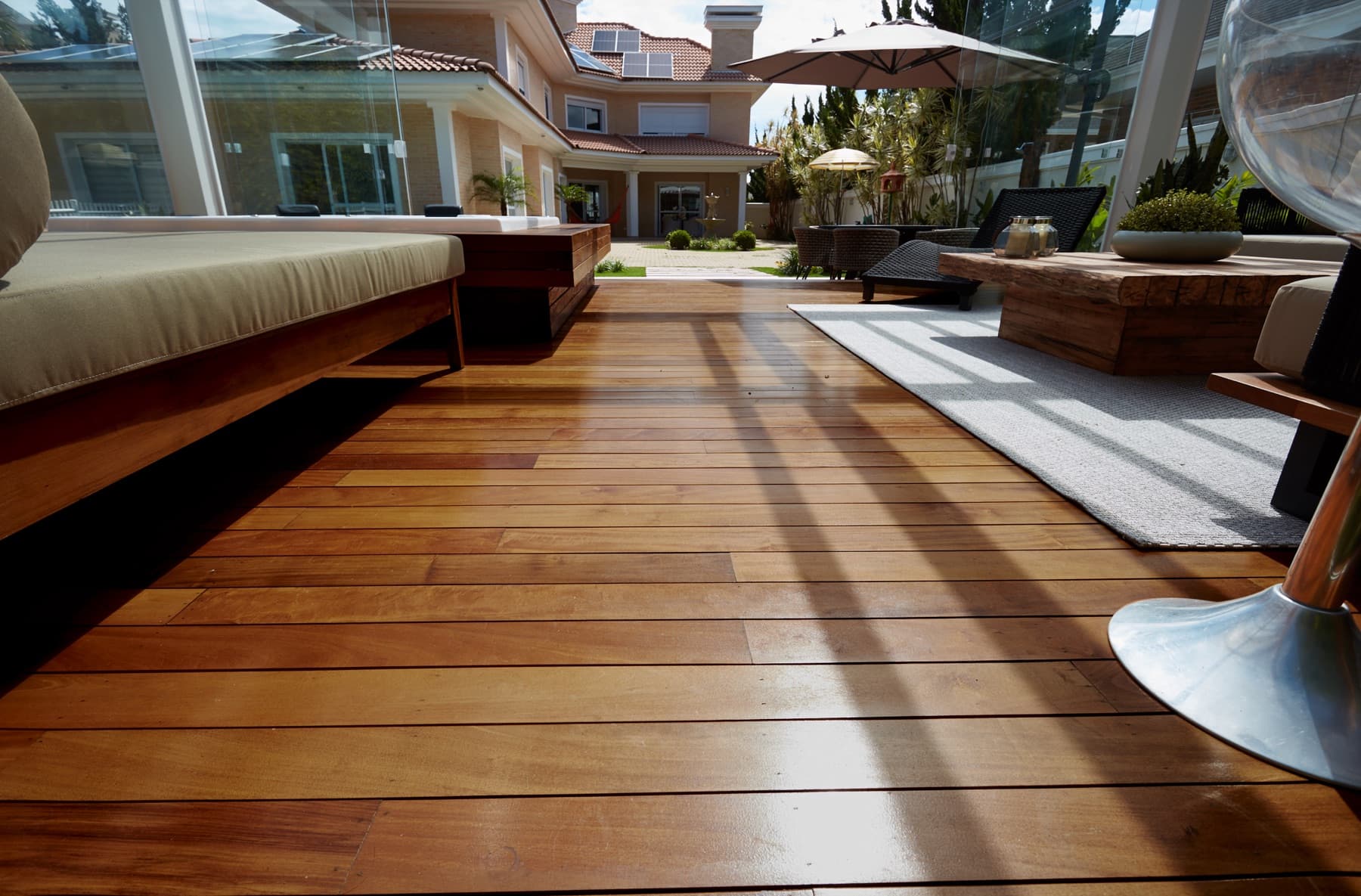
Evaluating Your Existing Deck Frame
Before selecting new decking boards, a thorough inspection of your existing deck frame is essential. The structural integrity of the joists, beams, and support posts will determine if it can safely support new hardwood decking. Hardwoods like Ipe and Cumaru are dense and heavier than many common decking materials, so the frame must be robust enough to handle the increased load.
Check for any signs of rot, insect damage, or excessive wear on wooden components. Fasteners should be secure and free from corrosion. Pay close attention to connections between the deck and your home, as well as the condition of any concrete footings. If significant issues are found, these must be addressed and repaired or replaced before new decking is installed. This initial assessment can help you understand the scope of your renovation and whether a professional structural review is needed.
Hardwood Species: Ipe and Cumaru for Coastal Climates
For coastal Florida projects, Ipe and Cumaru stand out as popular choices for hardwood decking due to their inherent properties. These species are known for their exceptional density and natural resistance to common outdoor challenges.
Ipe, also known as Brazilian walnut, is a dense, durable hardwood that ranges from reddish-brown to olive-brown. It is recognized for its resistance to rot, insects, and mold, and its ability to resist warping after moisture exposure. Ipe is often specified for demanding builds, including boardwalks and marine applications, making it a suitable option for West Palm Beach's conditions.
Cumaru is another very durable tropical hardwood. It is resistant to termites and weather changes, offering stiffness, strength, and extreme hardness. Cumaru provides a similar level of resilience to Ipe, making it a dependable choice for outdoor decking. Both species can be left untreated to weather to a silvery-gray patina or maintained with a UV-blocking sealer to preserve their original color.
Considering Board Profiles and Lengths
Hardwood decking is available in a variety of profiles and lengths, which can impact both the aesthetic and the installation process. Standard profiles typically include nominal 1x4 and 5/4x6 boards, but other dimensions may be available. Longer board lengths can minimize the number of butt joints, creating a more continuous look, while shorter lengths might be more economical or easier to handle for smaller projects.
When planning your renovation, consider how different board widths will integrate with your deck's dimensions and desired pattern. For renovations, matching existing board widths can simplify the transition, but a change in width can also offer a fresh look. Always confirm current profiles and lengths available for your chosen species, as stock can vary.
Fastening Systems for Hardwood Decking
The choice of fastening system is crucial for hardwood decking, impacting both the deck's appearance and its long-term performance. Two primary methods are face-fastening and hidden fastening.
Face-fastening involves driving screws through the face of the board into the joists. This method is generally strong and secure, but the screw heads are visible. Pre-drilling is typically required for dense hardwoods like Ipe and Cumaru to prevent splitting. Hidden fastening systems use clips or fasteners that attach to the sides or underside of the boards, creating a smooth, unblemished surface. These systems require specific board profiles and careful installation to ensure proper spacing and hold. Discuss both options with your installer to determine the best approach for your project and chosen hardwood.
Worked Example: Deck Renovation Planning
Let's consider a hypothetical deck renovation project in West Palm Beach. Imagine an existing 12-foot by 16-foot deck with a sound pressure-treated pine frame, spaced at 16 inches on center. The homeowner wants to replace the old composite decking with Ipe hardwood. They prefer a clean, seamless look, opting for 5/4" x 6" Ipe boards with a hidden fastening system.
First, the existing decking is removed. The frame is inspected for any necessary repairs or reinforcements. Assuming the frame is in good condition, the next step is material calculation. For a 12' x 16' area, the total square footage is 192 sq ft. Using 5/4" x 6" (nominal) Ipe boards, which are approximately 5.5 inches wide, each linear foot covers roughly 0.458 sq ft (5.5/12). To cover 192 sq ft, approximately 419 linear feet of decking would be needed (192 / 0.458).
Considering a typical waste factor of 10-15% for cuts and potential imperfections, the homeowner would need to purchase around 460-480 linear feet of Ipe. If boards are available in 12-foot and 16-foot lengths, a mix could be used to minimize cuts and waste. The hidden fastening system would also require specific clips, calculated based on the number of joist connections per board. This example highlights the need for precise measurements and accounting for waste and specific fastener requirements.
Before you order
- Assess the structural integrity of your existing deck frame (joists, beams, posts, footings).
- Identify and repair any rot, insect damage, or corrosion in the frame.
- Confirm your existing joist spacing and ensure it's compatible with hardwood decking requirements.
- Determine the total square footage of your deck surface.
- Choose your preferred hardwood species (e.g., Ipe, Cumaru) based on durability, appearance, and maintenance preferences.
- Select the desired board profile and dimensions (e.g., 1x4, 5/4x6).
- Decide on a fastening method: visible face-fasteners or hidden fasteners.
- Calculate the linear footage of decking required, including a waste factor (typically 10-15%).
- Calculate the quantity of fasteners or clips needed for your chosen system.
- Consider any fascia, trim, or stair materials to match your new decking.
- Plan for proper ventilation beneath the deck, especially important in humid climates.
- Review local building codes and obtain any necessary permits for your renovation.
Confirm installation details, approved uses and warranty terms in the current instructions for the exact product and profile. Your installer should verify the substrate, structure and applicable project requirements.
This is a planning guide for projects in West Palm Beach, FL. Ask our team to confirm availability, delivery to your ZIP code and which branch can support your order.
Questions to help you decide
Does hardwood decking work well in the West Palm Beach climate?
Yes, hardwoods like Ipe and Cumaru are well-suited for the West Palm Beach climate. They are naturally dense and resistant to moisture, rot, insects, and UV exposure, making them durable choices for coastal and humid environments.
How much heavier is hardwood decking compared to other materials?
Hardwood decking, especially species like Ipe and Cumaru, is significantly denser and heavier than common pressure-treated pine or composite decking. This increased weight is a key factor in its durability but requires a robust underlying frame. Always verify your existing frame can support the additional load.
Can I install hardwood decking over an existing deck frame myself?
While it is possible for experienced DIYers, installing dense hardwood decking requires specialized tools and techniques, particularly for cutting and fastening. Professional installation is often recommended to ensure proper technique, a secure installation, and to achieve the best finish.
Ready to Plan Your Hardwood Deck Renovation?
Request a material quote with your project dimensions, desired hardwood profile, and ZIP code to confirm current availability and service options for your West Palm Beach project.
Request a material quote →