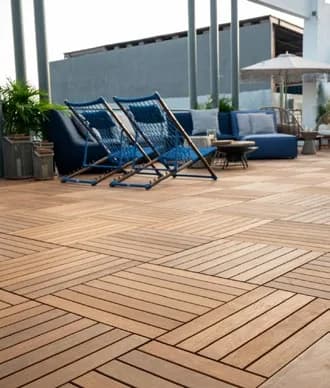
Assess Your Rooftop or Balcony Structure
Before selecting any deck tiles, it's crucial to understand the existing structure. For rooftops, this means confirming the integrity of the roof membrane and the load-bearing capacity of the building. Balconies require similar scrutiny, especially regarding the condition of the concrete slab or structural supports. Your building's management or a qualified structural engineer can provide necessary documentation or assessments.
Key questions to ask include: What is the maximum allowable live load per square foot? Is the existing surface sloped for drainage? Where are the roof drains, and how will they remain accessible? What is the height of your door thresholds, and how much clearance is available beneath them? These details will dictate the type of deck tile system you can install and any necessary preparatory work.
Drainage and Water Management
Effective drainage is paramount for any elevated outdoor surface, particularly in a climate like West Palm Beach where heavy rains are common. Deck tile systems must allow water to flow freely to existing roof drains or off the edge of a balcony. Pedestal systems are often used for rooftops to create a void beneath the tiles, facilitating water movement and concealing utilities.
Ensure that the chosen deck tile system does not impede the flow of water to drains. If using an interlocking tile system, verify that the base allows for sufficient water passage. Maintaining access to roof drains for inspection and cleaning is also critical. Consider the height of the deck tiles in relation to the drains to prevent pooling.
Navigating Local Building Permissions and HOAs
In West Palm Beach, FL, installing deck tiles on a rooftop or balcony, especially if it involves a pedestal system or significant changes, may require local building permits. It's essential to consult with the City of West Palm Beach permitting department to understand specific requirements, which may include structural reviews and wind load considerations.
For condominiums or apartments, homeowner association (HOA) approval is almost always necessary. HOAs often have specific rules regarding materials, colors, installation methods, and even the weight of objects placed on balconies. Submit a detailed plan, including material specifications and installation diagrams, to your HOA for approval before purchasing materials or beginning work.
Choosing the Right Deck Tile Material and Size
Lumber Plus offers a selection of hardwood deck tiles suitable for outdoor applications. Your choice will depend on aesthetic preference, desired durability, and the specific conditions of your project.
Ipe deck tiles offer deep chocolate tones and are known for their hardness. Garapa deck tiles provide warm golden tones, suitable for brighter aesthetics. Cumaru deck tiles feature rich reddish-brown grains, combining strength with a distinctive character. All these hardwoods are dense and can withstand outdoor exposure when properly maintained.
Deck tiles are typically available in two common sizes: 12 x 12 inches and 24 x 24 inches. The 12 x 12 inch format is a compact square, often chosen for smaller areas or layouts that require more cuts and transitions. The 24 x 24 inch format is a larger square, suitable for more expansive terraces and open surfaces where fewer tile seams are desired.
Consider how the tile size will impact your layout. For a typical rooftop or balcony, a 24 x 24 inch tile might reduce installation time and create a more expansive look, while a 12 x 12 inch tile offers more flexibility for intricate patterns or smaller, irregularly shaped spaces. Always review product specifications for exact dimensions and weight per tile, as these contribute to the overall load on your structure.
Explore our full selection of deck tiles: [Deck Tiles](/deck-tiles). Specific hardwood options include: [Ipe Deck Tiles](/deck-tiles/ipe), [Garapa Deck Tiles](/deck-tiles/garapa), and [Cumaru Deck Tiles](/deck-tiles/cumaru).
Worked Example: Planning Deck Tiles for a 10' x 12' Balcony
Let's consider a hypothetical 10-foot by 12-foot rectangular balcony in West Palm Beach. The balcony has a single door threshold that is 2 inches high, and the existing concrete slab has a slight slope away from the building.
First, measure the exact dimensions: 120 inches by 144 inches. We need to respect the 2-inch door threshold and the HOA's 1.5-inch maximum height. This means our deck tile system, including any support structure, must not exceed 1.5 inches.
If using 24 x 24 inch (2-foot x 2-foot) deck tiles, the layout would be 5 tiles along the 10-foot width (10 ft / 2 ft = 5 tiles) and 6 tiles along the 12-foot length (12 ft / 2 ft = 6 tiles). This results in a total of 30 tiles (5 x 6 = 30 tiles). Since the dimensions are perfectly divisible by 24 inches, no edge cuts are strictly necessary for the main field, reducing waste.
Always add a contingency of 5-10% for cuts, waste, or future replacements, even if the initial calculation suggests no cuts. For this project, ordering 32-33 tiles would be a prudent approach. Confirming the exact height of the chosen tile system and its compatibility with the threshold and drainage requirements is the next critical step.
Before you order
- Verify structural load capacity of rooftop or balcony.
- Confirm roof membrane integrity and warranty (for rooftop projects).
- Measure door threshold heights and available clearance.
- Locate all roof drains and plan for their accessibility.
- Understand the existing surface slope for drainage.
- Consult with the City of West Palm Beach permitting department for local requirements.
- Obtain approval from your Homeowner Association (HOA) if applicable.
- Select deck tile material (Ipe, Garapa, Cumaru) based on aesthetics and durability.
- Choose deck tile size (12x12 or 24x24) considering layout and project scale.
- Calculate the number of tiles needed, including a waste factor.
- Confirm the total height of the deck tile system (tile + support) meets clearance limits.
Confirm installation details, approved uses and warranty terms in the current instructions for the exact product and profile. Your installer should verify the substrate, structure and applicable project requirements.
This is a planning guide for projects in West Palm Beach, FL. Ask our team to confirm availability, delivery to your ZIP code and which branch can support your order.
Questions to help you decide
Do I need a permit to install deck tiles on my West Palm Beach balcony or rooftop?
It depends on the scope of your project and local regulations. Always consult with the City of West Palm Beach building department and your HOA before starting any work.
How do deck tiles handle the West Palm Beach climate, especially rain?
Hardwood deck tiles are designed for outdoor use and can withstand the climate. The key is proper installation that ensures effective drainage. Systems that allow water to flow freely beneath the tiles to existing drains are essential to prevent water pooling and maintain the integrity of the underlying structure. Regular cleaning to keep drains clear is also important.
What maintenance do deck tiles require in West Palm Beach?
Hardwood deck tiles benefit from regular cleaning to remove dirt, leaves, and debris. Periodically, you may choose to apply a UV-inhibiting oil to help maintain the wood's original color and protect it from the intense Florida sun. Without oiling, hardwood will naturally weather to a silver-gray patina. Ensure that any cleaning products or sealants are suitable for outdoor hardwoods and will not harm the underlying roof membrane or balcony surface.
Ready to Transform Your West Palm Beach Outdoor Space?
Request a material quote with your project dimensions, desired deck tile profile, and ZIP code to confirm current availability and service options for your West Palm Beach, FL project.
Request a material quote →