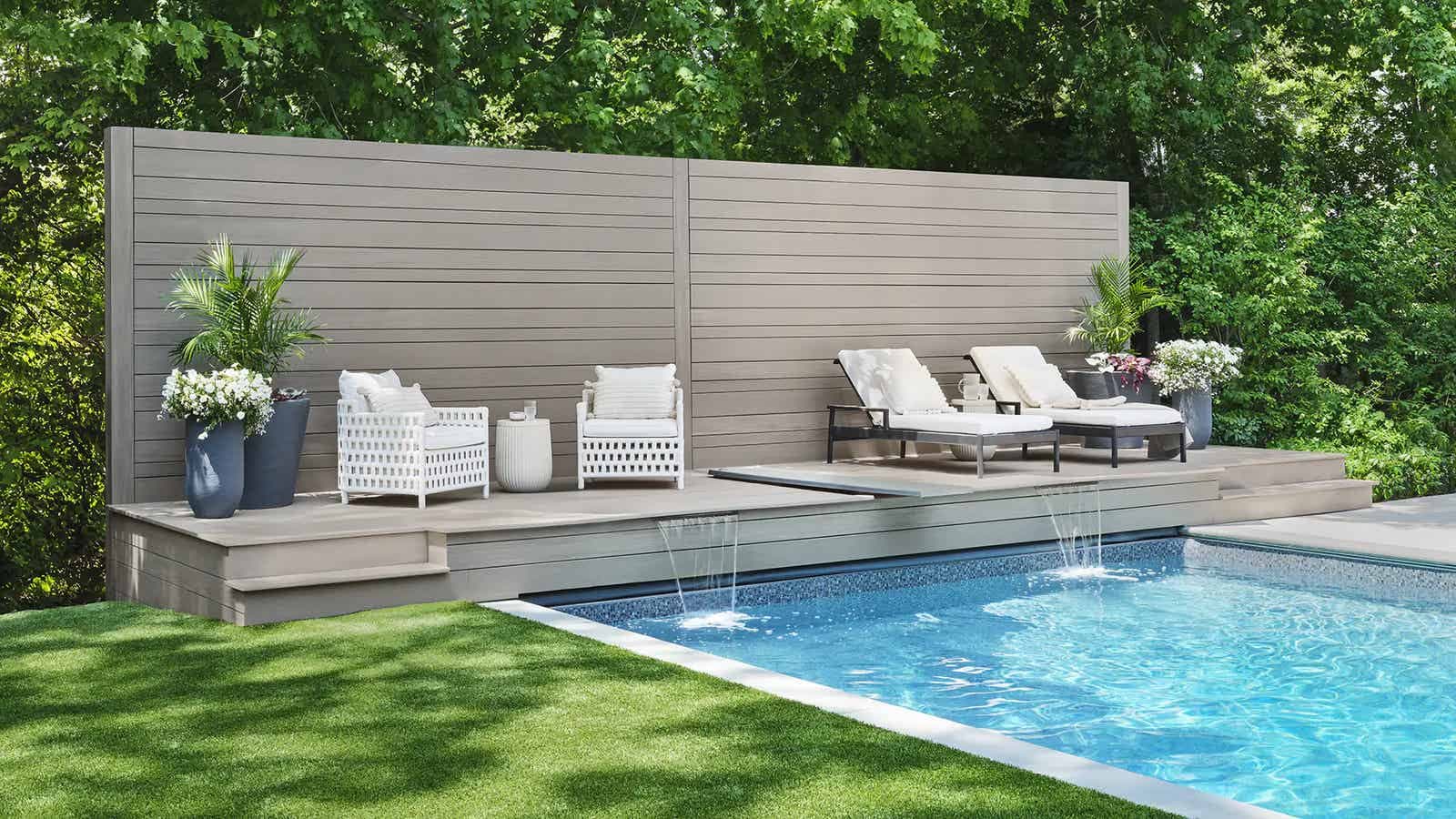
Why PVC Decking for Pool Terraces?
PVC decking is a 100% synthetic material, meaning it contains no wood fibers. This composition is key to its performance in high-moisture applications like pool terraces. Unlike wood or composite materials that may absorb moisture, PVC boards are waterproof to the core. This inherent quality helps prevent common issues such as swelling, staining, and rot, which can be accelerated by consistent exposure to pool water, splashes, and even chemicals.
The non-absorbent nature of PVC also contributes to its ease of cleaning. Spills from drinks or food, as well as pool chemicals, tend to remain on the surface, making them simpler to wipe away with soap and water. This is particularly beneficial in a poolside setting where cleanliness and hygiene are important.
Additionally, PVC decking is often lighter than hardwood and some composite options, which can streamline handling and installation. This can be a factor for projects with specific structural considerations or where material transport around the site is a concern.
Key Characteristics for Wet Environments
The primary advantage of PVC decking around a pool is its resistance to moisture. Its 100% synthetic nature means it does not swell, stain, or rot when exposed to standing water, splash zones, or even salt spray, if applicable. This makes it a suitable choice for areas where boards are consistently wet, such as pool surrounds and docks. The material's advanced capping also helps shed grease and wine, which can be common occurrences on a pool terrace.
The surface can become slippery when wet, as can any hard surface. Design considerations, such as ensuring proper drainage and selecting a textured board profile if available, can help mitigate this. Always exercise caution on wet surfaces.
Another benefit is the availability of heat-mitigating color options. While all dark surfaces absorb heat, some PVC decking lines offer colors and finishes designed to stay cooler to the touch than conventional decking in similar shades. This can be a significant comfort factor for bare feet on a sunny Topeka day.
Planning Your Pool Terrace Layout
Careful planning of your pool terrace layout is essential for both aesthetics and functionality. Consider the flow of traffic from the house to the pool, as well as areas for lounging, dining, and other activities. Measure the dimensions of your pool and the surrounding area accurately, accounting for any existing structures or landscaping.
When laying out PVC boards, consider board lengths and seam placement. While PVC boards are available in various lengths, planning where seams will fall can create a more cohesive look. "Picture-frame" borders are a popular design choice for pool decks, providing a finished edge and visually defining the space. This involves running boards perpendicular to the main decking along the perimeter. Also, plan for fascia and edge finishes that complement your chosen decking boards for a complete appearance.
A Hypothetical Pool Terrace Project Example
Let's consider a hypothetical pool terrace project in Topeka, KS. Imagine a rectangular pool measuring 15 feet by 30 feet, with a desire to create a 5-foot wide decking border on all four sides. This would result in an outer dimension of 25 feet by 40 feet (15+5+5 by 30+5+5). The total area for decking would be (25 ft * 40 ft) - (15 ft * 30 ft) = 1000 sq ft - 450 sq ft = 550 sq ft.
If using standard PVC decking boards that are 5.5 inches wide (approximately 0.458 feet) and available in 16-foot lengths, you would first calculate the number of linear feet needed. For the main decking area, not accounting for cuts or waste, you would need approximately 550 sq ft / 0.458 ft width = 1200 linear feet of decking. However, this is a simplified area calculation. A precise take-off would involve a detailed layout plan, accounting for board orientation, cuts, and a waste factor (typically 5-10%).
For the picture-frame border, if you want a single 5.5-inch wide board around the entire 40x25-foot perimeter, you would need 2 * (40 ft + 25 ft) = 130 linear feet of border material. This example highlights that a simple area calculation is a starting point, but a detailed plan is necessary to accurately determine the quantity of boards, trim, and fasteners needed for your specific project.
Maintenance and Cleaning for Poolside PVC Decking
One of the advantages of PVC decking for a pool terrace is its relatively low maintenance. The advanced capping on many PVC boards helps them shed common stains like grease and wine, making cleanup simpler. For routine cleaning, soap and water are often sufficient. A soft brush or cloth can be used to gently scrub away dirt and grime. It's advisable to clean up spills promptly to prevent any potential marking, especially around a pool where various substances might be tracked onto the deck.
For more stubborn stains or general seasonal cleaning, consult the manufacturer's specific cleaning recommendations. These instructions will outline approved cleaning products and methods to ensure the longevity and appearance of your decking. Avoid abrasive cleaners or harsh chemicals not recommended by the manufacturer, as these could potentially damage the surface. Regular removal of debris such as leaves and dirt will also help prevent organic buildup and keep your deck looking its best.
Before you order
- Confirm local building codes and regulations for pool surrounds.
- Evaluate the primary use of the terrace (lounging, dining, access) to inform layout.
- Measure the exact dimensions of the pool and desired decking area.
- Consider sun exposure and choose heat-mitigating colors if desired.
- Select a PVC decking profile and color that complements your home's exterior.
- Plan for drainage to prevent standing water on or around the deck.
- Determine if a picture-frame border or other design elements are desired.
- Factor in the need for compatible fasteners and trim boards.
- Review manufacturer's installation guidelines for board spacing and support.
- Understand the recommended cleaning and maintenance procedures for your chosen PVC decking.
Confirm installation details, approved uses and warranty terms in the current instructions for the exact product and profile. Your installer should verify the substrate, structure and applicable project requirements.
This is a planning guide for projects in Topeka, KS. Ask our team to confirm availability, delivery to your ZIP code and which branch can support your order.
Questions to help you decide
Is PVC decking slippery when wet?
While PVC decking is designed for wet environments, any hard surface can become slippery when wet. It's important to exercise caution, and some manufacturers offer boards with textured finishes that may provide improved traction. Ensuring proper drainage around the pool terrace can also help reduce standing water.
How do I clean pool chemicals or sunscreen off PVC decking?
For most spills, including pool chemicals and sunscreen, prompt cleaning with soap and water using a soft brush or cloth is usually effective. Always refer to the specific manufacturer's cleaning guidelines for your PVC decking product, as they will provide approved cleaning agents and methods to ensure the material's integrity and appearance.
Can PVC decking be installed directly on concrete around a pool?
PVC decking typically requires a substructure for proper ventilation and drainage. While it can be installed over a concrete slab, it usually involves creating a sleeper system or using pedestals to elevate the boards. Always consult the manufacturer's installation instructions for the specific requirements and approved methods for installation over concrete or other solid surfaces to ensure proper performance and warranty coverage.
Request a Quote for Your PVC Decking Pool Terrace
Ready to plan your Topeka, KS pool terrace? Provide your project dimensions, desired PVC decking profile, and ZIP code to request a material quote. Confirm current availability and service options for your project.
Request a material quote →