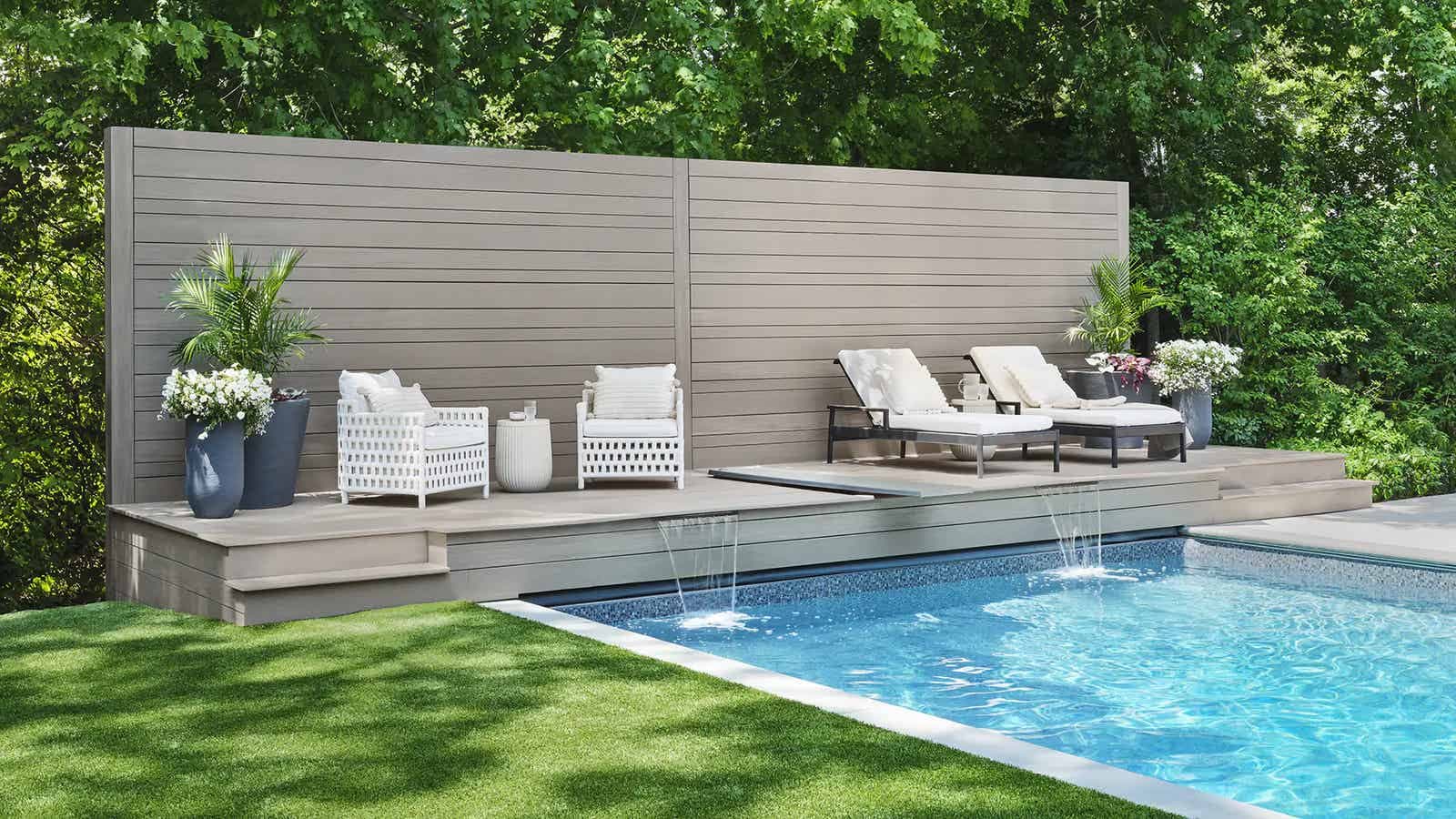
Why PVC Decking Excels in Poolside Environments
PVC decking is a material specifically designed to handle constant moisture without degradation. Its 100% synthetic composition, free from wood fibers, means it is inherently waterproof. This attribute is crucial for pool terraces where boards are regularly exposed to splashes, drips, and standing water. Unlike wood, which can swell, rot, or splinter over time when consistently wet, PVC maintains its structural integrity and appearance.
The resistance to moisture also translates to a low-maintenance profile. PVC boards shed grease and wine and can be cleaned with soap and water, simplifying the upkeep of a busy pool area. This ease of cleaning is a practical benefit for homeowners who want to spend more time enjoying their pool and less time on deck maintenance. Additionally, some PVC decking options offer heat-mitigating color choices, which can be a consideration for bare feet on sunny days around the pool.
Withstanding Syracuse's Climate: Winter and Moisture Resilience
Syracuse's climate presents unique challenges for outdoor materials, particularly the heavy snowfall, freezing temperatures, and subsequent thawing cycles. PVC decking's waterproof nature is a key advantage here; it prevents water absorption that can lead to freeze-thaw damage, cracking, or warping common in other materials. The boards are designed to perform in environments where they are frequently wet, including exposure to snow and ice.
While PVC decking is robust against moisture, proper installation with adequate ventilation is still important to ensure the longevity of the entire deck structure. The material's lightweight nature also contributes to easier handling during installation, which can be an advantage when dealing with varying weather conditions or complex designs.
Appearance and Design Flexibility for Your Pool Terrace
Modern PVC decking offers a range of aesthetic options, including collections designed to mimic the deep textures and varied tones of natural wood. This allows for significant design flexibility, enabling homeowners to achieve a sophisticated look that complements their home and landscaping. Choices include different board widths and lengths, which can be planned to minimize seams and create a cohesive appearance.
For a pool terrace, consider how the decking will integrate with surrounding elements like coping, landscaping, and outdoor furniture. PVC decking's consistent finish and available trim pieces, such as fascia and risers, help create a polished, finished look around the pool. The ability to coordinate these elements contributes to a unified outdoor living space.
Planning for Safety and Maintenance Around the Pool
While PVC decking generally offers good traction, especially when dry, its suitability for wet areas like a pool surround should always be evaluated with specific product data. Some manufacturers offer heat-mitigating color options, which can help keep the deck surface cooler to the touch on hot days, enhancing comfort for bare feet. However, no material can eliminate all heat absorption, and direct sun exposure will still warm the surface.
Maintenance for PVC decking is generally straightforward. Regular cleaning with mild soap and water is typically sufficient to remove dirt, pool chemicals, and general debris. It's important to consult the manufacturer's specific cleaning guidelines to ensure compatibility with cleaning products and to avoid damaging the surface or voiding any coverage. Unlike wood, PVC does not require sanding, staining, or sealing, reducing ongoing maintenance tasks significantly.
Worked Example: Calculating PVC Decking for a Syracuse Pool Terrace
Let's consider a hypothetical pool terrace project in Syracuse, NY, with a rectangular deck area measuring 20 feet by 15 feet. This area surrounds a 10-foot by 20-foot inground pool, with the decking forming a uniform 2.5-foot wide perimeter on all sides. The total deck surface area is calculated as (20 ft + 2 * 2.5 ft) * (15 ft + 2 * 2.5 ft) - (20 ft * 15 ft) = (25 ft * 20 ft) - 300 sq ft = 500 sq ft - 300 sq ft = 200 sq ft.
If using standard PVC decking boards that are 5.5 inches wide and available in 16-foot lengths, we need to determine the number of boards. A 5.5-inch board is approximately 0.458 feet wide. To cover the 200 sq ft, we would need 200 sq ft / (0.458 ft * 16 ft) = 200 sq ft / 7.328 sq ft per board = approximately 27.3 boards. Accounting for cuts and waste, it is prudent to round up and add a waste factor, perhaps 10-15%. For this example, we would plan to purchase 32-35 boards of 16-foot length.
This calculation is a simplified example. A precise material take-off would involve detailed layout planning, accounting for board orientation, end-matching, and specific cutting requirements around the pool's shape and any deck features like stairs or railings. Always verify exact product dimensions and manufacturer's recommended waste factors.
Before you order
- Verify manufacturer's specific recommendations for poolside applications and wet environments.
- Consider heat-mitigating color options, especially for areas with prolonged sun exposure.
- Plan for adequate ventilation beneath the deck structure to ensure overall system longevity.
- Review specific cleaning and maintenance instructions to ensure product compatibility.
- Account for Syracuse's winter conditions, ensuring the material is rated for freeze-thaw cycles.
- Confirm available board profiles, lengths, and trim options to match your design vision.
- Obtain a detailed material take-off based on your exact project dimensions and layout.
Confirm installation details, approved uses and warranty terms in the current instructions for the exact product and profile. Your installer should verify the substrate, structure and applicable project requirements.
This is a planning guide for projects in Syracuse, NY. Ask our team to confirm availability, delivery to your ZIP code and which branch can support your order.
Questions to help you decide
Is PVC decking slippery around a pool?
While PVC decking can offer a degree of slip resistance, especially when dry, all surfaces can become slippery when wet. It is important to consider the specific product's surface texture and any manufacturer ratings for wet-area use. Some PVC decking options feature embossed patterns that may offer additional grip. Always exercise caution on wet surfaces.
How does PVC decking hold up in Syracuse's winter conditions?
PVC decking's 100% synthetic composition makes it highly resistant to the effects of water, including freeze-thaw cycles common in Syracuse. Unlike wood, it will not absorb water and is thus less prone to cracking, warping, or rotting due to ice and snow. However, proper installation with good drainage and ventilation is still essential for the overall deck structure.
What kind of maintenance does PVC decking require for a pool terrace?
PVC decking is known for its low maintenance. For a pool terrace, regular cleaning with mild soap and water is typically sufficient to remove pool chemicals, dirt, and spills. It does not require sealing, staining, or painting. Always refer to the specific manufacturer's guidelines for recommended cleaning products and methods to ensure the longevity and appearance of your deck.
Ready to Plan Your PVC Pool Terrace in Syracuse, NY?
Request a material quote today. Provide your project dimensions, desired PVC decking profile, and your ZIP code to confirm current availability and service options for your Syracuse, NY project. Explore our range of PVC decking products: /decking/pvc
Request a material quote →