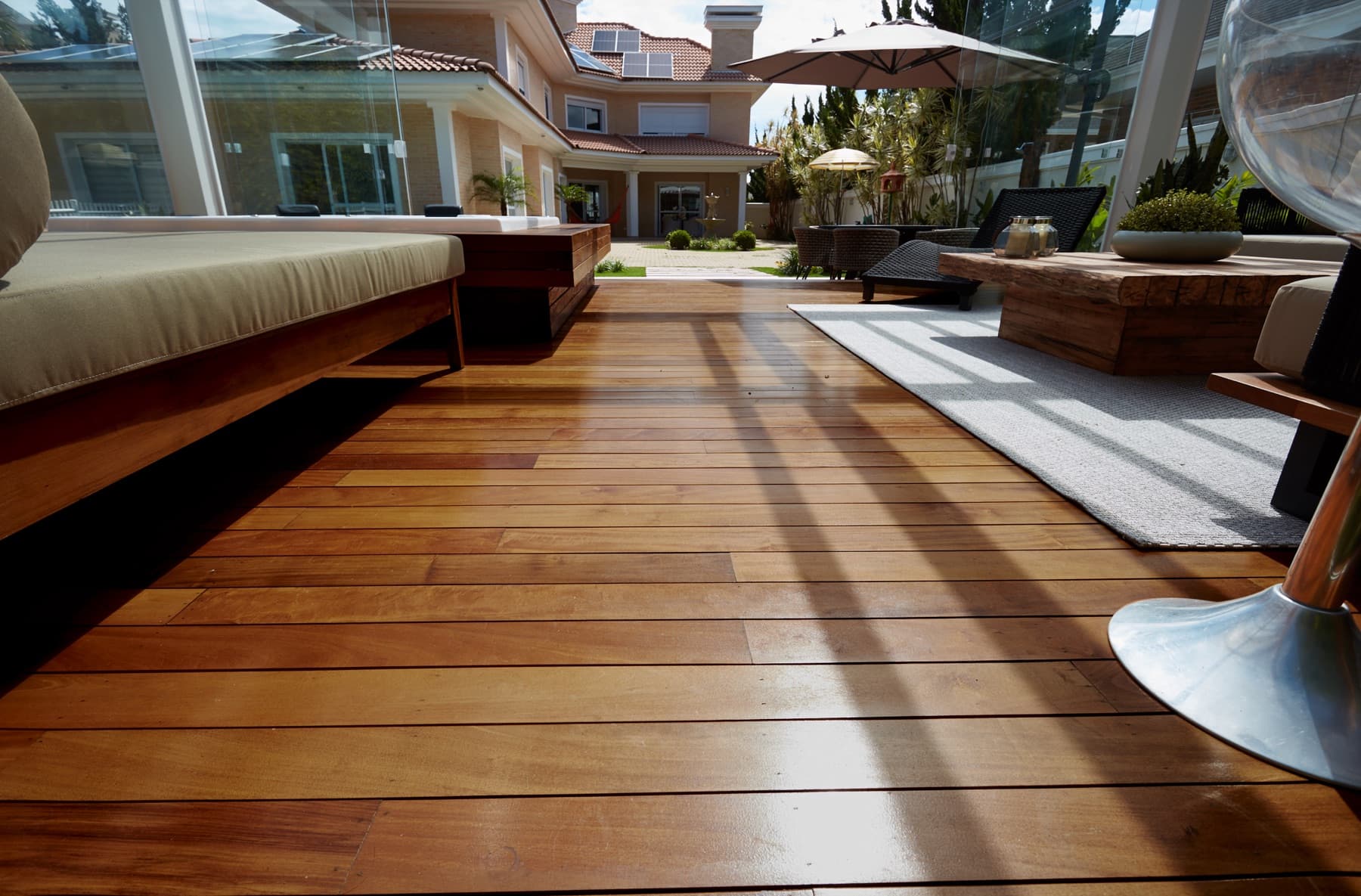
Assessing Your Existing Deck Structure
The first step in any deck renovation is to inspect the existing substructure. Hardwood decking, particularly dense species like Ipe or Cumaru, is heavier than many common decking materials. Your existing joists, beams, and footings must be capable of supporting this increased load. Look for signs of rot, insect damage, or excessive deflection in the current framing. Any compromised elements will need repair or replacement.
Consider the spacing of your joists. Consult the specific product guidelines for your chosen hardwood species to confirm joist spacing requirements. If your existing joists are spaced too far apart, you might need to add additional blocking or sister new joists to the existing ones.
Choosing Your Hardwood Species: Durability and Appearance
Lumber Plus offers a range of Brazilian hardwood decking species, each with unique characteristics suitable for various renovation goals. Ipe, for example, is often considered a benchmark for outdoor decking due to its exceptional density and natural resistance to rot, insects, and weather changes. It can last for decades with proper care, making it a durable choice for Syracuse's varied climate. Ipe typically presents reddish-brown to olive-brown tones.
Cumaru is another durable tropical hardwood, known for its stiffness, strength, and resistance to termites and weather. While slightly less dense than Ipe, it offers comparable performance and can be a cost-effective alternative. Cumaru often features a range of golden-brown to reddish-brown hues. Other species like Garapa or Tigerwood offer different aesthetic profiles and durability levels, allowing for a tailored approach to your deck's appearance and performance needs.
When making your selection, consider how the wood's natural color and grain will complement your home's exterior. Some hardwoods, like Ipe, will weather to a silvery-gray patina if left untreated, while others may retain more of their original color with regular application of a UV-blocking sealer. This aesthetic decision is an important part of your renovation plan.
Explore options such as Ipe decking, Cumaru decking, Garapa decking, or PVC decking for comparison.
Material Takeoff for a Hardwood Deck Renovation
Accurate measurements are crucial for ordering hardwood decking. For a renovation, you'll need to measure the total area of your deck surface, accounting for any unusual shapes or transitions. Here's a hypothetical example:
Imagine you are renovating a rectangular deck that measures 12 feet by 16 feet. You've chosen Ipe decking in a standard 1x6 (nominal) profile, which typically has an actual width of 5.5 inches. You plan for a traditional straight-lay installation. The total deck surface area is 12 ft x 16 ft = 192 square feet.
To calculate the number of boards needed, first convert the actual board width to feet: 5.5 inches / 12 inches/foot = 0.4583 feet. For a 16-foot long deck, each board will cover 16 feet in length. The number of boards needed across the 12-foot width would be 12 feet / 0.4583 feet/board ≈ 26.18 boards. Since you cannot purchase fractions of boards, you would round up to 27 boards. Therefore, you would need 27 boards, each 16 feet long.
This calculation provides a baseline. Always add a waste factor, typically 10-15%, to account for cuts, mistakes, and potential board imperfections, especially if your deck has complex angles or patterns. For this example, 27 boards + 10% waste (2.7 boards) = 29.7 boards, rounded up to 30 boards of 16-foot length.
Remember to also account for any fascia boards, stair treads, or railing components you plan to replace or add. These often require different profiles or lengths. Always confirm current profiles and lengths available when requesting a quote.
Fastening Systems and Board Spacing
Hardwood decking can be installed using either face fastening or hidden fastening systems. Face fastening involves screwing directly through the face of the board into the joists, which is a strong and secure method. Hidden fasteners, on the other hand, create a clean, unblemished surface by attaching the boards from the sides or underside.
Due to the density of tropical hardwoods, pre-drilling is often necessary for both face and hidden fastening to prevent splitting. The specific fastening system you choose may also influence the required board spacing. Hardwood decking naturally expands and contracts with changes in humidity and temperature, and proper spacing is essential for drainage and ventilation, particularly in areas like Syracuse that experience significant seasonal shifts.
Always follow the manufacturer's recommendations for board spacing for your chosen product and fastening system. Incorrect spacing can lead to issues such as buckling or excessive gapping.
Maintenance Considerations for Hardwood Decks
One of the advantages of tropical hardwoods is their relatively low maintenance. A simple annual wash is often sufficient to keep the deck clean. If you prefer to maintain the wood's original rich color, an annual application of a UV-blocking oil or sealer is recommended. Without this treatment, the wood will naturally weather to a silvery-gray patina, which many find appealing and does not compromise the structural integrity of the deck.
For homeowners in Syracuse, where winter conditions can be harsh, regular cleaning helps prevent the accumulation of debris and moisture that could promote mold or mildew growth. While hardwoods are naturally resistant, good maintenance practices contribute to the longevity and appearance of your deck over many seasons.
Before you order
- Assess existing deck framing for structural integrity and joist spacing.
- Determine if current framing can support the weight of hardwood decking.
- Select a hardwood species based on desired durability, appearance, and budget.
- Measure the deck area accurately for material takeoff, including a waste factor.
- Choose between face fastening or hidden fastening systems.
- Confirm board spacing requirements for your chosen hardwood and fastening method.
- Plan for annual cleaning and optional sealing to maintain appearance.
- Request a material quote with exact dimensions and desired profiles.
Confirm installation details, approved uses and warranty terms in the current instructions for the exact product and profile. Your installer should verify the substrate, structure and applicable project requirements.
This is a planning guide for projects in Syracuse, NY. Ask our team to confirm availability, delivery to your ZIP code and which branch can support your order.
Questions to help you decide
Can I use my existing deck frame for hardwood decking?
It depends on the condition and construction of your existing frame. Hardwood decking is denser and heavier than many other materials, so your joists, beams, and footings must be structurally sound and adequately spaced to support the increased load. A professional inspection can confirm suitability.
How long does hardwood decking last in Syracuse's climate?
With proper installation and maintenance, tropical hardwoods like Ipe can last up to 75 years, while Cumaru can last over 25 years. These woods are highly resistant to weather changes, rot, and insects, making them suitable for the varying conditions in Syracuse, NY. Regular cleaning and optional sealing can help maximize their lifespan and appearance.
Does hardwood decking require special tools for installation?
Yes, due to the density of tropical hardwoods, specialized tools may be required. Pre-drilling is typically necessary for all fasteners to prevent splitting. Professional installation is often recommended to ensure proper techniques and longevity of the deck.
Ready to Renovate Your Syracuse Deck with Hardwood?
Request a material quote today. Provide your project dimensions, desired hardwood profile, and ZIP code to confirm current availability and service options for your renovation project.
Request a material quote →