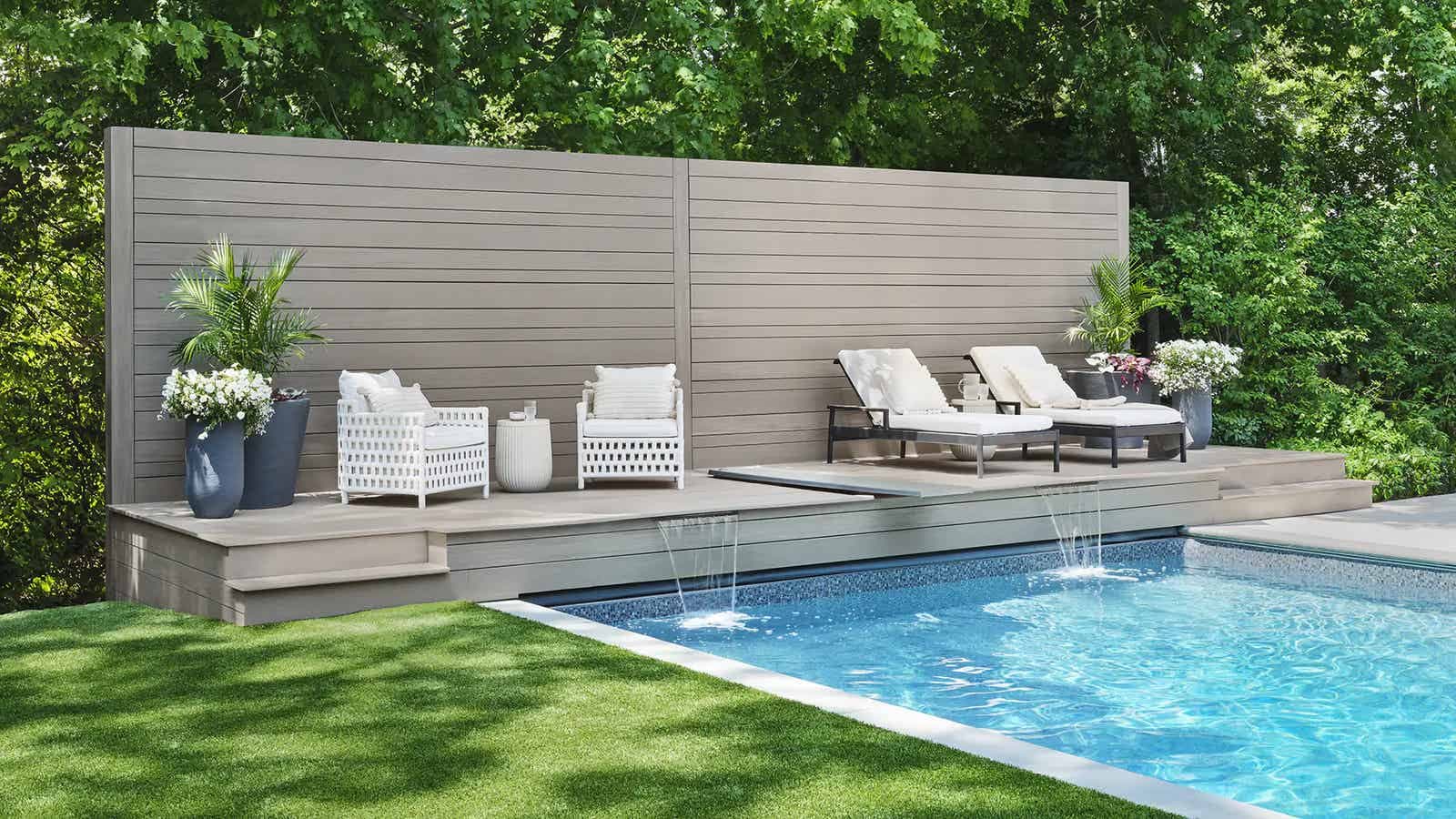
Why PVC Decking Excels in Wet Environments
PVC decking is constructed from 100% synthetic materials, containing zero wood fiber. This composition is key to its performance in wet environments, as it prevents the material from absorbing moisture, which can lead to swelling, staining, or rot in other decking types. For a pool terrace, where constant splashing and humidity are common, this characteristic is a significant advantage. The material is also inherently resistant to salt spray, making it suitable for coastal areas.
Manufacturers like TimberTech Azek offer PVC decking lines that are specifically designed for demanding applications such as pool surrounds and docks. These boards feature advanced capping that helps shed grease and common spills, contributing to ease of cleaning and maintaining their appearance over time. This makes PVC a practical choice for areas where spills from sunscreens, drinks, or food are likely.
Appearance and Design Flexibility
While functionality is paramount for a pool terrace, the aesthetic appeal is also important. PVC decking is available in various collections, such as TimberTech Azek's Vintage, Landmark, and Harvest lines, which offer a range of colors and textures designed to mimic the look of natural wood. These options allow homeowners to achieve a desired visual style, from modern to classic, without the maintenance demands of wood.
Beyond color, PVC decking also offers design flexibility for edges and borders. Planning for fascia and trim boards that complement the main deck boards can create a polished, finished look around the pool. Consider how the decking will transition to other hardscaping elements, such as pavers or concrete, to ensure a cohesive design.
Installation Considerations for Pool Terraces
When planning PVC decking for a pool terrace, proper installation is crucial. While PVC decking is lighter than many hardwood and composite options, potentially simplifying handling and installation, specific guidelines must be followed. This includes ensuring adequate ventilation beneath the deck to prevent moisture buildup, even though the boards themselves are waterproof. Good airflow helps to keep the substructure dry.
The substructure itself must be designed to support the decking adequately and withstand the moist environment. Confirming the appropriate joist spacing and fastener types with the manufacturer's installation guide is essential. Hidden fastening systems are often used with PVC decking to create a smooth, fastener-free surface, which can be desirable for barefoot traffic around a pool.
Maintenance and Cleaning for Poolside Use
One of the primary advantages of PVC decking for a pool terrace is its low maintenance. The advanced capping on many PVC boards helps them shed common stains like grease and wine, which can be wiped clean with soap and water. This is a significant benefit for an area that sees frequent use and potential spills.
Regular cleaning typically involves sweeping away debris and occasional washing with a mild soap and water solution. It is important to consult the manufacturer's specific cleaning recommendations to avoid using incompatible products that could damage the surface. This proactive approach helps maintain the decking's appearance and performance over time.
Hypothetical Project Example: Rehoboth Beach Pool Terrace
Consider a hypothetical pool terrace project in Rehoboth Beach, DE, measuring 20 feet by 15 feet. The homeowner desires a low-maintenance surface that can withstand frequent splashes and sun exposure, with a modern gray appearance. They select TimberTech Azek's Vintage Collection in a Weathered Teak color, which offers a sophisticated look with heat-mitigating color options.
The project area is 300 square feet. Assuming standard PVC decking boards are 12 feet long and 5.5 inches wide, each board covers approximately 5.5 square feet (12 feet * 5.5 inches / 12 inches/foot). To cover 300 square feet, an area-equivalent calculation would suggest around 55 boards (300 sq ft / 5.5 sq ft/board). However, accounting for cuts, waste, and a potential picture-frame border, a more realistic estimate for purchased boards might be 60-65 boards. This project would also require coordinating fascia boards for the deck perimeter, appropriate hidden fasteners, and a robust substructure designed for a coastal, wet environment. A contractor would plan the exact layout to minimize waste and ensure proper support and ventilation.
Before you order
- Confirm the local building codes for pool deck materials and installation in Rehoboth Beach, DE.
- Assess the specific sun exposure and shade patterns around your pool to consider heat-mitigating color options.
- Verify the substructure requirements for PVC decking in a wet environment, including joist spacing and ventilation.
- Choose a PVC decking profile and color that complements your home's architecture and landscaping.
- Plan for fascia and trim details to create a finished look around the pool perimeter.
- Identify compatible cleaning products and establish a regular maintenance routine.
- Request samples to evaluate color, texture, and slip resistance in person, especially when wet.
Confirm installation details, approved uses and warranty terms in the current instructions for the exact product and profile. Your installer should verify the substrate, structure and applicable project requirements.
This is a planning guide for projects in Rehoboth Beach, DE. Ask our team to confirm availability, delivery to your ZIP code and which branch can support your order.
Questions to help you decide
Is PVC decking slippery when wet?
It is always recommended to test samples under wet conditions to assess their specific slip resistance for your project. Always exercise caution on any wet surface.
How does PVC decking handle the heat from direct sun?
PVC decking can absorb and retain heat, especially darker colors, similar to other decking materials. However, some manufacturers offer specific color options designed with heat-mitigating properties. When planning for a sun-exposed pool terrace in Rehoboth Beach, consider lighter color choices or those specifically engineered to stay cooler.
Can I install PVC decking directly over an existing concrete slab around my pool?
Installing PVC decking directly over a concrete slab typically requires a properly constructed sleeper system or a pedestal system to ensure adequate ventilation and drainage. Direct contact with a flat, non-draining surface can trap moisture and compromise the substructure or the decking's performance. Always consult manufacturer guidelines for approved installation methods over existing surfaces.
Ready to Plan Your PVC Pool Terrace?
Request a material quote for your Rehoboth Beach pool decking project. Provide your project dimensions, desired PVC decking profile, and ZIP code to confirm current availability and service options. Our team can help you select the right materials for a durable and beautiful poolside space.
Request a material quote →