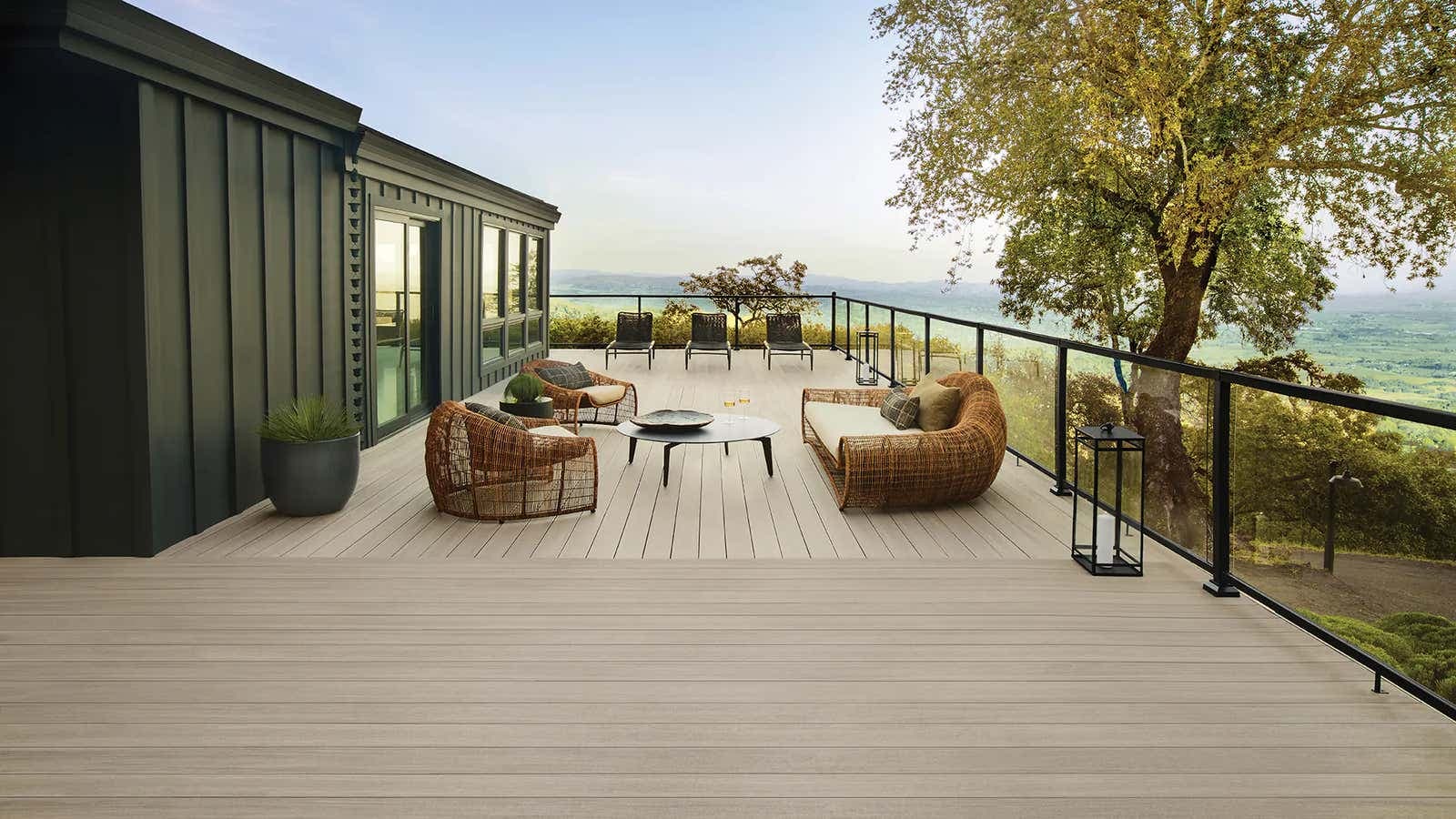
Understanding Composite Decking for Small Spaces
Composite decking is engineered from a blend of wood fibers and recycled plastics, offering a material that resists rot, splinters, and insect damage. For compact outdoor spaces, these characteristics translate into a low-maintenance surface that remains attractive without extensive upkeep, a significant advantage where access for maintenance might be limited.
Unlike natural wood, composite boards offer consistent color and grain, ensuring a uniform look across your compact deck. This consistency can be beneficial in smaller areas where visual clutter might otherwise make the space feel even smaller. The material's durability also means it stands up well to foot traffic, making it a reliable choice for frequently used small patios or balconies.
Many composite decking lines also feature capped shells, which can help shrug off humidity, a relevant consideration for coastal environments. Options that are cooler underfoot are also available, which can enhance comfort during warmer months on a sun-exposed deck.
Maximizing Usable Space with Board Selection
In a compact outdoor area, the choice of decking board width and profile can subtly influence the perception of space. While wider boards might seem to visually expand a small area, they can also lead to more waste if cuts are frequent and non-reusable. Conversely, narrower boards might require more fasteners and installation time but can offer a more intricate pattern that adds visual interest without overwhelming the space.
Consider the overall dimensions of your compact deck. For a very narrow balcony, a standard-width board might be the most practical choice. For a slightly wider, but still compact, patio, exploring different board widths from manufacturers like Trex, TimberTech, or Fiberon could allow for a layout that minimizes cuts and optimizes material use.
The profile of the board also matters. Some composite boards are solid, providing a substantial feel, while others are grooved for hidden fastener systems. For smaller projects, where visibility of fasteners might be more pronounced, hidden fasteners can contribute to a cleaner, more streamlined appearance. Always confirm the specific installation requirements and compatible fasteners for your chosen composite decking product.
Collection-Specific Support and Installation Details
Each composite decking collection has specific requirements for substructure spacing and support. For a compact deck, it is crucial to adhere strictly to the manufacturer's guidelines to ensure structural integrity and warranty compliance. This is especially important for smaller decks, where improper support could lead to sagging or instability over time.
Always consult the product's technical documentation for exact requirements. This information will dictate the framing plan for your deck.
When planning for a small space, consider the implications of these support requirements on the overall deck height and design. For ground-level compact decks, ensure adequate ventilation beneath the deck surface as recommended by the manufacturer. This helps prevent moisture buildup, which can affect the long-term performance of the decking and substructure, even for composite materials.
Navigating Project Access and Logistics in Compact Areas
Rehoboth Beach properties, especially those with compact outdoor spaces, may present unique challenges for material delivery and project access. Planning how composite decking boards will be delivered and stored on-site is essential. Long boards might be difficult to maneuver through narrow gates, side yards, or up multiple flights of stairs to a balcony.
Before ordering, measure all access points: gates, pathways, and doorways. Discuss delivery options with your supplier to understand if specialized delivery, such as smaller trucks or manual offloading, is necessary. Consider temporary storage locations that are protected from the elements and foot traffic.
For installation, a compact area means less room for tools, cuts, and staging materials. Plan your workflow to optimize the limited space. Pre-cutting boards off-site or in a designated, larger area (if available) can help minimize on-site clutter and improve efficiency.
Worked Example: A 6x10 Foot Compact Deck
Let's consider a hypothetical compact deck project in Rehoboth Beach: a 6-foot by 10-foot rectangular patio extension.
To cover the 6-foot width, if boards are laid perpendicular to the 10-foot length, you would need approximately 13 boards (6 feet / 5.5 inches per board = 13.09 boards, rounded up). Since the boards are 12 feet long, and the deck is 10 feet long, each board can cover the entire length without a seam. Therefore, 13 boards would be needed.
This calculation does not include rim joists or blocking, which would also be necessary. Always add a percentage for waste and future repairs, typically 5-10%, especially for projects with cuts.
This example illustrates how precise measurements and adherence to product specifications are critical for efficient material ordering and installation, even for small projects.
Before you order
- Confirm local zoning and building code requirements for deck size and height.
- Measure all access points for material delivery and on-site storage.
- Select a composite decking collection that suits the aesthetic of your home and compact space.
- Verify the manufacturer's specific joist spacing and support requirements for your chosen product.
- Consider board width and length options to minimize waste and optimize visual flow.
- Plan for adequate ventilation beneath the deck, especially for low-to-ground installations.
- Determine if hidden fasteners are compatible and desired for a cleaner finish.
- Request a material quote with exact dimensions, chosen profile, and your project ZIP code.
Confirm installation details, approved uses and warranty terms in the current instructions for the exact product and profile. Your installer should verify the substrate, structure and applicable project requirements.
This is a planning guide for projects in Rehoboth Beach, DE. Ask our team to confirm availability, delivery to your ZIP code and which branch can support your order.
Questions to help you decide
Is composite decking suitable for coastal areas like Rehoboth Beach?
Yes, composite decking is often a strong choice for coastal environments. Its engineered composition resists moisture, salt air, and insect damage better than many natural wood options. Many lines feature capped shells designed to shrug off humidity, making them suitable for the climate in Rehoboth Beach. Always check specific product details for resistance to environmental factors.
How do I maintain composite decking in a small space?
Composite decking requires minimal maintenance. Typically, a simple soap-and-water wash is sufficient to keep it clean. Unlike wood, it does not require sanding, staining, or oiling. For compact spaces, this low-maintenance aspect is particularly beneficial as access for more intensive upkeep might be limited. Regular cleaning helps prevent the buildup of dirt and debris.
Can composite decking be installed directly over an existing patio?
Installing composite decking directly over an existing patio or concrete slab depends on several factors, including proper drainage, ventilation, and the specific manufacturer's guidelines. It is generally not recommended to lay decking directly on a solid surface without a proper substructure to allow for airflow and water runoff. A floating deck system or a raised frame might be required to ensure adequate ventilation and prevent moisture issues. Always consult the decking manufacturer's installation instructions for approved methods.
Ready to Plan Your Compact Deck in Rehoboth Beach?
Request a material quote for your composite decking project. Provide your project dimensions, desired profile, and ZIP code to confirm current availability and service options for your compact outdoor space.
Request a material quote →