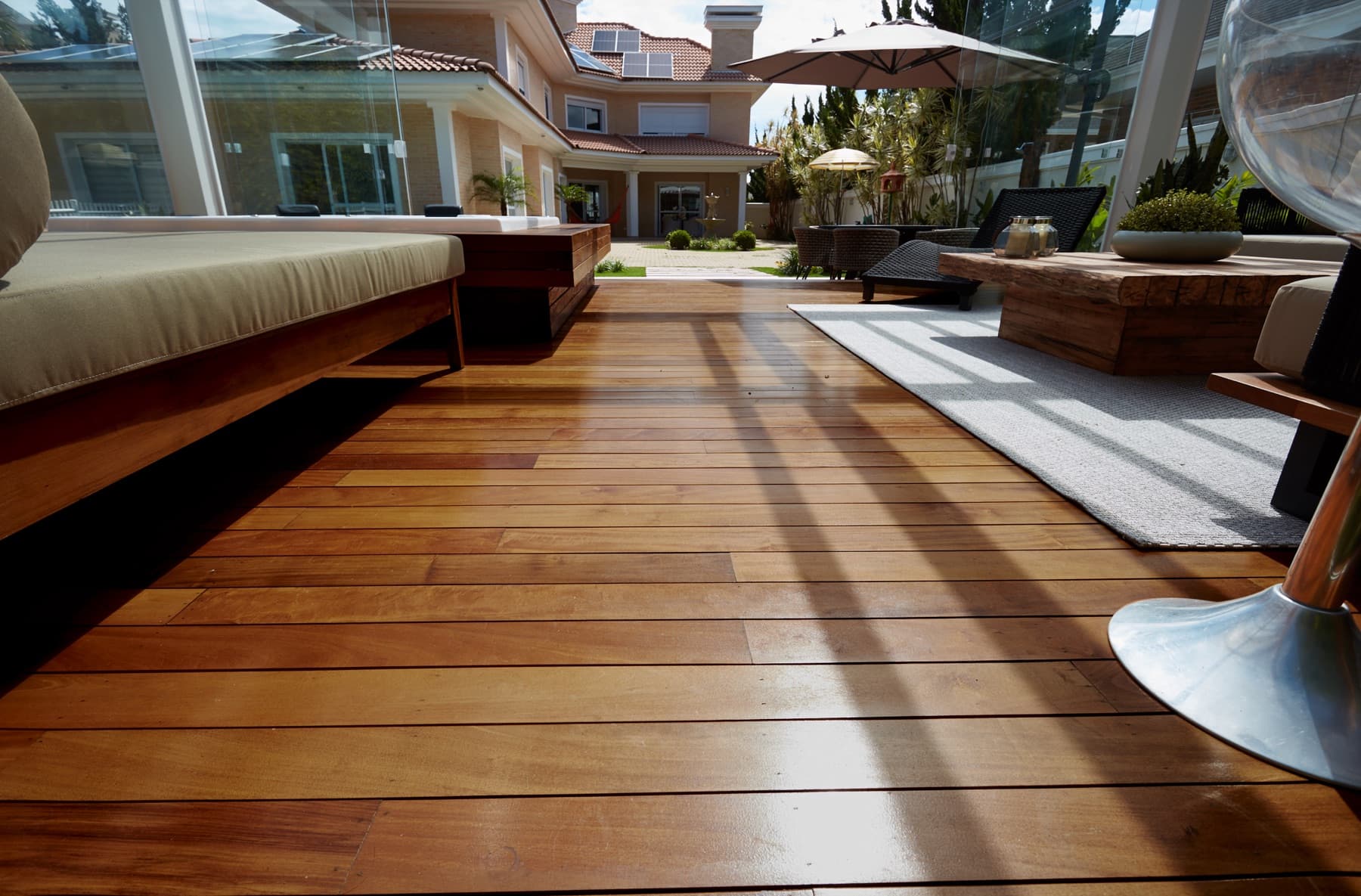
Assessing Your Existing Deck Frame for Hardwood Decking
Before selecting new hardwood decking, the first critical step in any renovation is a thorough inspection of your existing deck frame. Hardwood decking species like Ipe and Cumaru are notably dense and heavy compared to many other decking materials. This characteristic means your underlying structure must be robust enough to support the increased weight.
Check for any signs of rot, insect damage, or structural fatigue in joists, beams, and ledger boards. Any compromised elements must be repaired or replaced to ensure the safety and longevity of your new hardwood deck. Consulting with a local structural engineer or experienced contractor is recommended to confirm the frame's suitability for hardwood.
Choosing Hardwood Species for Coastal Durability
For coastal environments like Rehoboth Beach, where salt air, humidity, and sun exposure are significant factors, selecting a hardwood species with inherent resistance to these conditions is paramount. Two prominent choices for durability are Ipe and Cumaru.
Ipe, also known as Brazilian walnut, is a dense and durable hardwood. It is naturally resistant to rot, insects, and mold, making it a strong candidate for outdoor applications. Ipe is known for its minimal movement post-installation and its ability to resist warping even after moisture exposure. Its color ranges from reddish-brown to olive-brown.
Cumaru is another very durable tropical hardwood. It shares Ipe's resistance to termites and weather changes. Cumaru is also dense and offers stiffness and strength. Like Ipe, it carries a Class A fire resistance rating. Both Ipe and Cumaru are considered marine-grade standards, often used for docks and boardwalks, indicating their suitability for salt air and spray conditions. If left untreated, both species will weather to a silvery-gray patina; applying a UV-blocking sealer can help maintain their original color.
Understanding Hardwood Profiles and Lengths
Hardwood decking is available in various profiles and lengths, which can impact your renovation project's aesthetic and installation efficiency. Common profiles include standard rectangular boards. For Ipe, dimensions such as 1"x2" through 6"x6" are listed as available, with lengths ranging from 3 to 24 feet. Cumaru is similarly available in various lengths and profiles.
When planning your renovation, consider how board lengths will align with your deck's dimensions to minimize waste and visible seams. Longer boards can create a more seamless look on larger decks, while shorter lengths might be more practical for intricate designs or smaller areas. Confirming the exact profiles and lengths available for your chosen species is essential for accurate project planning and ordering.
Planning for Installation and Fastening Systems
Due to the density of hardwood species like Ipe and Cumaru, installation requires specialized tools and techniques. Pre-drilling is typically necessary for fasteners to prevent splitting. You'll need to decide between visible face-fastening or hidden fastening systems.
Hidden fasteners create a clean, uninterrupted surface, which can enhance the aesthetic of your hardwood deck. However, they may require specific board profiles or grooving. Face-fastening, while visible, can be a secure and straightforward method. Always follow the manufacturer's specific installation guidelines for board spacing and fastening, as these can vary by product and species. Proper ventilation beneath the deck is also crucial for the longevity of hardwood decking, particularly in humid coastal climates.
Worked Example: Replacing Decking on a 10x12 Foot Deck
Let's consider a hypothetical renovation project: replacing the decking on an existing 10-foot by 12-foot deck in Rehoboth Beach, DE.
We choose Ipe decking, in a 1x6-inch nominal profile (actual dimensions approximately 0.75 inches thick by 5.5 inches wide). The total deck area is 120 square feet. To calculate the number of boards needed, we first determine the linear feet. If we lay the boards along the 12-foot length, we'll need approximately 26 boards across the 10-foot width (10 feet * 12 inches/foot / 5.5 inches/board = 21.8 boards, rounded up to 22, plus extra for cuts and waste, so 26 boards for a safer estimate). Each board will be 12 feet long. So, 26 boards * 12 feet/board = 312 linear feet.
Considering potential cuts and waste, especially for a renovation where some existing features might require custom cuts, it's wise to add 10-15% for waste. For 312 linear feet, adding 15% waste brings the total to approximately 359 linear feet. When ordering, you would request this quantity, specifying the 1x6 Ipe profile and preferred lengths (e.g., primarily 12-foot boards, with a few shorter lengths for ends or specific cuts).
Before you order
- Inspect existing deck frame for rot, insect damage, and structural integrity.
- Consult a structural engineer or experienced contractor if unsure about frame's capacity.
- Select a hardwood species like Ipe or Cumaru for coastal durability and resistance.
- Decide on the desired aesthetic: natural weathering to gray or maintaining original color with a UV-blocker.
- Confirm available profiles and lengths for your chosen hardwood species.
- Plan your board layout to minimize waste and optimize appearance.
- Choose between face-fastening and hidden fastening systems, considering installation requirements.
- Account for specialized tools and techniques needed for dense hardwood installation.
- Ensure adequate under-deck ventilation is planned for the new hardwood surface.
Confirm installation details, approved uses and warranty terms in the current instructions for the exact product and profile. Your installer should verify the substrate, structure and applicable project requirements.
This is a planning guide for projects in Rehoboth Beach, DE. Ask our team to confirm availability, delivery to your ZIP code and which branch can support your order.
Questions to help you decide
How long can Ipe and Cumaru decking last in a coastal environment?
With proper care, Ipe decking can last up to 75 years, and Cumaru over 25 years. Their natural density and resistance to rot, insects, and weather changes make them highly durable for coastal conditions like those in Rehoboth Beach, DE. These species are considered marine-grade and stand up well to salt air and spray.
What kind of maintenance do hardwood decks require in Rehoboth Beach?
Hardwood decks like Ipe and Cumaru require minimal maintenance. A wash once a year is generally sufficient. If you prefer to maintain the wood's original reddish-brown to olive-brown color, an annual application of a UV-blocking oil or sealer is recommended. If left untreated, the wood will naturally weather to a silvery-gray patina, which does not affect its structural integrity.
Can I install hardwood decking over my existing frame myself?
While it is possible for experienced DIYers, installing dense hardwoods like Ipe and Cumaru requires specialized tools and techniques, including pre-drilling for fasteners. Professional installation is often recommended to ensure correct spacing, fastening, and overall longevity, especially considering the investment in these premium materials.
Ready to Transform Your Deck with Hardwood?
Request a material quote for your hardwood decking project. Provide your project dimensions, desired hardwood profile, and ZIP code to confirm current availability and service options for your Rehoboth Beach renovation.
Request a material quote →