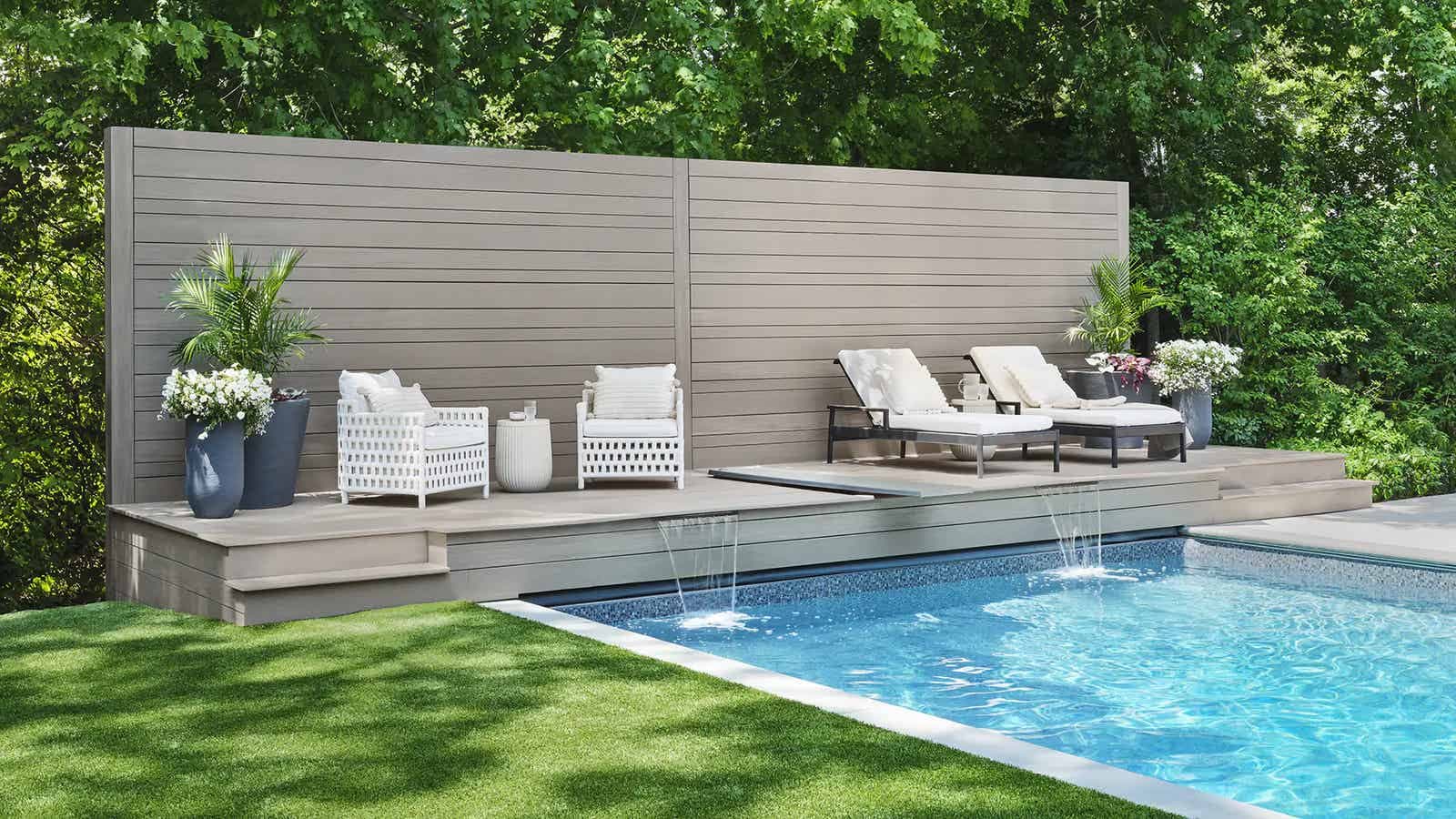
Why PVC Decking for Pool Terraces?
PVC decking is a 100% synthetic material, meaning it contains no wood fibers. This composition is a key advantage for areas exposed to frequent moisture, such as pool terraces. Unlike wood or composite materials that can absorb water, PVC is waterproof to the core, which helps prevent issues like swelling, staining, or rot from standing water or splash zones. This makes it a suitable choice where boards are consistently wet.
The synthetic nature of PVC also means it is resistant to salt spray, a consideration for certain pool types or if you are planning a deck in a coastal environment. This inherent resistance to moisture and its associated problems contributes to the material's durability and can reduce long-term maintenance needs for a pool surround. PVC decking is also lighter than many hardwood and composite options, which can simplify handling and installation.
Water Resistance and Durability in Wet Conditions
One of the primary benefits of PVC decking for a pool terrace is its complete water resistance. This material is designed to perform well in environments where it will be consistently exposed to water, making it a standard specification for pool decks and docks.
Because PVC boards are 100% synthetic and have no wood fiber, they do not swell, stain, or rot when exposed to standing water or splash zones. This characteristic is particularly important around pools where splashes, wet feet, and even occasional standing water are inevitable. The advanced capping on many PVC boards further enhances their ability to shed water and resist staining from common poolside spills like sunscreen or beverages.
Considering Slip Resistance and Surface Temperature
For any pool terrace, safety is a key concern, and slip resistance is an important factor. While PVC decking offers a textured surface, it is always important to consider how the specific product performs when wet. Different PVC lines may have varying surface textures, so examining samples and manufacturer specifications for wet slip resistance is recommended.
Another consideration for pool decks is surface temperature. Like all decking materials, PVC can absorb heat from the sun. Some PVC decking products offer 'heat-mitigating' color options, which are designed to feel cooler underfoot than darker alternatives. When planning your pool terrace, especially for areas with significant sun exposure, selecting lighter colors or those specifically designed for cooler temperatures can enhance comfort for bare feet.
Maintenance for a Poolside PVC Deck
Maintaining a PVC pool terrace is generally straightforward. The capped polymer surface of PVC decking is designed to shed common poolside elements like grease and wine, making cleanup relatively simple. Most spills can be wiped clean with soap and water.
Regular cleaning to remove dirt, leaves, and other debris will help keep the deck looking its best. It is important to follow the specific cleaning instructions provided by the manufacturer for your chosen PVC decking product to avoid damaging the surface or voiding any coverage. While PVC is resistant to many issues that affect wood, consistent maintenance helps preserve its appearance over time.
Planning Your Olympia Pool Terrace Project: A Hypothetical Example
Imagine you are planning a new pool terrace for a residential property in Olympia, WA. The area to be decked is a rectangular 20-foot by 15-foot space, plus a 4-foot by 8-foot section for a small lounge area. The total area is (20 ft * 15 ft) + (4 ft * 8 ft) = 300 sq ft + 32 sq ft = 332 sq ft. You have selected a PVC decking product available in 16-foot and 20-foot lengths, with a board width of 5.5 inches (0.458 feet).
For the main 20-foot by 15-foot section, running boards parallel to the 20-foot length means you'll need approximately 15 ft / 0.458 ft/board = 32.75 boards. Rounding up, you'll need 33 boards. Since the length is 20 feet, you can use 20-foot boards directly. For the 4-foot by 8-foot lounge area, if boards run parallel to the 8-foot length, you'll need 4 ft / 0.458 ft/board = 8.73 boards, so 9 boards. For length, you could use 16-foot boards and cut them to 8 feet, yielding two 8-foot pieces per board, meaning 5 purchased 16-foot boards would cover this section.
Total purchased boards: 33 x 20-foot boards and 5 x 16-foot boards. This is an illustrative example; actual quantities will depend on specific layout, waste factors, and any picture framing or diagonal patterns. Always add a percentage for cuts and potential future repairs. Consider [Fascia and Trim Boards](/decking/pvc) for finishing the edges around your pool, and consult the manufacturer's installation guide for proper spacing and fastening.
Before you order
- Confirm local building codes and permitting requirements for pool decking in Olympia, WA.
- Evaluate the specific PVC decking product's wet slip resistance ratings.
- Consider lighter, heat-mitigating color options for sun-exposed areas of the pool terrace.
- Plan for proper ventilation beneath the deck to prevent moisture buildup, even with waterproof materials.
- Review manufacturer guidelines for cleaning and maintenance, especially regarding chemical compatibility with pool water.
- Measure the exact dimensions of your pool terrace, accounting for any curves or irregular shapes.
- Budget for necessary accessories like fasteners, fascia boards, and trim.
- Obtain samples to assess the texture and color in your specific outdoor lighting conditions.
Confirm installation details, approved uses and warranty terms in the current instructions for the exact product and profile. Your installer should verify the substrate, structure and applicable project requirements.
This is a planning guide for projects in Olympia, WA. Ask our team to confirm availability, delivery to your ZIP code and which branch can support your order.
Questions to help you decide
Is PVC decking truly waterproof for a pool area?
Yes, PVC decking is 100% synthetic and waterproof to the core. This makes it highly resistant to water absorption, swelling, rotting, and staining, even in consistently wet environments like pool surrounds and splash zones. This is a primary advantage over wood or composite materials that contain wood fibers.
Will PVC decking get too hot around a pool?
Like all decking materials, PVC can absorb heat from direct sunlight. However, many PVC decking lines offer 'heat-mitigating' color options, which are designed to stay cooler underfoot than darker colors. When planning your pool terrace, selecting lighter shades or those specifically engineered for cooler temperatures can improve comfort, especially in areas with prolonged sun exposure.
How do I clean PVC decking around a pool?
PVC decking is generally easy to clean. Most spills, dirt, and grime can be removed with soap and water. For specific cleaning products or stubborn stains, always refer to the manufacturer's cleaning and maintenance instructions for your particular PVC decking product to ensure compatibility and avoid damage to the surface.
Ready to Plan Your PVC Pool Terrace?
Request a material quote with your project dimensions, exact profile preferences, and ZIP code to confirm current availability and service options for your Olympia, WA project. Explore our full range of [PVC Decking](/decking/pvc) and other [Decking materials](/decking) like [Hardwood Decking](/decking/hardwood) or [Composite Decking](/decking/composite) to find the perfect fit for your outdoor space.
Request a material quote →