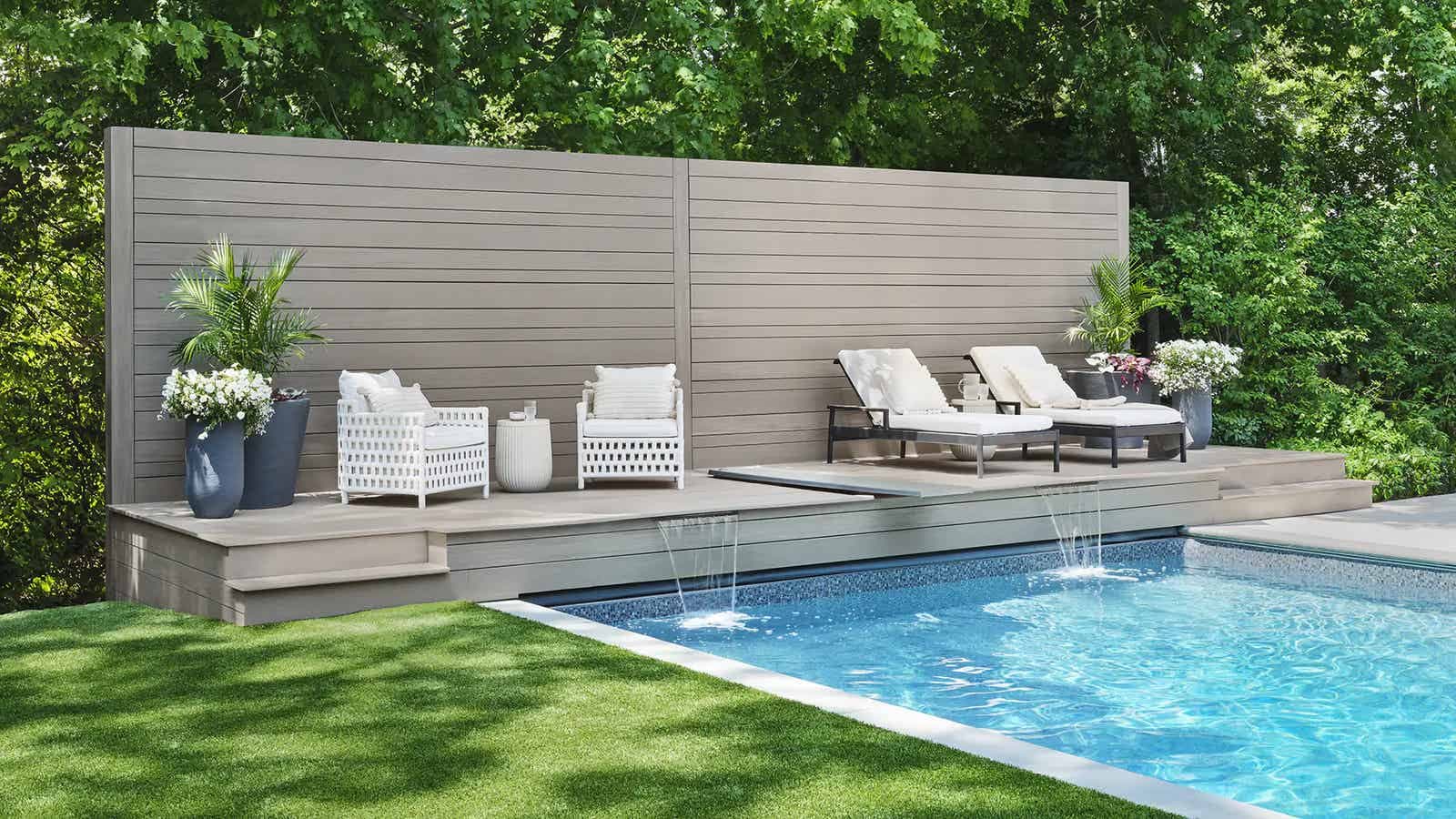
Why Choose PVC Decking for a Pool Terrace?
PVC (polyvinyl chloride) decking is a 100% synthetic material, meaning it contains no wood fibers. This composition makes it inherently resistant to moisture, a key advantage for pool surrounds and splash zones. Unlike wood or some composite materials, PVC boards do not absorb water, which helps prevent issues such as swelling, staining, or rot.
This water resistance makes PVC a practical choice for areas where boards are consistently wet, whether from pool splashes, rain, or humidity. The material is also designed to shed common spills like grease and wine, allowing for simpler cleanup with soap and water.
Specific PVC decking lines, such as TimberTech Azek, are engineered for demanding applications like pool decks and docks, offering advanced capping for enhanced durability and appearance. These products are often considered where boards will experience frequent standing water or salt spray exposure.
Understanding PVC Decking Profiles and Appearance
PVC decking is available in various collections and profiles, often designed to emulate the look of natural wood. The TimberTech Azek line, for example, includes Vintage, Landmark, and Harvest collections, which offer different aesthetic options with varying grain patterns and color palettes. These collections can provide deep wood looks without the maintenance requirements of natural timber.
The boards are typically full PVC with an advanced capping layer that provides the finished surface. This capping is crucial for stain and fade resistance, helping to maintain the deck's appearance over time. When selecting PVC decking, consider how the chosen color and texture will complement your pool area and overall landscape design.
Design Considerations for a Pool Terrace
When designing a PVC deck for a pool terrace, several factors unique to this application should be considered. The layout should facilitate safe movement around the pool, allowing for clear pathways and adequate space for lounge chairs or other amenities. Consider how the decking will integrate with the pool coping and any surrounding landscaping.
While PVC decking is designed for wet environments, proper drainage around the pool area remains important. Ensure that the deck design allows water to drain away from the house and other structures. The weight of PVC decking is generally lighter than hardwood or some composite options, which can be a benefit for installation, particularly on elevated or complex structures, though this is less common for ground-level pool surrounds.
For specific edge treatments and fascia, coordinate your order to ensure a cohesive look. PVC fascia boards are available to finish the perimeter of the deck, providing a clean, polished appearance that matches the decking surface.
Hypothetical Project Example: A 15x20 Foot Pool Terrace
Imagine planning a rectangular pool terrace in Concord, NH, measuring 15 feet by 20 feet. For this project, we'll use a PVC decking board with dimensions of 12 feet long by 5.5 inches wide, with a nominal coverage width of 5.5 inches per board.
First, calculate the total area: 15 feet * 20 feet = 300 square feet. To cover this area, we need to determine the number of boards. A single 12-foot board at 5.5 inches wide covers (12 feet * 12 inches/foot) * 5.5 inches = 792 square inches, or 5.5 square feet (12 * 5.5/12).
For a 20-foot length, you would need two 12-foot boards joined end-to-end (24 feet total length) or a combination of 12-foot and 8-foot boards if available. If we lay the boards parallel to the 20-foot dimension, each row would require two 12-foot boards with a 4-foot offcut from the second board, assuming no waste from cuts. For the 15-foot width, you'd need 15 feet * 12 inches/foot = 180 inches. Divided by 5.5 inches per board, this is approximately 32.73 boards. Rounding up, you would need 33 rows of boards.
This calculation is a material estimate and does not account for specific cutting patterns, diagonal layouts, or potential waste from miscuts or complex shapes around the pool itself. Always add an overage, typically 5-10%, for cuts and unforeseen needs.
Maintenance and Longevity for Poolside PVC Decking
One of the primary benefits of PVC decking for a pool terrace is its low-maintenance nature. The synthetic composition resists common issues found in wood decking. Regular cleaning with soap and water is typically sufficient to remove dirt, pool chemicals, and general debris. For specific cleaning product compatibility, it is always best to refer to the manufacturer's guidelines.
PVC decking is designed to offer lasting performance, with manufacturers often providing coverage for fade and stain resistance. This helps ensure the deck retains its aesthetic appeal even with continuous exposure to sun and pool water. The material is also 100% recyclable, which means that boards removed from a deck can be processed for reuse rather than ending up in a landfill.
Before you order
- Assess the specific exposure conditions: Is the pool terrace fully sun-exposed, partially shaded, or prone to significant standing water?
- Confirm desired aesthetic: Do you prefer a deep wood grain look or a more uniform, modern appearance?
- Consider color options: Are there heat-mitigating colors available that would be beneficial for a sun-exposed area?
- Verify compatibility with pool chemicals: While PVC is resistant, ensure any specific chemicals used in your pool will not adversely affect the decking.
- Plan for drainage: How will water from the pool and rain be managed on and around the deck surface?
- Determine edge and fascia needs: Will the deck require matching fascia boards or other trim elements?
- Calculate material quantities: Have you accounted for cuts, waste, and any specific board lengths required for your layout?
- Review manufacturer installation guidelines: Understand specific requirements for spacing, fastening, and substructure compatibility.
- Investigate cleaning recommendations: Are you familiar with the recommended cleaning products and methods for the chosen PVC decking?
Confirm installation details, approved uses and warranty terms in the current instructions for the exact product and profile. Your installer should verify the substrate, structure and applicable project requirements.
This is a planning guide for projects in Concord, NH. Ask our team to confirm availability, delivery to your ZIP code and which branch can support your order.
Questions to help you decide
Is PVC decking slippery when wet around a pool?
However, any wet surface can be slippery. It is always recommended to exercise caution on any wet deck surface around a pool. Some PVC decking lines may offer enhanced traction properties, so check product specifications.
Can PVC decking get hot in direct sunlight?
All decking materials, including PVC, can absorb heat from direct sunlight. The degree to which PVC decking heats up depends on factors like color, ambient temperature, and sun exposure. Some PVC decking manufacturers offer 'heat-mitigating' or lighter color options that are designed to remain cooler to the touch compared to darker colors. It's advisable to consider lighter shades for areas with intense, direct sun.
How do I clean pool chemical stains from PVC decking?
PVC decking is generally resistant to common pool chemicals. For routine cleaning, soap and water are often sufficient. For specific stains, including those from pool chemicals, it is crucial to consult the manufacturer's cleaning guide for the exact product you have chosen. Using incompatible cleaners could potentially damage the surface or void warranties.
Ready to Plan Your PVC Pool Terrace in Concord, NH?
Request a material quote with your project dimensions, desired PVC decking profile, and ZIP code. We can help confirm current availability and service options for your project.
Request a material quote →