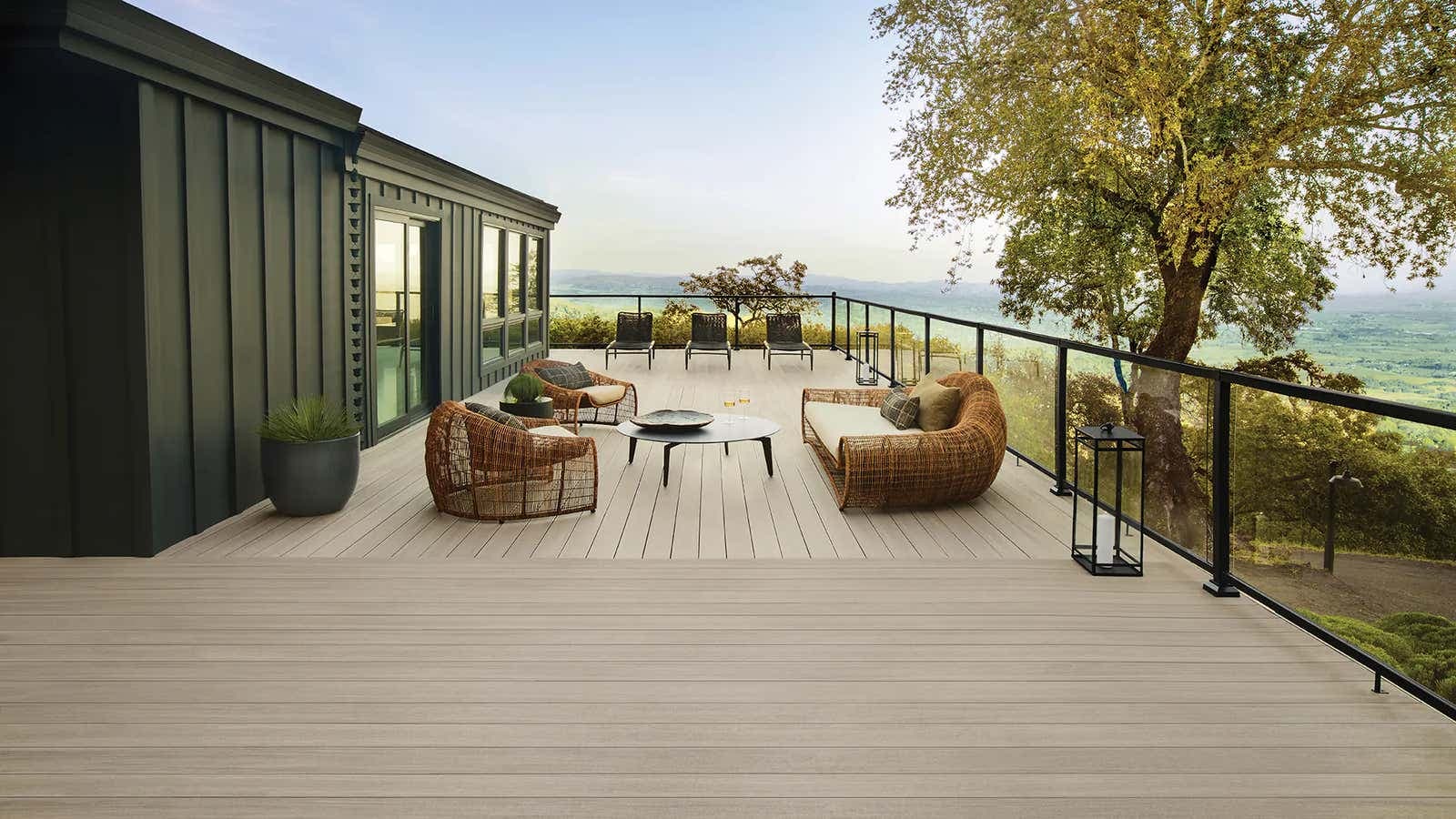
Understanding the Unique Challenges of Compact Decking
Compact outdoor spaces, whether a small patio, a balcony, or a narrow side yard deck, present distinct challenges. The goal is to create an area that feels open and welcoming, not cramped. This means carefully choosing materials and layouts that enhance the perceived size and utility of the space.
Consider factors such as pedestrian flow, placement of outdoor furniture, and integration with existing landscaping or structures. Every inch counts, so planning for efficient use of space is critical from the outset.
Choosing Board Profile and Width for Smaller Areas
The profile and width of your composite decking boards can significantly influence the perception of space. Wider boards might visually broaden a narrow deck, while narrower boards could create a sense of length in a short area. Many composite decking manufacturers, such as Trex, TimberTech, and Fiberon, offer various board widths and profiles.
Standard board widths are common, but some collections offer wider or narrower options. For a compact space, consider how the board width interacts with the overall dimensions. A uniform, consistent board width can contribute to a clean, uncluttered look, which is often desirable in smaller areas. The consistent color and grain of composite decking boards can also help maintain a cohesive visual.
For example, a 10-foot by 8-foot deck might benefit from standard-width boards laid perpendicular to the longest dimension to visually expand the space. If the space is very narrow, laying boards lengthwise could emphasize its depth. Always check the specific product documentation for available profiles and dimensions.
Color and Finish: Enhancing Light and Space
Color plays a crucial role in how large or small a space feels. Lighter composite decking colors tend to reflect more light, making a compact area appear more open and expansive. Darker colors, while elegant, can absorb light and potentially make a small space feel more enclosed.
Composite decking offers a consistent color and grain, which is advantageous for maintaining a uniform appearance. Many lines feature cooler-underfoot options and capped shells designed to resist humidity. These features, combined with lighter shades, can contribute to a comfortable and visually appealing outdoor space.
Consider the surrounding elements: the color of your home's siding, existing hardscaping, and natural light conditions. A lighter deck color can create a seamless transition from indoors to outdoors, especially if your interior flooring is also light-toned. This helps to blur the boundaries and make the entire area feel larger.
Layout and Installation: Maximizing Usable Area
Strategic layout and installation techniques can optimize a compact deck. Running boards diagonally can create an illusion of greater width and depth, adding visual interest without cluttering the space. This approach may require more cuts and potentially more material, but the visual impact can be significant.
Another consideration is minimizing visible fasteners. Hidden fastener systems are often compatible with composite decking and can contribute to a clean, uninterrupted surface, which is particularly beneficial in smaller areas where every detail is noticeable. This creates a smooth walking surface and an uncluttered appearance.
Ensure proper board spacing according to manufacturer guidelines to allow for drainage and thermal expansion. Even in compact spaces, adequate ventilation beneath the deck is important for the longevity of the structure and the decking material itself.
Worked Example: A 10' x 6' Deck in Concord
Let's consider a hypothetical 10-foot by 6-foot compact deck space in Concord, NH. The homeowner wants to create an inviting area for two chairs and a small table.
To maximize the feeling of space, they decide on a lighter-colored composite decking product with a standard 5.5-inch board width. Laying the boards perpendicular to the 10-foot length (running across the 6-foot width) will make the deck feel wider.
For a 10-foot length, this means 10 linear feet per board. For the 6-foot width, with 5.5-inch boards (0.458 feet), approximately 13 boards (6 feet / 0.458 feet per board) would be needed. To account for cuts and a potential picture-frame border, a few extra boards would be prudent. If using 12-foot length boards to minimize waste from the 10-foot runs, they would need 13 boards. The remaining 2 feet from each board could be used for shorter cuts or a border.
Using hidden fasteners would provide a clean, uncluttered surface, enhancing the modern aesthetic and making the small space feel more open. The consistent color of composite decking ensures a uniform look, preventing visual fragmentation that might make the space feel smaller.
Before you order
- Measure your compact space accurately, noting any obstructions or irregularities.
- Consider the primary use of the space (dining, lounging, pathway) to inform layout.
- Evaluate lighter composite decking colors to enhance perceived space and reflect light.
- Determine if standard, wider, or narrower board widths best complement your area's dimensions.
- Explore diagonal or perpendicular board layouts to create visual interest and expand the space.
- Plan for minimal visible fasteners to achieve a clean, uninterrupted surface.
- Confirm local building codes and ventilation requirements for your specific deck design.
- Request samples of chosen composite decking to visualize in your space's lighting.
Confirm installation details, approved uses and warranty terms in the current instructions for the exact product and profile. Your installer should verify the substrate, structure and applicable project requirements.
This is a planning guide for projects in Concord, NH. Ask our team to confirm availability, delivery to your ZIP code and which branch can support your order.
Questions to help you decide
Can composite decking be installed over an existing concrete patio in a compact space?
Installing composite decking over an existing concrete patio is possible, but it requires careful planning to ensure proper drainage and ventilation. A sleeper system or a pedestal system is typically needed to elevate the deck boards, allowing air circulation and preventing moisture buildup. Consult the specific manufacturer's installation guidelines for details on suitable substructures and clearances.
What maintenance is required for composite decking in a small area?
Composite decking is known for its low maintenance. Generally, an annual wash with soap and water is sufficient to keep it clean. Unlike wood, it does not require oiling, sanding, or staining. This ease of care is a significant advantage for compact spaces, where accessing all areas for intensive maintenance might be challenging. Always refer to the manufacturer's specific cleaning recommendations.
Are there specific composite decking products better suited for compact outdoor spaces?
While most composite decking lines from brands like Trex, TimberTech, and Fiberon can be adapted, those offering a consistent color and grain, along with a variety of board widths, can be particularly suitable. Lighter color options and capped shells that resist humidity are also beneficial for creating an open, comfortable feel. Review the collections for features like different board profiles and color palettes that align with your design goals for a smaller footprint.
Plan Your Compact Composite Decking Project
Ready to enhance your compact outdoor space in Concord, NH? Request a material quote today. Provide your project dimensions, desired composite decking profile, and ZIP code to get started. We can also confirm current availability and service options for your area.
Request a material quote →