Evaluating Your Existing Deck Frame
Before selecting new decking material, a thorough inspection of your existing deck frame is essential. Look for signs of rot, insect damage, or structural instability in joists, beams, posts, and ledger boards. Pay close attention to connections, fasteners, and areas where wood meets the ground or concrete. Even if the surface decking is deteriorated, the underlying structure might be in good condition, allowing for a surface-level renovation.
Consider the age of your deck. Older frames, especially those built with non-pressure-treated lumber, may have exceeded their useful life. Hardwood decking, while durable, is also dense and heavy. The existing frame must be robust enough to safely support the increased load. Consulting with a local builder or structural engineer can provide a professional assessment and ensure compliance with current building codes in Concord, NH.
Ensure proper spacing of joists. Most hardwood decking requires specific joist spacing to prevent deflection and ensure a stable surface. If your existing joists are spaced too far apart, additional blocking or sistering may be necessary, which adds to the project scope and cost.
Choosing Your Hardwood Species: Ipe vs. Cumaru
Lumber Plus offers a range of Brazilian hardwood decking species, with Ipe and Cumaru being popular choices known for their durability and aesthetic appeal.
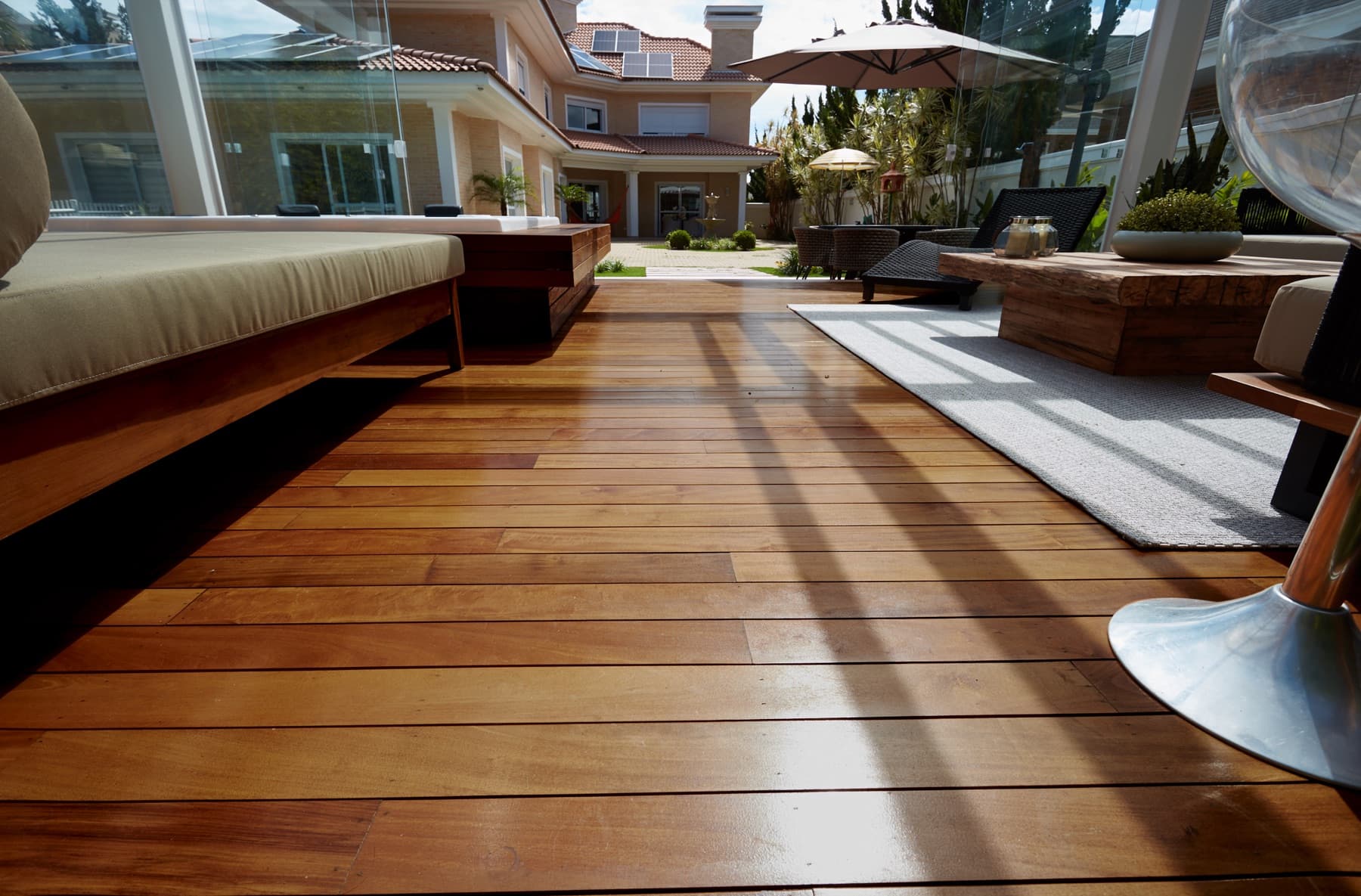
Ipe, also known as Brazilian walnut, is a benchmark hardwood. It is dense and resistant to rot, insects, and mold. Its color ranges from reddish-brown to olive-brown. Ipe is often selected for projects requiring exceptional longevity and resistance to weather changes. It can be a premium upfront investment but offers decades of service with minimal maintenance. Ipe carries a Class A fire rating, making it suitable for projects with strict code requirements.
Cumaru is another very durable tropical hardwood. It is resistant to termites and weather changes, offering stiffness, strength, and extreme hardness. Cumaru presents a warm, reddish-brown to golden-brown color, which can deepen with age. When worked, it can emit a scent of cinnamon and vanilla. Cumaru is a robust alternative to Ipe, providing similar performance characteristics at a different price point.
Both Ipe and Cumaru can be left untreated to weather to a silvery-gray patina, or they can be oiled annually to maintain their original rich color. The choice depends on your aesthetic preference and maintenance commitment.
For a renovation project, consider how the chosen hardwood's color and grain will complement your home's existing exterior and landscaping. Hardwood offers a natural, organic look that can enhance the curb appeal of any property in Concord.
Planning for Concord's Climate: Winter and Coastal Considerations
Concord, NH experiences distinct seasonal changes, including cold winters with snow and ice, and warm, humid summers. Hardwood decking is well-suited for these conditions due to its natural density and resistance to moisture. The inherent properties of species like Ipe and Cumaru help them resist warping and cracking even with significant temperature fluctuations and freeze-thaw cycles.
For areas with winter exposure, proper installation and ventilation are crucial to prevent moisture accumulation beneath the deck boards. Ensure adequate spacing between boards to allow for drainage and air circulation. While hardwood is naturally resistant, removing snow and ice promptly can help prevent prolonged moisture exposure and maintain the deck's appearance.
While Concord is inland, understanding the performance of hardwoods in demanding environments, such as coastal areas, can be reassuring. Ipe and Cumaru are considered marine-grade standards, used for docks and boardwalks due to their resilience against salt air and spray. This demonstrates their capacity to withstand harsh outdoor elements, making them a reliable choice for New Hampshire's varied weather.
It's important to note that while hardwood is resilient, any decking material benefits from regular cleaning to remove debris, which can trap moisture and promote mildew growth. This is particularly relevant after periods of heavy rain or snowmelt.
Determining Board Dimensions and Quantity
Hardwood decking is available in various profiles and lengths. Common profiles include standard decking boards, often with eased edges. When planning your renovation, measure your deck's dimensions carefully to minimize waste and optimize board layout.
Consider the desired aesthetic. Wider boards can create a more contemporary look, while narrower boards might offer a traditional feel. Mixed widths can also add visual interest. Longer board lengths can reduce the number of butt joints, creating a cleaner, more continuous surface.
For a hypothetical 12-foot by 16-foot deck renovation, requiring coverage for 192 square feet: if you select 1x6 (nominal) Ipe decking boards, which typically have an actual width of about 5.5 inches, you would need approximately 2.18 linear feet of board per square foot of deck. This calculation (12 inches / 5.5 inches = 2.18) helps estimate linear footage. For 192 square feet, you would need about 418.56 linear feet. However, due to cuts, waste, and optimizing for available lengths (e.g., 12-foot or 16-foot lengths), it's advisable to add 10-15% for waste and future repairs. This example assumes a straight layout; complex patterns like diagonal layouts or picture-frame borders will require more material and careful planning.
Always confirm current profile and length availability with your supplier, as stock can vary. Custom milling options may also be available for specific project needs.
Installation Considerations and Fastening Methods
Due to the density of hardwoods like Ipe and Cumaru, specialized tools and techniques are often recommended for installation. Pre-drilling is typically necessary for fasteners to prevent splitting. Professional installation is often recommended to ensure proper technique and a high-quality finish.
There are two primary fastening methods for hardwood decking: face fastening and hidden fastening. Face fastening involves screwing or nailing directly through the face of the board into the joists. This method is secure but leaves visible fasteners.
Hidden fastening systems use clips or fasteners that attach to the sides or underside of the boards, creating a smooth, unblemished surface. While offering a cleaner aesthetic, hidden fastening systems often require specific board profiles and may impact the overall cost and installation time. Discuss both options with your installer to determine the best method for your project and budget.
Proper ventilation beneath the deck is critical for the longevity of hardwood decking. Ensure there is adequate airflow to prevent moisture buildup, especially in a climate like Concord's where humidity and precipitation vary significantly throughout the year. This helps prevent cupping, warping, and the growth of mold or mildew.
Before you order
- Assess the structural integrity of your existing deck frame (joists, beams, posts, ledger board).
- Verify joist spacing is suitable for hardwood decking or plan for reinforcement.
- Decide between Ipe and Cumaru based on color preference, durability requirements, and budget.
- Measure your deck area accurately and estimate linear footage, adding 10-15% for waste.
- Determine preferred board width and length to optimize layout and minimize seams.
- Choose between visible face fastening or concealed hidden fastening systems.
- Plan for adequate under-deck ventilation to manage moisture.
- Consider professional installation due to the density of hardwood.
- Factor in ongoing maintenance preferences (oiling for color retention vs. natural silvering).
Confirm installation details, approved uses and warranty terms in the current instructions for the exact product and profile. Your installer should verify the substrate, structure and applicable project requirements.
This is a planning guide for projects in Concord, NH. Ask our team to confirm availability, delivery to your ZIP code and which branch can support your order.
Questions to help you decide
How long does hardwood decking typically last in Concord, NH?
With proper care and installation, Ipe decking can last up to 75 years, and Cumaru for over 25 years. Their natural resistance to rot, insects, and weather changes makes them well-suited for the climate variations in Concord, NH.
Does hardwood decking require special maintenance for winter in New Hampshire?
Hardwood decking is highly weather resistant. Regular cleaning to remove debris and prompt removal of heavy snow can help. If you prefer to maintain the original color, apply a UV-blocking sealer annually. Otherwise, it will naturally weather to a silvery-gray patina with no structural difference.
Can I install hardwood decking myself for a renovation project?
While it is possible, installing dense hardwoods like Ipe and Cumaru requires specialized tools and techniques, including pre-drilling. Professional installation is generally recommended to ensure proper adherence to guidelines and a lasting result.
Ready to Renovate Your Concord Deck with Hardwood?
Request a material quote today. Provide your project dimensions, desired hardwood profile, and ZIP code to confirm current availability and service options for your Concord, NH renovation.
Request a material quote →