Understanding Live Edge Slab Moisture Content
Live edge slabs, particularly those intended for furniture or interior applications, are typically kiln-dried to a specific moisture content (MC). This process stabilizes the wood, reducing the likelihood of significant movement or cracking after fabrication. However, wood is hygroscopic, meaning it will absorb or release moisture to equilibrate with its surrounding environment.
When your slab arrives, it's important to understand its current moisture content and the target moisture content for your project's final environment. Significant differences between the slab's MC and the storage environment's equilibrium moisture content (EMC) can lead to problems. Always confirm the moisture information provided with your specific slab.
For interior projects, a general target MC for storage and fabrication is often between 6% and 8%, depending on local climate and intended use. Fluctuations outside this range can cause the wood to expand or contract, potentially leading to stress and damage.
Selecting the Right Storage Location
The ideal storage location for a live edge slab is a stable, climate-controlled environment that mimics the conditions of its final installation. This typically means an indoor space, such as a heated and air-conditioned workshop or a dedicated storage room, rather than a garage, basement, or outdoor shed.
Avoid areas with direct sunlight, drafts, or extreme temperature swings. For instance, storing a slab near a window where it receives direct sun for part of the day can cause uneven drying and warping. Similarly, placing it directly in front of a heating vent or air conditioner can lead to rapid moisture loss or gain in localized areas.
Ensure the chosen location is clean and free from pests. Dust and debris can settle into the wood grain, while insects could potentially damage the slab. A stable environment is key to minimizing stress on the wood as it acclimatizes.
Proper Stacking and Support
How you stack your slab is as important as where you store it. Always store slabs flat and fully supported to prevent bowing, twisting, or cupping. Never lean a slab against a wall for an extended period, as gravity can cause it to warp.
Use uniformly sized and spaced stickers (small, dry wood strips) to create air circulation channels above and below the slab. The stickers should be placed directly in line with each other from top to bottom if stacking multiple slabs. This prevents pressure points and allows air to circulate evenly around all surfaces.
For a single slab, place it on a flat, stable surface (like a workbench or sturdy sawhorses) with stickers underneath, ensuring the stickers support the entire length and width of the slab at regular intervals, typically every 12-18 inches. If stacking multiple slabs, ensure adequate support for the bottom slab and consistent sticker placement for each subsequent slab.
Consider covering the slab loosely with a breathable material, such as a canvas tarp or sheet, to protect it from dust while still allowing air exchange. Avoid plastic sheeting, which can trap moisture and promote mold or mildew growth.
Monitoring Environmental Conditions
Regularly monitor the temperature and humidity of your storage area. A hygrometer and thermometer can help you track these conditions. Aim for stable conditions, typically a temperature range of 60-75°F (15-24°C) and relative humidity (RH) between 35% and 55%.
Significant fluctuations in temperature or humidity will cause the wood to constantly expand and contract, leading to internal stress. If your storage environment experiences seasonal changes, consider using a dehumidifier in humid months or a humidifier in dry months to maintain stable RH levels.
Periodically inspect your slab for any signs of movement, such as new checks, cracks, or warping. Early detection allows for adjustments to storage conditions before issues become severe. Small checks are often part of the natural character of live edge slabs, but sudden or significant new cracks can indicate stress from environmental changes.
Worked Example: Storing a Cumaru Live Edge Slab
Imagine you've acquired a Cumaru live edge slab, measuring 10 feet long, with an average width of 30 inches and a thickness of 2 inches, for a future dining table project.
Upon delivery, you would transport the slab flat on a trailer or truck bed, fully supported, to your climate-controlled shop. Inside the shop, you'd prepare a sturdy set of sawhorses or a workbench. You would then place 1-inch thick, dry wood stickers every 18 inches along the length of the slab, ensuring they are perfectly level and aligned.
For this 10-foot slab (120 inches), you would need 7 stickers (120 inches / 18 inches = 6.67, rounded up to 7 for consistent support, including ends). These stickers would be placed at 0, 18, 36, 54, 72, 90, and 108 inches from one end. The slab is then carefully laid on top, ensuring full contact with all stickers.
You would then monitor the shop's temperature and humidity daily for the first week, and then weekly. If the humidity consistently drops below 35% during winter, a small room humidifier might be used. Conversely, if summer humidity rises above 55%, a dehumidifier would be considered. This consistent environment helps the Cumaru slab remain stable until it's ready for milling and finishing.
This methodical approach minimizes the risk of issues like warping or cracking, preserving the slab's integrity for your dining table project.
Before you order
- Confirm the slab's current moisture content upon arrival.
- Identify the target moisture content for your project's final environment.
- Select a climate-controlled indoor storage location, free from direct sunlight and drafts.
- Prepare a flat, stable support surface for the slab.
- Acquire uniformly sized, dry wood stickers for proper air circulation.
- Carefully place stickers in a perfectly aligned manner under the slab.
- Position the slab flat on the stickers, ensuring full and even support.
- Consider loosely covering the slab with a breathable material to protect against dust.
- Obtain a hygrometer and thermometer to monitor storage area conditions.
- Establish target temperature (60-75°F) and relative humidity (35-55%) for the storage space.
- Implement measures (humidifier/dehumidifier) to maintain stable conditions if needed.
- Schedule regular inspections of the slab for any signs of movement or damage.
- Plan for safe and supported transport of the slab to the fabrication area when ready.
Confirm installation details, approved uses and warranty terms in the current instructions for the exact product and profile. Your installer should verify the substrate, structure and applicable project requirements.
Questions to help you decide
How long can I store a live edge slab before fabrication?
With proper storage conditions, a live edge slab can be stored indefinitely. The key is maintaining a stable, climate-controlled environment that matches the slab's equilibrium moisture content (EMC). Short-term storage (a few weeks) in less ideal conditions might be acceptable if the environment is relatively stable, but for longer periods, consistent environmental control is crucial to prevent warping or cracking.
Can I store a live edge slab in my garage or basement?
Generally, it is not recommended to store live edge slabs in an uncontrolled garage or basement. These spaces often experience significant fluctuations in temperature and humidity, which can lead to wood movement, warping, or cracking. If these areas are climate-controlled and consistently maintain the recommended temperature and humidity levels (e.g., 60-75°F and 35-55% RH), they might be suitable, but verification with a hygrometer is essential.
What are 'stickers' and why are they important for slab storage?
Stickers are small, dry strips of wood, typically 3/4 to 1 inch thick, used to separate layers of lumber or a single slab from its support surface. They are crucial because they allow air to circulate evenly around all surfaces of the wood. This even air circulation prevents moisture from getting trapped in certain areas, which can lead to uneven drying, mold growth, or warping. Stickers also ensure that the slab is consistently supported, preventing sagging or bowing.
Ready to Plan Your Live Edge Project?
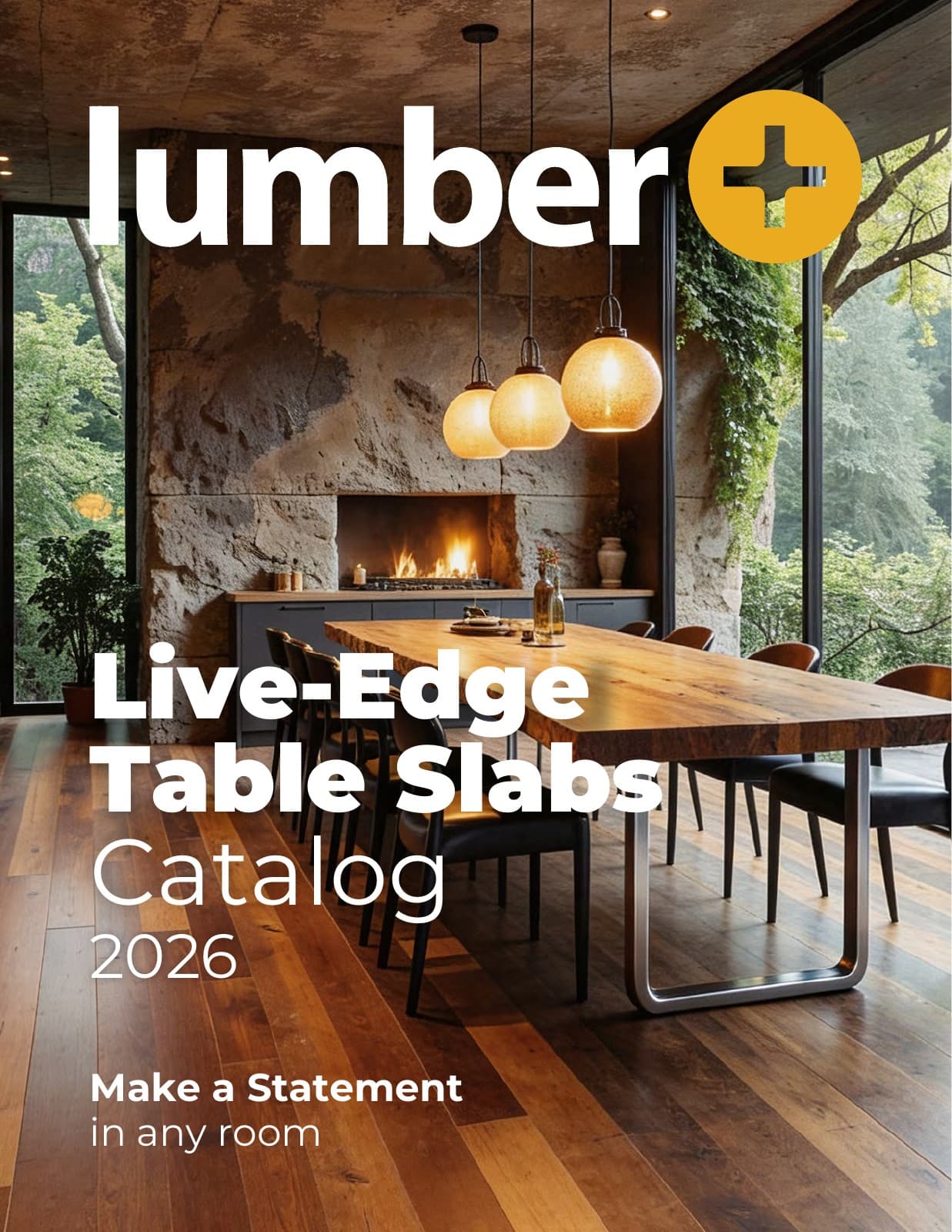
Request a material quote with your project dimensions, desired slab profile, and ZIP code. Confirm current availability and service options for live edge slabs at Lumber Plus. You can also request the current Lumber Plus live-edge slab catalog to see available species and dimensions.
Request a material quote →