Understanding Live Edge Slab Material Costs
The primary cost in any live edge project is the slab itself. Prices vary significantly based on several factors: the wood species, its dimensions (length, width, and thickness), the quality of the live edge, and any unique characteristics such as figuring or minimal natural defects. Exotic hardwoods or very large, thick slabs will naturally command a higher price. It's important to obtain current pricing for specific slabs you are considering, as inventory and pricing can fluctuate.
When reviewing potential slabs, pay close attention to the listed minimum and maximum widths, rather than relying on a general average for a species. Also, inquire about the slab's current condition, including any checks, voids, or its moisture content, as these factors can influence the amount of preparation work required and thus the overall project cost. Always confirm the species and its expected color or grain behavior to ensure it aligns with your aesthetic goals. (S1)
Essential Accessories and Supplies
Beyond the slab, numerous accessories and supplies contribute to the total project cost. These can include items for preparation, finishing, and assembly:
For preparation, you might need sandpaper of various grits, wood filler for small imperfections, or epoxy resin for filling larger voids or cracks. If the slab requires significant flattening or sanding, specialized tools or professional services might be necessary.
Finishing materials are another significant category. This includes stains, sealers, oils, or polyurethane finishes. The choice of finish impacts both the final appearance and the durability of your project, with some high-performance finishes having a higher upfront cost. Consider the application method as well; brushes, rollers, or spray equipment may be needed.
For assembly, especially for tables or desks, you will need a suitable base. This could be metal legs, a wooden frame, or a custom-fabricated support structure. The cost of the base can sometimes rival or exceed the cost of the slab itself, depending on material and design complexity. Fasteners, such as threaded inserts or specialized table top fasteners, are also required to attach the slab securely to its base while allowing for natural wood movement.
Labor Costs: DIY vs. Professional Fabrication
Deciding whether to tackle the project yourself or hire professionals is a major budget consideration. DIY can save on labor, but requires time, tools, and expertise. If you lack experience with woodworking, particularly with large slabs, the learning curve can be steep, potentially leading to mistakes that increase material costs.
Professional fabrication includes services like flattening, sanding, finishing, and base construction/attachment. A skilled woodworker or fabricator can ensure a high-quality outcome, but their services will be a significant part of your budget. Obtain detailed quotes from multiple professionals, outlining the scope of work, materials included, and estimated timelines. Be specific about your desired finish and any unique design elements.
Even if you plan a DIY approach, consider professional assistance for specific tasks like initial flattening or complex joinery, which might require specialized equipment you don't own.
Worked Example: Budgeting for a Live Edge Dining Table
Let's outline a hypothetical budget for a 7-foot long, 36-inch average width, 2-inch thick live edge dining table made from a Walnut slab. This example assumes some DIY work for finishing, but professional flattening and base attachment.
Build this part of the estimate from the current supplier quote. Record the exact product, quoted unit, quantity, compatible accessories and delivery costs separately so assumptions do not become advertised prices.
Build this part of the estimate from the current supplier quote. Record the exact product, quoted unit, quantity, compatible accessories and delivery costs separately so assumptions do not become advertised prices.
Build this part of the estimate from the current supplier quote. Record the exact product, quoted unit, quantity, compatible accessories and delivery costs separately so assumptions do not become advertised prices.
Build this part of the estimate from the current supplier quote. Record the exact product, quoted unit, quantity, compatible accessories and delivery costs separately so assumptions do not become advertised prices.
Build this part of the estimate from the current supplier quote. Record the exact product, quoted unit, quantity, compatible accessories and delivery costs separately so assumptions do not become advertised prices.
Build this part of the estimate from the current supplier quote. Record the exact product, quoted unit, quantity, compatible accessories and delivery costs separately so assumptions do not become advertised prices.
Build this part of the estimate from the current supplier quote. Record the exact product, quoted unit, quantity, compatible accessories and delivery costs separately so assumptions do not become advertised prices.
Build this part of the estimate from the current supplier quote. Record the exact product, quoted unit, quantity, compatible accessories and delivery costs separately so assumptions do not become advertised prices.
Build this part of the estimate from the current supplier quote. Record the exact product, quoted unit, quantity, compatible accessories and delivery costs separately so assumptions do not become advertised prices.
Considering Delivery, Storage, and Site Access
Don't overlook the logistics. Large live edge slabs are heavy and bulky. Factor in the cost of delivery from the supplier to your workshop or home, especially if you don't have suitable transportation. Some suppliers offer delivery services, while others may require you to arrange pickup.
Once delivered, the slab needs proper storage. It should be kept flat, supported, and in a climate-controlled environment to prevent warping or cracking before fabrication. If you don't have adequate space, temporary storage solutions or professional storage services might be needed.
Also, consider access to your project site. Can a large slab be easily moved into your home or workshop? Are there tight corners, stairs, or narrow doorways that might require additional hands or specialized equipment for maneuvering? These factors can add to labor or rental costs.
The Importance of Contingency
Even with careful planning, unexpected issues can arise. A slab might have an unseen void that requires more epoxy, you might decide to upgrade your finish, or a tool might break. Allocating a contingency budget, typically 10-15% of your total estimated costs, provides a buffer for these unforeseen expenses.
This contingency prevents you from having to compromise on materials or quality mid-project due to budget overruns. It's a critical component of any realistic project budget.
Before you order
- Have I obtained current pricing for the specific live edge slab(s) I am considering?
- Have I accounted for all necessary preparation materials (sandpaper, wood filler, epoxy)?
- Have I selected a finish and budgeted for all required finishing products (stains, sealers, oils, applicators)?
- Is the cost of the table base or support structure included in my budget?
- Have I factored in assembly hardware (fasteners, inserts)?
- Have I decided between DIY and professional labor for each stage (flattening, sanding, finishing, assembly)?
- If hiring professionals, have I obtained detailed quotes for their services?
- Have I considered delivery costs for the slab and other large components?
- Do I have a suitable storage plan for the slab before fabrication?
- Have I included a contingency fund (10-15%) for unexpected expenses?
- Have I reviewed the slab's current photos, checks, voids, and moisture information before reservation? (S1)
Confirm installation details, approved uses and warranty terms in the current instructions for the exact product and profile. Your installer should verify the substrate, structure and applicable project requirements.
Questions to help you decide
What factors most influence the cost of a live edge slab?
The primary factors influencing slab cost are the wood species (e.g., exotic vs. domestic), its dimensions (length, width, thickness), the quality and character of the live edge, and any unique features like highly figured grain or minimal natural defects. Larger, rarer, or more aesthetically perfect slabs generally cost more. (S1)
Should I budget for professional flattening of my live edge slab?
Most live edge slabs, especially those intended for tabletops, will benefit from professional flattening to ensure a perfectly level and stable surface. While it's possible for experienced DIYers with specialized equipment, budgeting for professional flattening can save time, prevent errors, and ensure a high-quality result, especially for larger slabs. It's a significant step that impacts the overall finish and stability of your project.
Why is a contingency budget important for a live edge project?
A contingency budget, typically 10-15% of your total estimated costs, is crucial because unexpected issues can arise in any woodworking project. This could include needing more finishing material, discovering a hidden void in the slab that requires more epoxy, or even minor tool breakages. It provides a financial buffer to address these unforeseen circumstances without derailing your project or forcing compromises on quality.
Request a Material Quote for Your Live Edge Slab Project
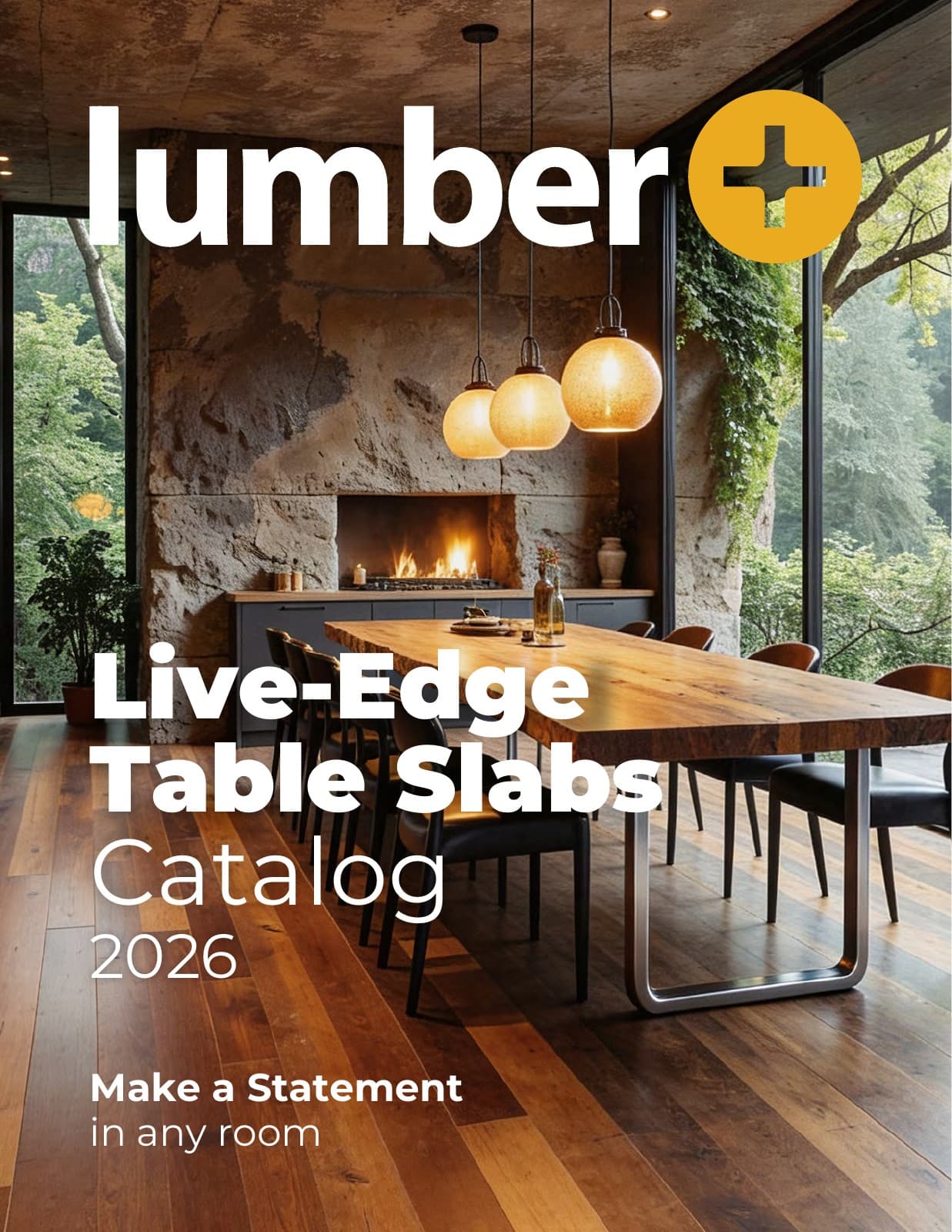
Ready to bring your live edge vision to life? Request the current Lumber Plus live-edge slab catalog and speak with our team about available species, dimensions, and individual slab details. Provide your project dimensions, desired profile, and ZIP code to get started. Confirm current availability and service options directly with our team.
Request a material quote →