Understanding the Existing Structure and Support
Before considering any live edge slab, evaluate the existing structural support. A live edge slab, especially a large, thick piece of solid hardwood, can be significantly heavier than typical engineered wood or laminate alternatives. For a countertop, bar top, or desk, assess the strength of the cabinet bases, wall studs, or existing table frame. If the renovation involves removing an old surface, examine the underlying structure for any signs of wear, damage, or insufficient capacity.
For a new installation on an existing floor or wall, confirm that the foundation or framing can bear the additional weight. This is particularly crucial for larger applications like conference tables or substantial islands. Consulting with a structural engineer or experienced contractor can provide peace of mind and prevent future issues related to overloading.
Assessing Space and Dimensions
Live edge slabs are unique, often featuring irregular widths and lengths. Measure your available space precisely, considering not just the desired footprint but also clearance for movement, seating, and adjacent elements. A slab's listed dimensions, particularly its minimum and maximum width, are critical. Do not rely on average dimensions.
Consider how the organic shape of the live edge will interact with walls, appliances, or other furniture. A slab that appears perfect in isolation might feel cramped or disproportionate in a confined renovation space. Think about access for installation as well; a large slab needs a clear path from delivery to its final position.
Integrating with Existing Design and Aesthetics
A live edge slab introduces a strong natural element. Consider how its specific wood species, grain pattern, and color will complement or contrast with existing finishes, flooring, cabinetry, and wall colors. For example, a deeply colored Cumaru slab might offer a striking contrast in a light, modern kitchen, while a lighter species could blend more seamlessly into a rustic or Scandinavian-inspired space.
Review current photos of available slabs to understand their unique characteristics, including checks and voids. These natural features contribute to the slab's character but should align with your overall design vision for the renovated space. The goal is a cohesive look, not just a standalone showpiece.
Moisture and Environmental Considerations
Wood is a hygroscopic material, meaning it absorbs and releases moisture, which can lead to movement. In a renovation, the existing environment—temperature, humidity levels, and proximity to heat sources or moisture—can impact a live edge slab. Ensure the slab's moisture content is appropriate for the intended indoor environment to minimize the risk of significant warping or cracking after installation. Discuss the moisture information of specific slabs with your supplier.
If the renovation involves a bathroom, kitchen, or other area with fluctuating humidity, consider the implications for long-term stability and choose appropriate finishes to protect the wood.
Hypothetical Renovation Example: Kitchen Island Countertop
A homeowner is renovating a kitchen and wants to replace an old laminate island countertop with a live edge slab. The existing island base is 60 inches long and 30 inches deep, constructed from standard cabinetry. The kitchen features light grey cabinets and white subway tile.
First, the homeowner must confirm the existing cabinet base can support the weight of a solid hardwood slab. A 6-foot by 3-foot by 2-inch thick hardwood slab can weigh over 150 pounds. If the existing base is not sturdy, reinforcements or a new base might be necessary. Second, they measure the available space around the island, ensuring the irregular live edge won't impede traffic flow or access to appliances. They decide on a slab with a minimum width of 30 inches and a maximum of 36 inches to allow for a slight overhang. Third, they review photos of available Cumaru slabs, noting the rich reddish-brown tones would provide a warm contrast to their cool-toned kitchen, and they prefer a slab with minimal large voids. Finally, they confirm the slab's moisture content is stable for an indoor kitchen environment. Based on this assessment, they reserve a specific Cumaru slab that meets their criteria.
Before you order
- Have I assessed the existing structural support for the slab's weight?
- Are the dimensions of my renovation space suitable for the slab's unique shape and size?
- Does the slab's appearance (species, grain, color, natural features) complement the existing design?
- Have I considered the environmental conditions (moisture, temperature) of the renovation area?
- Is there clear access for delivery and installation of the chosen slab?
- Have I reviewed current photos and specific details (checks, voids, moisture) of the actual slab?
- Have I confirmed the listed minimum and maximum width, not just an average?
- Have I reserved the specific slab with the branch before finalizing renovation plans?
Confirm installation details, approved uses and warranty terms in the current instructions for the exact product and profile. Your installer should verify the substrate, structure and applicable project requirements.
Questions to help you decide
How do I know if my existing cabinets can support a live edge slab?
For kitchen islands or countertops, assess the construction of your existing cabinet bases. Standard cabinetry is often built to support a range of countertop materials. However, a thick, solid hardwood live edge slab can be substantially heavier than laminate or even some stone. If you have concerns, it is advisable to consult a qualified contractor or structural engineer to evaluate the load-bearing capacity of your specific cabinetry and make any necessary reinforcements.
What if the live edge slab I want doesn't fit my exact dimensions?
Live edge slabs are unique, and their dimensions, particularly width, can be irregular. It's important to work with the listed minimum and maximum widths. If a slab is slightly too long, it can often be trimmed. If it's too wide for a section, you may need to adjust your design or consider a different slab. For a precise fit, it's crucial to measure your space carefully and compare it against the specific slab's dimensions and its unique shape. Always confirm the specific slab's details before making a final decision.
How do I ensure the slab's appearance matches my renovation's aesthetic?
The best approach is to review current photos of the actual live edge slabs available. This allows you to see the unique grain patterns, color variations, and natural features like checks and voids. Consider bringing material samples from your renovation (e.g., cabinet door samples, paint swatches) to compare with the slab photos or, if possible, the slab itself. This helps ensure the slab's character complements your existing design elements rather than clashing with them.
Request a Live Edge Slab Quote
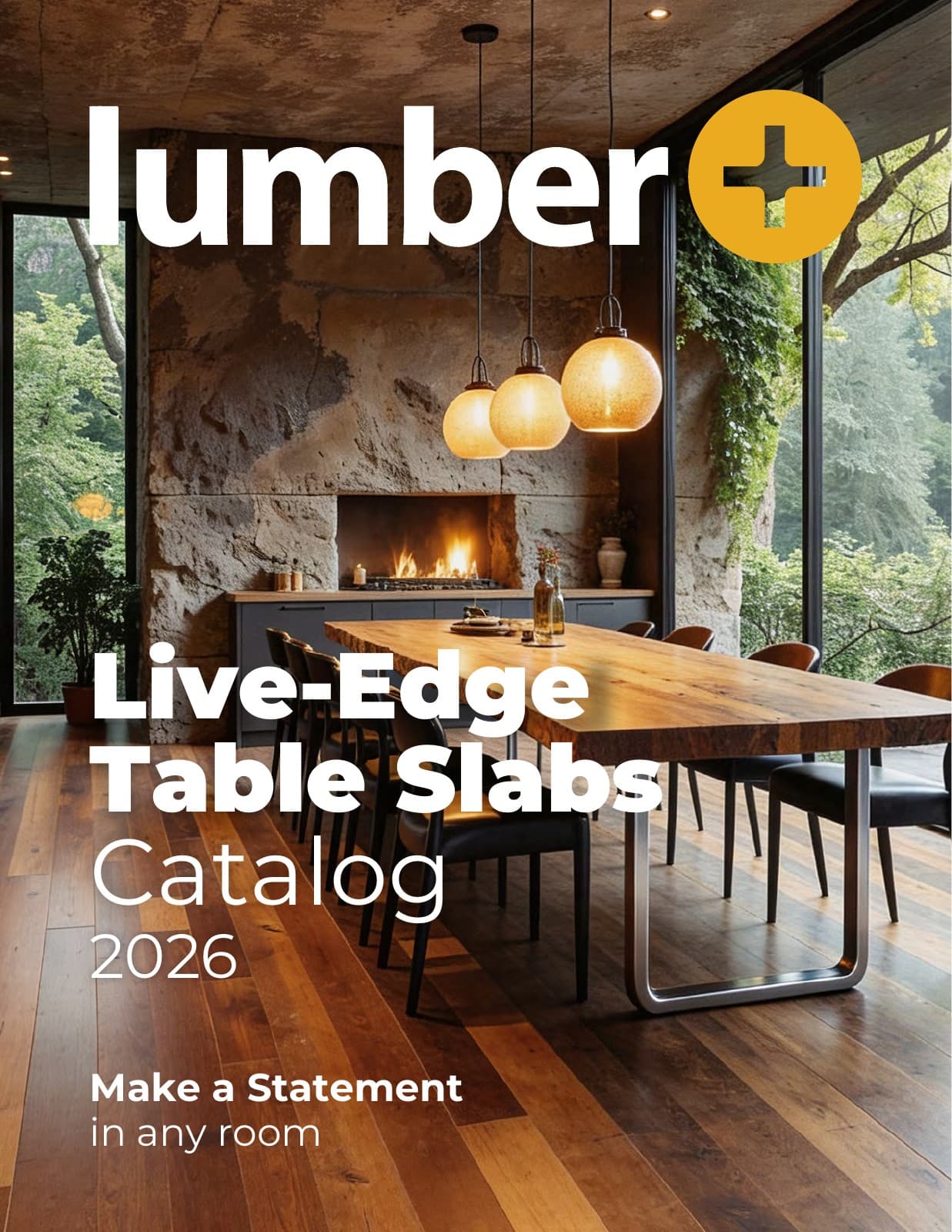
Ready to integrate a live edge slab into your renovation? Request a material quote with your project dimensions, desired profile, and ZIP code. Confirm current availability and service options by contacting a local branch. You can also request the current Lumber Plus live-edge slab catalog to explore available species and dimensions.
Request a material quote →