The Unique Nature of Live Edge Slab Specifications
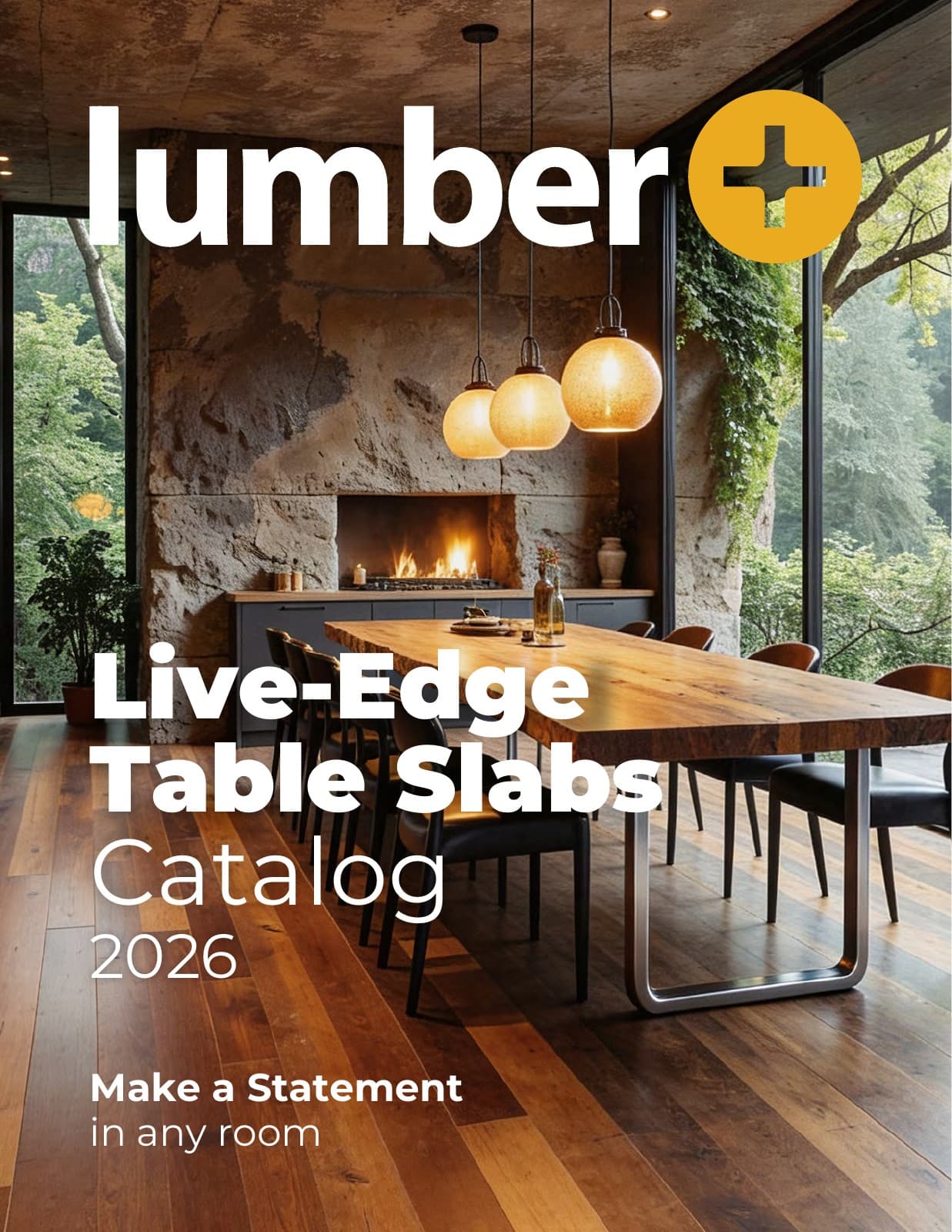
Live edge slabs retain the natural edge of the tree, giving each piece a distinct, organic shape. This individuality is what makes them highly sought after for furniture, countertops, and other design elements. However, it also means that their dimensions are not uniform across the entire length or width.
When reviewing specifications, you'll encounter ranges for width and often detailed notes on the slab's unique features. It's important to approach these specifications with the understanding that you are selecting a specific, individual piece of wood, not a mass-produced item. This requires a different approach to planning and measurement than with standard milled lumber.
The Lumber Plus live-edge slab catalog provides a general overview, but for precise details, you will need to review current photos and specific measurements for the slab you are considering. Inventory changes frequently, so direct confirmation is always recommended.
Key Dimensions: Length, Width, and Thickness
The primary dimensions for any live edge slab are its length, width, and thickness. While length and thickness are typically more consistent, width can vary significantly along the slab's profile due to the natural tree shape.
Always use the listed minimum and maximum width measurements provided for a specific slab, rather than relying on an average. For example, a slab might be listed as 96 inches long, 2.5 inches thick, with a width ranging from 28 inches to 34 inches. This means your project must accommodate the narrower sections, or you must plan to trim the slab to a consistent width if that is your design intention. Ensure your project's required dimensions fall within these specified ranges, especially the minimum width.
Thickness is critical for structural integrity and should be chosen based on the intended use. A dining table top will generally require a thicker slab than a console table or a decorative shelf.
Species and Expected Characteristics
The wood species is a fundamental specification that dictates many aesthetic and practical aspects of the slab. Each species has a unique grain pattern, color, and density. For instance, a Maximo Cumaru slab will present different characteristics compared to other hardwoods.
Confirming the species allows you to anticipate the expected color variations, grain structure, and natural behaviors of the wood over time. Researching the typical properties of the specified species, such as its natural color range, potential for movement, and how it accepts finishes, can help manage expectations and inform your design choices.
Natural Features: Checks, Voids, and Bark Inclusion
Live edge slabs often come with natural features such as checks (small cracks), voids (empty spaces), and areas where bark may still be present or missing. These are integral to the slab's character but require careful consideration for your project.
Current photos of the specific slab are invaluable for assessing these features. You'll need to decide if these natural imperfections enhance your design or if they need to be addressed during fabrication. Some checks can be stabilized, and voids can be filled with epoxy, but these steps add to the project's complexity and cost. Understanding these features upfront helps in planning your fabrication process and overall budget.
Moisture Content: A Critical Factor
The moisture content (MC) of a live edge slab is a critical specification that impacts its stability and suitability for indoor use. Properly dried wood is essential to minimize future warping, cracking, or movement. Slabs intended for furniture or interior applications should typically be kiln-dried to a stable moisture content.
Always inquire about the moisture information for the specific slab you are considering. A stable MC, usually between 6-8% for interior applications in most climates, indicates that the wood has been properly prepared and is less likely to experience significant movement after fabrication. If the MC is too high, the slab may continue to dry and move, potentially compromising your finished piece.
Worked Example: Selecting a Maximo Cumaru Slab for a Dining Table
Imagine you are planning to build a dining table that is 7 feet long and needs to be at least 32 inches wide at its narrowest point. You also require a thickness suitable for a robust table, say 2.5 inches.
You review the Lumber Plus catalog and find a Maximo Cumaru slab with the following specifications:
Length: 88 inches (7 feet 4 inches) Thickness: 2.5 inches Width Range: 30 inches (minimum) to 36 inches (maximum)
Upon reviewing detailed photos of this specific slab, you note a significant check near one end, approximately 12 inches from the edge, and some bark inclusions along one live edge.
Here’s how you would interpret this:
1. **Length:** The slab's 88-inch length is sufficient for your 7-foot (84-inch) table, leaving 4 inches for potential trimming or squaring of the ends.
2. **Width:** The minimum width of 30 inches is less than your desired 32 inches. This immediately flags a potential issue. You would either need to adjust your design to accept a 30-inch minimum width, or continue searching for a wider slab. If you decide to proceed, you would plan to use the slab at its natural 30-inch width, or consider adding a narrow strip if your design allows.
3. **Thickness:** The 2.5-inch thickness is suitable for a dining table, providing good stability.
4. **Natural Features:** The check near the end means you might need to trim that section off, reducing the effective length, or stabilize it with a bowtie inlay or epoxy. The bark inclusions will contribute to the aesthetic, but you may need to decide if they need to be sealed or removed during finishing.
In this scenario, the width specification is the primary hurdle. You would need to either compromise on your desired table width or look for an alternative slab. This example highlights the importance of checking all specifications carefully against your project's needs.
Before you order
- Verify the slab's listed length against your project's required length, allowing for trimming.
- Confirm the minimum and maximum width of the slab and ensure it meets your project's narrowest dimension.
- Check the slab's thickness to ensure it is adequate for the intended structural use.
- Identify the wood species and understand its typical color, grain, and behavior.
- Review current photos of the specific slab for checks, voids, bark presence, and other natural features.
- Inquire about the slab's moisture content (MC) to ensure it is appropriate for your application.
- Consider how any natural features will be incorporated into or addressed during your fabrication process.
- Account for potential trimming or waste when calculating the required slab dimensions.
Confirm installation details, approved uses and warranty terms in the current instructions for the exact product and profile. Your installer should verify the substrate, structure and applicable project requirements.
Questions to help you decide
Why do live edge slabs have a width range instead of a single width?
Live edge slabs retain the natural, irregular shape of the tree trunk. This means the width can vary significantly along the slab's length, reflecting the tree's growth. The listed width range provides the minimum and maximum dimensions you can expect, which is crucial for project planning.
What is the importance of moisture content for a live edge slab?
Moisture content (MC) is vital because it indicates how much water is in the wood. If a slab has too high an MC and is brought into a drier indoor environment, it can shrink, warp, or crack as it dries. Properly dried slabs (typically 6-8% MC for interior use) are more stable and less prone to movement after fabrication.
Can I request specific photos of a slab before ordering?
Yes, it is highly recommended to request current photos of the specific live edge slab you are interested in. This allows you to visually inspect its unique features, such as grain, color, checks, voids, and bark inclusion, before making a final decision. Live edge inventory changes piece by piece, so verifying the exact slab is important.
Ready to Select Your Live Edge Slab?
Request the current Lumber Plus live-edge slab catalog and speak with a local branch about available species, dimensions, and individual slab details. Confirm current availability and service options by requesting a material quote with your project dimensions, exact profile, and ZIP code.
Request a material quote →