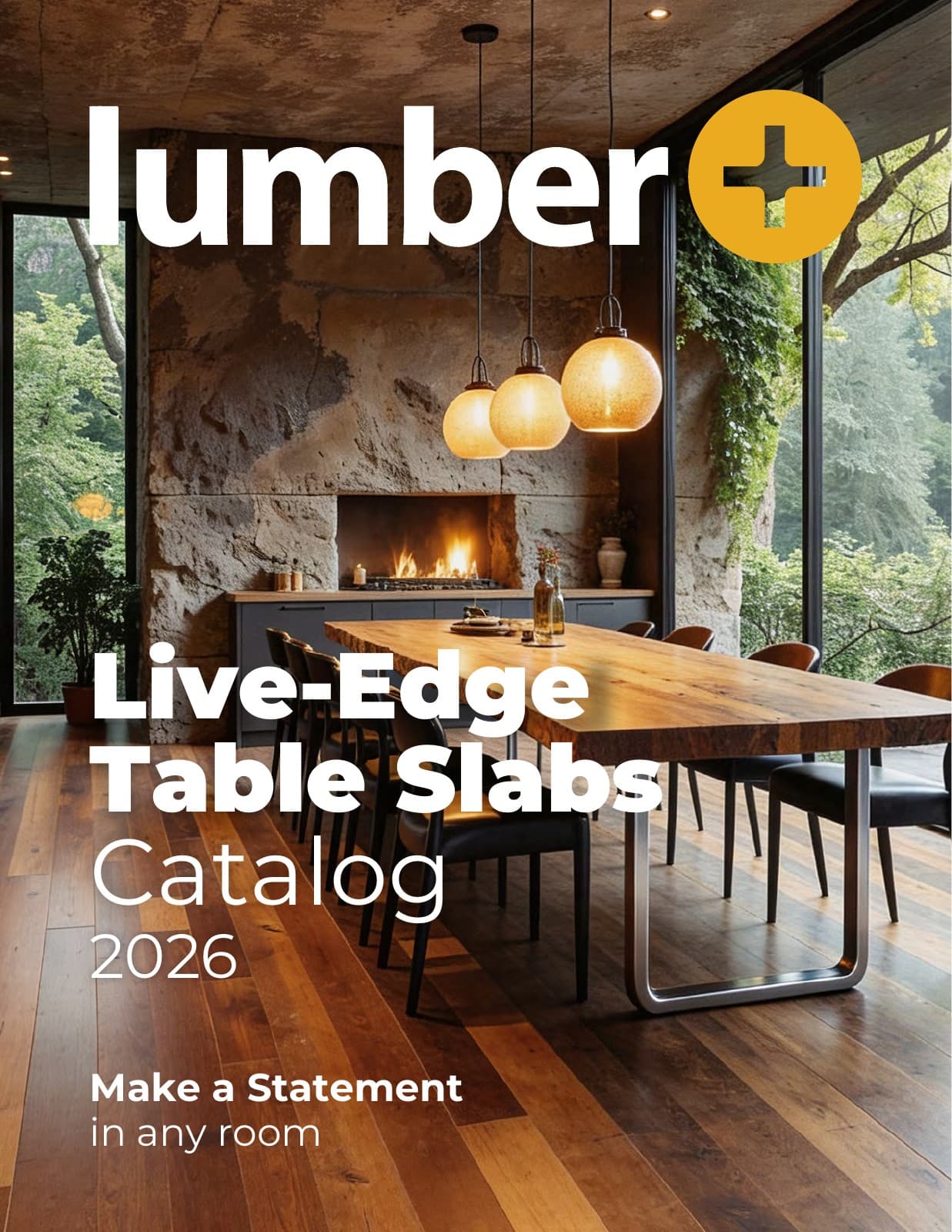
Evaluating Live Edge Slabs for Shelf Use
The first step in planning a live edge shelf is to evaluate the slab itself. Live edge slabs come in various species, each with distinct hardness, density, and grain patterns. A slab's inherent characteristics will influence its suitability for shelving, particularly concerning its ability to resist bowing or sagging under load.
Consider the slab's thickness, as this is a primary factor in its structural integrity. Thicker slabs generally offer greater resistance to deflection. The width of the slab is also important; while wider slabs can provide more surface area, they may also require more robust support. Review the current photos and available dimensions, including the listed minimum and maximum width, to ensure the slab meets your design and structural needs. Note any existing checks, voids, or natural imperfections, as these can impact both aesthetics and potential load-bearing capacity.
Moisture content is another crucial aspect. Properly dried slabs are more stable and less prone to warping or cracking after installation. Inquire about the slab's moisture information to ensure it is stable for indoor use, or if it will require further acclimatization before finishing and installation.
Calculating Shelf Load and Span
Before selecting brackets, it's essential to estimate the total load your shelf will carry. This includes the weight of the slab itself and the items you intend to place on it (e.g., books, decorative objects, dishware). A general guideline for residential shelving is to assume a live load of 15 to 20 pounds per linear foot for general storage. For heavy items like books, this might increase to 25-35 pounds per linear foot. Always err on the side of caution.
The span, or the distance between supports, directly impacts how much weight a shelf can hold without deflecting. A longer span will require a thicker slab and/or more robust support. For live edge shelves, due to their often irregular shape and varied density, it is prudent to plan for shorter spans compared to shelves made from engineered wood products of similar dimensions. As a hypothetical example, a 60-inch long, 2-inch thick hardwood slab intended for books might require supports every 24-30 inches to prevent noticeable sag over time.
Choosing Appropriate Shelf Brackets
The type and number of brackets are critical for supporting live edge shelves. Brackets must be strong enough to bear the calculated load and spaced appropriately to prevent sagging. Common options include:
Heavy-Duty L-Brackets: These provide strong vertical support and are visible. They are a reliable choice for heavier loads and longer spans. Ensure the bracket arm is long enough to support at least two-thirds of the slab's depth.
Floating Shelf Brackets: These create a minimalist look where the slab appears to float. They typically consist of rods or bars that are mortised into the back edge of the slab and anchored into wall studs. This option requires precise installation and is generally best for lighter loads or shorter spans, or with very thick, dense slabs. The slab itself must be thick enough to fully conceal the mounting hardware without compromising its integrity.
Concealed Standards and Brackets: This system uses vertical strips (standards) mounted to the wall, into which brackets are inserted. While less common for live edge slabs due to their irregular backs, it offers flexibility in shelf height and robust support if the slab can be adapted to fit the bracket profile.
Always ensure brackets are securely fastened into wall studs or appropriate blocking within the wall structure. Drywall anchors alone are typically insufficient for live edge shelves, especially with substantial loads.
Worked Example: Designing a Live Edge Book Shelf
Let's consider a hypothetical project: designing a 72-inch long live edge bookshelf for a home office. The client desires a rustic aesthetic and plans to store a significant number of books.
Slab Selection: We identify a 72-inch long, 10-14 inch wide, 2.5-inch thick Cumaru live edge slab from the catalog. Cumaru is a dense hardwood, suitable for heavy loads. Its weight is approximately 4.5 lbs per board foot. For a 72" (6 ft) slab, averaging 12" (1 ft) wide and 2.5" thick, the volume is 6 ft * 1 ft * 2.5/12 ft = 1.25 board feet. Slab weight: 1.25 board feet * 4.5 lbs/board foot = 5.625 lbs. (This is a simplified calculation; actual slab weight will vary by specific density and dimensions).
Load Calculation: Assuming a conservative live load of 30 lbs per linear foot for books, the total live load is 72 inches / 12 inches/foot * 30 lbs/foot = 180 lbs. Adding the slab's estimated weight, the total load is approximately 186 lbs.
Bracket Spacing and Type: Given the heavy load and length, floating brackets are likely insufficient. We opt for three heavy-duty L-brackets. To distribute the load effectively, we'll place one bracket 6 inches from each end, and the third bracket centered at 36 inches. Each bracket needs to support roughly 62 lbs (186 lbs / 3 brackets). The brackets selected should be rated for significantly more than this, providing a safety margin. The bracket arm should be at least 7-8 inches long to support the slab's depth adequately.
Installation: The L-brackets will be securely anchored into wall studs. If stud spacing does not align perfectly, additional blocking may need to be installed within the wall or a continuous mounting board used to distribute the load to multiple studs.
Finishing and Maintenance Considerations
The finish applied to your live edge shelf not only enhances its appearance but also protects the wood from moisture, spills, and wear. Common finishes include oils, varnishes, and polyurethanes. An oil finish can highlight the natural grain and texture, while a polyurethane or varnish offers a more durable, water-resistant surface. Consider the intended use of the shelf and the level of protection required.
Regular cleaning with a soft, damp cloth is typically sufficient for maintenance. Avoid harsh chemicals or abrasive cleaners that can damage the finish. For oil-finished shelves, periodic reapplication of oil may be necessary to maintain its luster and protective qualities.
Complementary Products for Your Live Edge Shelf Project
Beyond the slab and brackets, consider other elements that can enhance your live edge shelf. For a truly integrated look, you might explore complementary wood species for other furniture pieces in the room, such as a custom desk or console table. For example, a [Maximo Cumaru Board](https://www.lumberplus.com/maximo-cumaru-board) could be a good choice for a coordinating piece, offering similar density and color tones. If your project involves a built-in look, consider using [Siding](https://www.lumberplus.com/siding) or [Ceilings](https://www.lumberplus.com/ceilings) products to create custom cabinetry or wall panels around your live edge feature. For a more modern aesthetic, [Thermally Modified Wood](https://www.lumberplus.com/thermally-modified-wood) could offer a contemporary contrast while maintaining a natural material palette.
Before you order
- Determine the primary function and expected maximum load for the shelf.
- Measure the desired length and depth for the shelf, allowing for slab variations.
- Evaluate available live edge slabs for thickness, species, and any natural imperfections.
- Calculate the approximate weight of the slab and the items it will hold.
- Plan the span between supports based on total load and slab characteristics.
- Select appropriate brackets (L-brackets, floating, etc.) rated for the calculated load.
- Confirm that wall studs or adequate blocking are available for secure bracket installation.
- Choose a suitable finish based on desired aesthetics and protection needs.
- Consider complementary wood products for other elements in the room.
- Request current photos and dimensions of specific slabs from Lumber Plus.
- Reserve your chosen slab with the branch before finalizing design or construction schedules.
Confirm installation details, approved uses and warranty terms in the current instructions for the exact product and profile. Your installer should verify the substrate, structure and applicable project requirements.
Questions to help you decide
How thick should a live edge slab be for shelving?
The ideal thickness depends on the length of the shelf and the weight it will bear. Always consider the specific species of wood, as denser hardwoods will offer greater strength.
Can I use floating shelf brackets for a live edge slab?
Yes, but with careful consideration. Floating shelf brackets work best with slabs that are sufficiently thick (typically 2 inches or more) to accommodate the concealed hardware without compromising the slab's integrity. They are generally suitable for lighter loads or shorter spans. For heavier loads or longer shelves, visible L-brackets or other robust support systems are usually more appropriate. Always ensure the brackets are rated for the intended weight and securely anchored into wall studs.
How do I account for the irregular shape of a live edge slab when installing?
The irregular 'live edge' is typically intended to face outwards. The back edge, which abuts the wall, may need some flattening or scribing to ensure a flush fit, especially if using floating brackets. For L-brackets, a perfectly flush back edge is less critical, but ensuring the slab sits level and securely on the brackets is paramount. Always measure the minimum and maximum width of the slab from the catalog to understand its exact dimensions and how it will sit against the wall.
Ready to Plan Your Live Edge Shelf Project?
Request the current Lumber Plus live-edge slab catalog and speak with our team. Provide your project dimensions, desired profile, and ZIP code to confirm current availability and service options for individual slabs. Our team can help you review specific slab details, including current photos, checks, voids, and moisture information, to ensure you select the best piece for your shelving needs.
Request a material quote →