Selecting the Right Species for Countertop Use
The species of wood you choose for your live edge countertop significantly impacts its durability, appearance, and suitability for the intended environment. Hardwoods are generally preferred for countertops due to their density and resistance to dents and scratches. Species like Black Walnut, Maple, Oak, and Cherry are popular choices, offering a range of grain patterns and color variations. For areas potentially exposed to more moisture, such as a kitchen island or bar top, denser, naturally water-resistant woods like Cumaru or Ipe might be considered, though proper sealing is always critical.
Consider the aesthetic you want to achieve. Black Walnut is known for its deep, luxurious browns and distinctive grain. Maple offers a lighter, cleaner look, while Oak can provide a more rustic feel with prominent graining. The natural color variations and grain patterns within each slab mean that no two countertops will be exactly alike.
Understanding Dimensions and Slab Characteristics
Countertops require specific dimensions for both length and width to ensure adequate workspace and fit within your design. When selecting a live edge slab, pay close attention to its listed minimum and maximum width. Live edge slabs are rarely perfectly uniform in width due to the natural shape of the tree, and this variation is part of their appeal. Measure your project space carefully, allowing for overhangs and any necessary trimming.
Thickness is another important factor. Countertops typically benefit from a robust thickness to ensure stability and a substantial feel. While a slab might be available in various thicknesses, consider how the chosen thickness will integrate with your cabinet height and overall design. Review current photos of the specific slab you are considering to assess checks, voids, and its overall character. These natural features contribute to the unique appeal but should be evaluated against your functional and aesthetic requirements. Always confirm the moisture content of the slab; properly dried wood is essential for stability and to minimize future movement.
Support and Substrate Requirements
Unlike a freestanding table, a countertop requires robust and continuous support. Live edge slabs, especially larger ones, are heavy and need a structurally sound base. For kitchen islands or perimeter counters, this typically means a sturdy cabinet base. Ensure your cabinetry or support structure is designed to bear the weight of the slab and any items that will be placed on it. Overhangs, especially those extending more than 6-8 inches, may require additional support like corbels, steel brackets, or a hidden support system to prevent sagging or cracking over time.
While a live edge slab can be directly mounted to a cabinet, some applications might benefit from a substrate layer, particularly if precise leveling or integration with appliances is critical. However, for most live edge countertop applications, the slab itself forms the primary surface, directly affixed to the supporting structure with appropriate fasteners that allow for natural wood movement.
Finishing for Countertop Durability and Appearance
The finish applied to your live edge countertop is crucial for both its protection and its final appearance. For kitchen and bathroom countertops, a durable, water-resistant finish is essential. Options include polyurethane, epoxy, or specific countertop-grade oils. Polyurethane offers a hard, protective layer that resists moisture and wear. Epoxy can create a very durable, often high-gloss, and completely sealed surface, which is particularly suitable for high-use areas or bar tops.
Oil finishes penetrate the wood, enhancing its natural beauty and providing a more matte, tactile feel. While often requiring more frequent reapplication than film-building finishes, they are easier to repair if scratched. The choice of finish should align with the anticipated use, desired aesthetic, and your willingness to maintain it. Always ensure the chosen finish is food-safe if the countertop will be used for food preparation.
Worked Example: A Live Edge Kitchen Island Countertop
Consider a kitchen island countertop project requiring a finished surface of 96 inches long by approximately 30 inches wide, with a target thickness of 2 inches. The kitchen design features dark cabinetry, and the homeowner desires a rich, warm wood tone with a distinct grain pattern.
After reviewing available options, a Cumaru live edge slab measuring 100 inches long, with a minimum width of 32 inches and a maximum width of 36 inches, and a nominal thickness of 2.25 inches is selected. This allows for 2 inches of trim on the length, and sufficient width to achieve the desired 30-inch finished width while preserving the natural live edge. The extra thickness provides material for flattening and sanding to the target 2-inch thickness. Due to Cumaru's density and the island's function, a durable, clear epoxy finish is chosen for maximum protection against spills and daily wear. The island base is designed with internal structural supports to accommodate the slab's weight and a 10-inch overhang on one side, which will be reinforced with hidden steel brackets.
Before you order
- Confirm the exact dimensions needed for your countertop, including length, minimum and maximum width, and desired thickness.
- Evaluate the specific wood species for durability, moisture resistance, and aesthetic compatibility with your space.
- Review current photos and detailed descriptions of individual slabs, noting any natural features like checks, voids, or bark inclusion.
- Verify the moisture content of the slab to ensure stability.
- Plan the support structure for your countertop, considering the slab's weight and any overhangs that require additional reinforcement.
- Select a finish appropriate for countertop use, prioritizing durability, water resistance, and food safety if applicable.
- Consider the fabrication process: will the slab need professional flattening, sanding, or edge treatment?
- Factor in the lead time for slab selection, preparation, and finishing into your project schedule.
- Request a material quote with your project dimensions, desired profile, and ZIP code to confirm availability and service options.
Confirm installation details, approved uses and warranty terms in the current instructions for the exact product and profile. Your installer should verify the substrate, structure and applicable project requirements.
Questions to help you decide
What is the best wood species for a live edge countertop?
The 'best' species depends on your specific needs. Hardwoods like Black Walnut, Maple, Oak, and Cherry are popular for their durability and aesthetics. For areas with higher moisture exposure, denser woods like Cumaru or Ipe might be considered. Always prioritize a species known for stability and hardness for countertop applications. Confirm the species and expected color or grain behavior with your supplier.
How do I protect a live edge countertop from water and stains?
Effective protection comes from the right finish. For countertops, durable, water-resistant options are essential. Polyurethane provides a hard, film-forming layer. Epoxy creates a very robust, sealed surface, often used for high-traffic areas. Oil finishes penetrate the wood, offering a natural look but may require more frequent maintenance. Ensure the chosen finish is suitable for countertops and, if applicable, food-safe.
Do live edge countertops require special support?
Yes, live edge slabs are heavy and require robust support. For kitchen or bar countertops, ensure your cabinet base or support structure is strong enough to bear the slab's weight. Overhangs, especially those exceeding 6-8 inches, typically need additional reinforcement such as corbels, steel brackets, or a hidden support system to prevent sagging or cracking over time. Always plan your support system in conjunction with your slab selection.
Ready to Transform Your Space with a Live Edge Countertop?
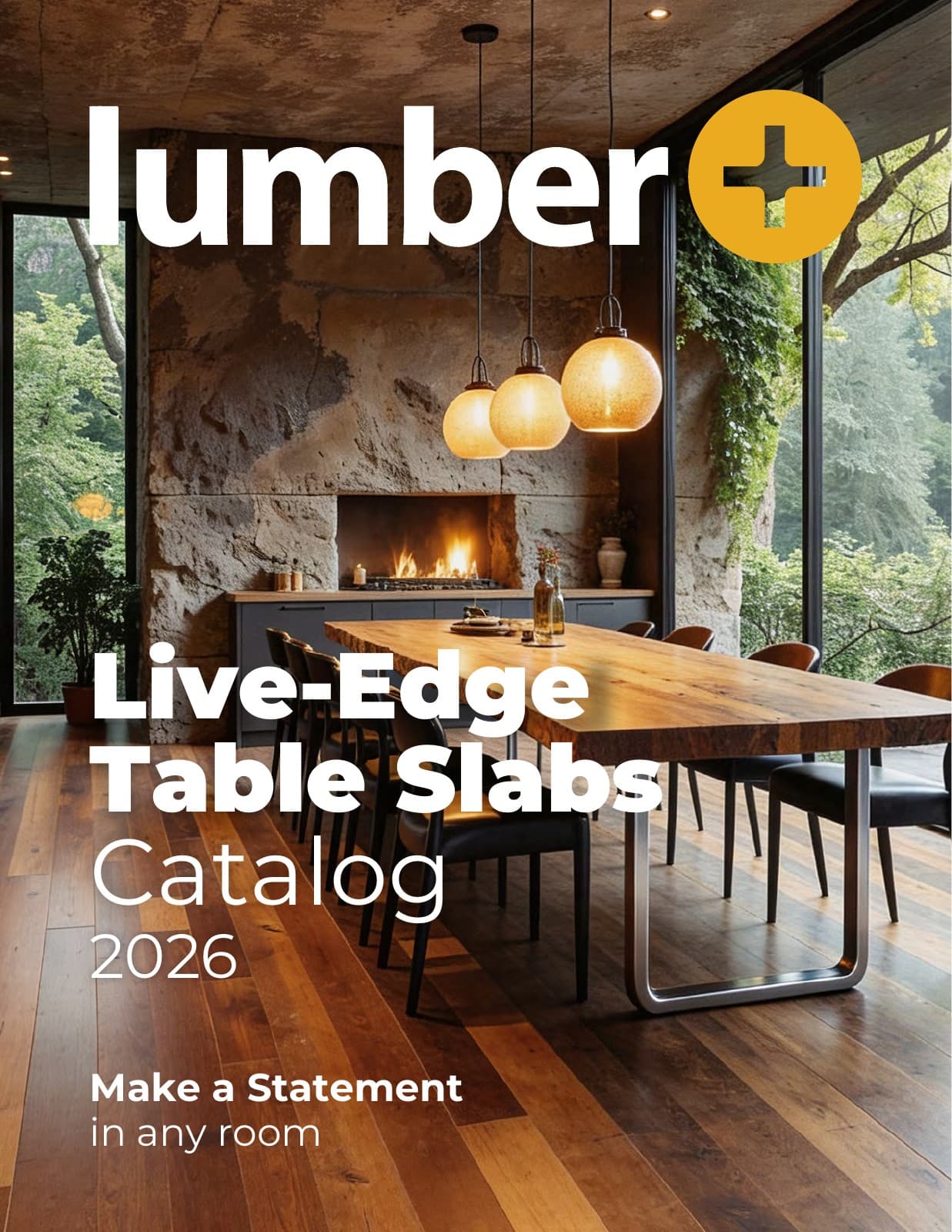
Request a material quote for your project. Provide your project dimensions, preferred slab profile, and ZIP code to confirm current availability and service options. Our team can assist you in finding the ideal live edge slab for your unique countertop design. You can also review the current Lumber Plus live-edge slab catalog for available species and general dimensions, but please contact us directly to confirm specific slab details and photos as inventory changes piece by piece.
Request a material quote →