Understanding Your Space: Room Circulation and Dimensions
Before selecting a live edge slab, assess the room where the coffee table will reside. The primary consideration is ensuring adequate circulation around the table. A general guideline suggests leaving at least 18 inches between the coffee table and surrounding seating to allow for comfortable movement and access to drinks or remotes. In larger rooms, this distance might extend to 24 inches for a more expansive feel.
Measure the length and width of your primary seating (sofa or sectional). A common design principle is for the coffee table to be approximately two-thirds the length of the sofa. For a 90-inch sofa, a 60-inch long coffee table would be a suitable starting point. The width of the coffee table should also allow for comfortable reach from seating, typically ranging between 18 to 24 inches. Consider the overall balance; a very wide slab in a narrow room can feel overwhelming, while a too-small table can get lost.
Also, evaluate the existing furniture and architectural features. Will the table obstruct pathways to doors, windows, or other furniture? Sketching a simple floor plan can help visualize the layout and identify potential conflicts before you commit to a slab.
Choosing the Right Slab Dimensions
Live edge slabs come in various sizes, and the 'live edge' itself means dimensions can be irregular. When reviewing available slabs, pay close attention to the listed minimum and maximum width. A slab might have a wider point and a narrower point along its length. For a coffee table, a consistent width is often preferred for stability and usability, though a slight variation can add character.
Consider the desired height of your coffee table. Standard coffee table heights range from 16 to 20 inches. This height should generally be within 1-2 inches of the height of your sofa's seat cushions. The thickness of the slab will contribute to the overall height, so factor this in when planning for the base. A slab that is 2-3 inches thick is common for coffee tables, providing a substantial look without being overly heavy.
When reviewing slab options, always check the actual measurements provided for each piece. The unique nature of live edge slabs means that general category averages may not accurately reflect an individual slab's dimensions. Confirming the specific length, minimum width, maximum width, and thickness for the slab you are considering is crucial.
Worked Example: Planning a Live Edge Coffee Table
Based on the two-thirds rule, we aim for a coffee table around 60 inches long. Assuming a standard sofa depth of 36 inches, we have 36 + 24 + (coffee table width) = 60 + (coffee table width). If we want the coffee table to be reachable, a width of around 20-22 inches would be appropriate.
For this project, we would look for a live edge slab approximately 60 inches long, with a minimum width of 20 inches and a maximum width no greater than 24 inches. A slab thickness of 2.5 inches would be a good choice. If we select a base that is 16 inches tall, the total height of the finished table would be 16 inches (base) + 2.5 inches (slab) = 18.5 inches, which is within the comfortable range for most sofas.
When reviewing available inventory, we would seek a slab with these approximate dimensions, paying close attention to the actual listed measurements for each unique piece. For instance, if a "Maximo Cumaru" slab is listed as 62 inches long, with a minimum width of 21 inches and a maximum width of 23 inches, and a thickness of 2.75 inches, it would be a strong candidate. This specific example helps illustrate how to match desired dimensions with the variability of live edge inventory.
Selecting a Suitable Table Base
The base you choose for your live edge coffee table significantly impacts its overall aesthetic and stability. Various styles can complement the natural beauty of the slab, from minimalist metal legs to more rustic wood designs.
Common base options include: hairpin legs for a mid-century modern look, steel box or U-shaped legs for industrial appeal, or solid wood trestle or slab bases for a more substantial, traditional feel. When choosing, consider the weight of the slab. A thicker, denser slab will require a sturdy base that can adequately support it.
The attachment method is also important. Bases typically attach to the underside of the slab using screws. It is essential to allow for wood movement, which means avoiding rigid attachments that prevent the slab from expanding and contracting with changes in humidity. Z-clips or elongated holes are often used to accommodate this natural movement.
Ensure the base provides adequate stability. For longer slabs, a base with two points of contact or a central support might be more stable than four individual legs at the corners, especially if the slab is prone to bowing or twisting. Consider the visual impact of the base as well; a chunky base might overpower a delicate slab, while a too-thin base might look out of proportion with a substantial top.
Understanding Slab Characteristics: Species, Grain, and Features
The species of wood will dictate the color, grain pattern, and overall character of your live edge slab. Hardwoods like oak, walnut, or maple offer distinct appearances and varying levels of density. Walnut, for instance, is known for its rich, dark tones and often dramatic grain, while maple can offer lighter hues and a more subtle pattern.
Beyond species, inspect the individual characteristics of the slab. Live edge slabs often feature natural elements like checks (small cracks), voids, and knots. Some prefer a perfectly smooth, uniform surface, while others embrace these natural imperfections as part of the slab's unique charm. Larger checks or voids may need to be filled with epoxy or left as is, depending on your aesthetic preference and functional needs.
Always review current photos of the specific slab you are considering. This allows you to see the exact grain, color, and any natural features or imperfections present. Also, inquire about the slab's moisture content, as properly dried wood is essential for stability and minimizing future movement or cracking. The "Live-Edge Slab Catalog" provides an overview, but individual slab details are best confirmed with current photos and information from the branch.
For complementary materials, consider pairing your live edge coffee table with other natural wood elements in your room, such as a [Live Edge Console Table](/guides/live-edge-slabs/console-table) or [Live Edge Shelves](/guides/live-edge-slabs/shelves) for a cohesive design.
Before you order
- Measure your room's dimensions and seating arrangement.
- Determine the ideal length and width for your coffee table based on circulation and reach.
- Confirm the desired overall height, accounting for slab thickness and base height.
- Review specific slab photos for grain, color, and natural features like checks or voids.
- Verify the slab's minimum width, maximum width, length, and thickness.
- Consider the wood species and its aesthetic contribution to your space.
- Select a table base that complements the slab's style and provides adequate support.
- Confirm the attachment method for the base allows for natural wood movement.
- Inquire about the slab's moisture content and drying process.
- Request a material quote with project dimensions and chosen slab details.
Confirm installation details, approved uses and warranty terms in the current instructions for the exact product and profile. Your installer should verify the substrate, structure and applicable project requirements.
Questions to help you decide
How do I determine the right size live edge slab for my coffee table?
Start by measuring the length of your main seating area (e.g., sofa). A good rule of thumb is for the coffee table to be approximately two-thirds the length of your sofa. For width, aim for 18-24 inches, ensuring it's easily reachable from seating.
What kind of base should I choose for a live edge coffee table?
The base should complement the slab's aesthetic and provide stable support. Options range from metal hairpin or box legs for a modern look to solid wood trestle or slab bases for a more rustic feel. Consider the slab's weight and ensure the base is sturdy enough. Also, verify that the attachment method allows for natural wood movement (e.g., using Z-clips or elongated holes).
What should I look for when inspecting a live edge slab?
Beyond general dimensions, examine the specific slab's photos for its unique grain pattern, color variations, and any natural features like knots, checks (small cracks), or voids. Confirm the listed minimum and maximum width, as live edges are irregular. Inquire about the wood species, its typical characteristics, and the slab's moisture content, as proper drying is crucial for stability.
Ready to Design Your Live Edge Coffee Table?
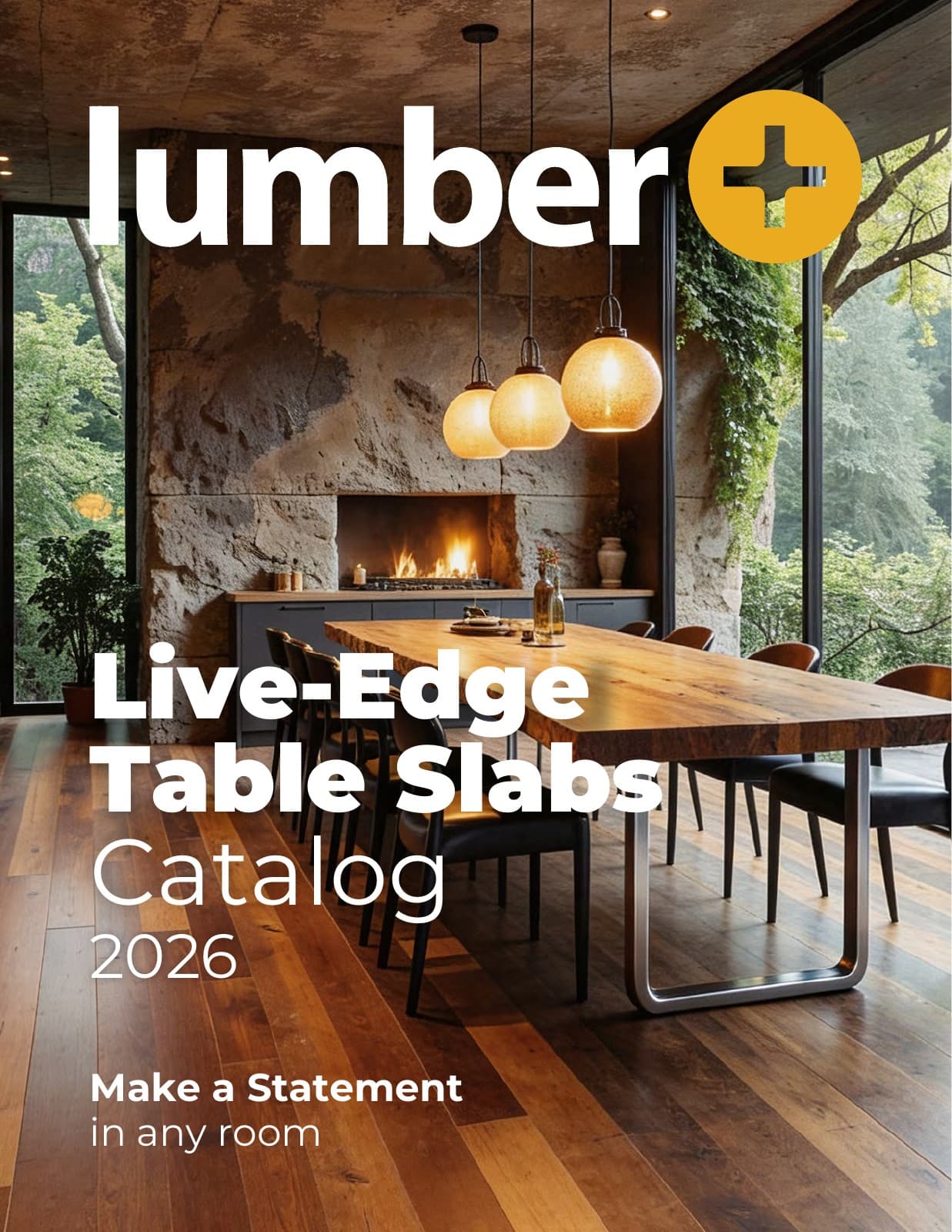
Request the current Lumber Plus live-edge slab catalog and speak with a local branch about available species, dimensions, and individual slab details. Provide your project dimensions, desired profile, and ZIP code to get a material quote and confirm current availability and service options.
Request a material quote →