Understanding the Bench's Purpose and Placement
Before selecting a live edge slab, define the bench's primary function and its intended location. Will it be a decorative entryway piece, a sturdy dining bench, or an outdoor garden seat? The intended use directly influences the required dimensions, wood species, and finish.
For an indoor entryway bench, a less dense wood might suffice, and the aesthetic can lean towards a finer finish. A dining bench, however, will require a more durable wood species to withstand frequent use and potential spills, along with a finish that offers protection. Outdoor benches demand species with natural resistance to moisture and pests, and finishes designed for exterior exposure. Consider the environment's humidity, temperature fluctuations, and exposure to sunlight.
The placement also dictates the bench's visibility. If the bench is against a wall, one live edge might be sufficient. If it's a standalone piece, both live edges may need to be visually appealing and carefully considered in the design.
Selecting the Right Live Edge Slab Dimensions
The dimensions of your live edge slab are critical for a functional and comfortable bench. Standard bench height is typically around 18 inches, with depth ranging from 14 to 18 inches. Length will vary significantly based on your project needs.
When reviewing available slabs, pay close attention to the listed minimum and maximum width (S1). Live edge slabs often have irregular widths, so ensure the narrowest point meets your minimum depth requirement for comfortable seating. For a typical dining bench, aim for a consistent minimum width of at least 14 inches. For a more substantial entryway or outdoor bench, you might prefer a wider slab.
Thickness is also paramount for a bench's stability and appearance. A common thickness for a sturdy bench slab is between 2 to 3 inches. Thicker slabs offer greater visual weight and structural integrity, but also add to the overall weight of the bench. Thinner slabs, while lighter, may require more robust support structures to prevent sagging or instability.
Consider the length carefully. A slab that is too long for its thickness might appear disproportionate or require additional central supports, which can complicate the design. Conversely, a slab that is too short might not serve its intended purpose effectively.
Choosing the Wood Species for Durability and Aesthetics
The wood species profoundly impacts both the durability and the aesthetic of your live edge bench. Different species offer varying hardness, grain patterns, and natural colors.
For outdoor benches or high-traffic indoor areas, consider species known for their durability and natural resistance to decay, such as certain hardwoods. For indoor decorative benches, a wider range of species might be suitable, allowing you to prioritize specific grain patterns or color tones that complement your interior design (S1).
Review current photos of individual slabs to assess the natural checks, voids, and moisture information (S1). These characteristics are inherent to live edge wood and contribute to its unique appeal, but they also need to be managed during fabrication. For example, larger checks might need filling with epoxy for structural integrity and a smoother surface, especially on a seating surface.
Designing for Structural Support
A live edge bench requires a robust and well-designed support system. The natural irregularities of the slab mean that standard leg placement might need adjustment. Legs or bases must be strong enough to bear the weight of the slab itself, plus the weight of multiple occupants.
Consider the type of base: metal legs, wooden trestles, or solid wood pedestals. Metal bases often provide a sleek, minimalist contrast to the organic slab, while wooden bases can create a more cohesive, rustic look. Ensure the attachment points are secure and distributed to prevent any rocking or instability.
For longer slabs, a central support might be necessary in addition to end supports. This helps prevent bowing or sagging over time, especially with heavier wood species or if the bench will experience significant loads. The design of the base should also account for potential wood movement due to changes in humidity, allowing the slab to expand and contract without causing stress on the joints.
Worked Example: A 6-Foot Dining Bench
Let's consider a hypothetical project: building a 6-foot (72-inch) dining bench for indoor use, intended to seat three adults comfortably.
1. **Desired Dimensions:** We aim for a bench height of 18 inches. For comfortable seating, a minimum depth of 15 inches is desired. The length should be 72 inches to fit a standard dining table side.
2. **Slab Selection:** We would look for a live edge slab approximately 72-78 inches long. Crucially, the slab must have a minimum consistent width of at least 15 inches across its entire length. A thickness of 2.5 inches would provide ample stability and a substantial look without being overly heavy. For an indoor dining bench, a durable hardwood like walnut or maple would be a good choice, offering both aesthetic appeal and resistance to wear.
3. **Support Structure:** Given the 72-inch length, two sturdy U-shaped steel legs, positioned approximately 6-8 inches from each end, would provide sufficient support. The steel legs would be fabricated from 2-inch wide, 0.25-inch thick steel to ensure stability. The design would allow for direct attachment to the underside of the slab using threaded inserts and bolts, accommodating minor wood movement.
4. **Finish:** A durable, food-safe polyurethane or oil-based finish would be selected to protect against spills and daily use, while enhancing the natural grain of the wood.
This example illustrates how specific dimensions and intended use guide the selection of the slab and the design of its support. Always confirm the specific slab's characteristics, including its actual width at various points and any natural features, before making a final decision (S1).
Before you order
- What is the primary purpose of the bench (e.g., dining, entryway, outdoor)?
- Where will the bench be placed, and what environmental factors need consideration?
- What is the desired overall length, height, and depth of the finished bench?
- What minimum consistent width is required for comfortable seating?
- What slab thickness will provide adequate structural integrity and visual balance?
- Which wood species offers the desired durability, grain, and color for the intended use?
- Have you reviewed current photos and details of available individual slabs (S1)?
- What type of support structure (legs/base) will be used, and how will it attach securely?
- Is a central support necessary for longer slabs to prevent bowing?
- What finish will protect the slab and complement its aesthetic?
- Have you accounted for potential wood movement in the design and installation?
- Is professional assistance required for fabrication, finishing, or installation?
Confirm installation details, approved uses and warranty terms in the current instructions for the exact product and profile. Your installer should verify the substrate, structure and applicable project requirements.
Questions to help you decide
How do I choose the right length for my live edge bench slab?
The ideal length depends on the number of people you wish to seat and the space available. For dining benches, allow approximately 24 inches per person for comfortable seating. For an entryway or decorative bench, the length can be dictated more by the wall space or the dimensions of the area it will occupy. Always measure your space carefully before selecting a slab.
Can I use a live edge slab for an outdoor bench?
Yes, but it's crucial to select a wood species known for its natural resistance to outdoor elements, such as teak, cedar, or specific hardwoods. The slab must also be properly sealed with an exterior-grade finish to protect it from moisture, UV radiation, and temperature fluctuations. Regular maintenance, including reapplication of the finish, will be necessary to preserve its appearance and integrity.
What should I look for regarding cracks or voids in a live edge slab for a bench?
Small, stable checks or voids are common and can add to the character of a live edge slab. However, for a bench, any significant or unstable cracks, especially those that compromise structural integrity or create uncomfortable seating surfaces, should be addressed. These can often be filled with epoxy or butterfly keys for both stability and aesthetic appeal. Always review current photos and details of individual slabs to understand their specific characteristics (S1).
Request a Quote for Live Edge Slabs
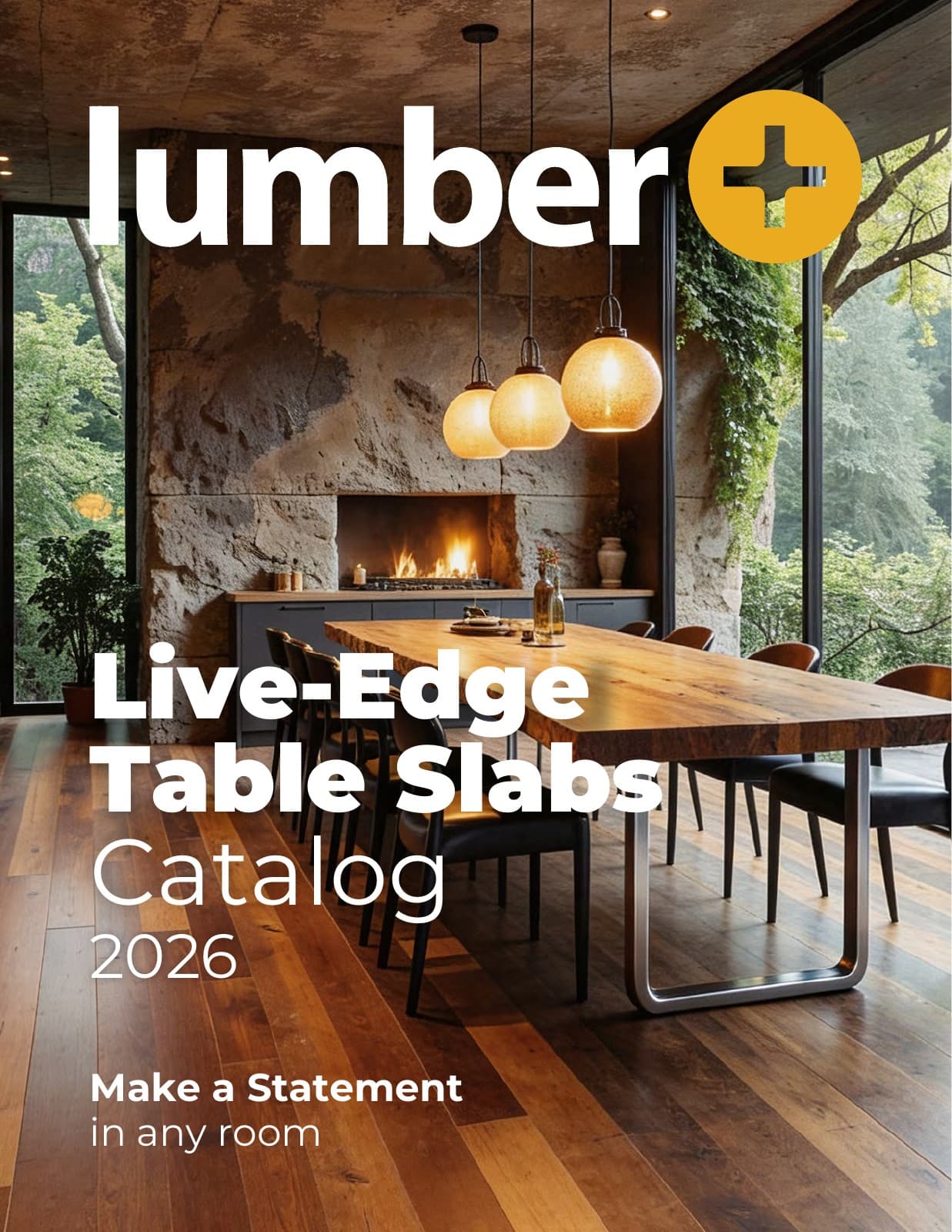
Ready to design your live edge bench? Request the current Lumber Plus live-edge slab catalog to explore available species, dimensions, and individual slab details. Provide your project dimensions, desired profile, and ZIP code to receive a material quote and confirm current availability and service options.
Request a material quote →