Understanding Moisture Exposure for Bar Tops
Bar tops are inherently exposed to moisture from spills, condensation from cold drinks, and routine cleaning. This consistent exposure means that the wood species and, critically, the chosen finish, must be appropriate for such conditions. Some wood species naturally tolerate moisture better than others, but no wood is impervious to water without proper sealing.
When selecting a live edge slab, consider the typical use of your bar. Will it be a high-traffic commercial bar, a home entertainment area, or a quiet reading nook with occasional drinks? The intensity and frequency of moisture exposure will influence your material and finish choices. For high-moisture environments, a denser wood species paired with a robust, water-resistant finish is essential.
Selecting the Right Wood Species for a Bar Top
The species of wood plays a significant role in a bar top's performance and appearance. Hardwoods are generally preferred for their durability. While any live edge slab can be used, some species offer better inherent resistance to denting and scratching, which are common concerns for a bar surface.
When reviewing available slabs, confirm the species and its expected color and grain behavior. For example, a species like Cumaru is known for its density and striking grain, which can be a dramatic feature for a bar top. Reviewing current photos and details of individual slabs, including checks and voids, is important before making a selection. Each live edge slab is unique, and its specific characteristics will contribute to the final look of your bar.
The Critical Role of Finish in Bar Top Durability
For a bar top, the finish is not just for aesthetics; it's the primary protective layer against moisture and wear. A durable, water-resistant finish is non-negotiable. Options typically include polyurethane, epoxy, or marine-grade sealants.
Polyurethane offers good resistance to moisture and abrasion and is available in various sheens. Epoxy finishes create a very hard, non-porous surface that is highly resistant to water, alcohol, and scratches, often resulting in a deep, glossy appearance. Marine-grade sealants are designed for extreme moisture environments and can offer superior protection. Discussing the specific finish with your fabricator or woodworker, considering the expected use and desired maintenance, is crucial for long-term satisfaction.
Planning Slab Dimensions and Features for Your Bar
Measure the intended space for your bar top carefully, including length, desired depth, and any overhangs. Live edge slabs are unique, so their listed minimum and maximum widths should be reviewed, not just a category average. The natural, irregular edge of a live edge slab means that its width can vary along its length.
Consider how the natural shape and features of the slab, such as knots or bark inclusions, will integrate with your bar design. Some prefer a fully intact bark edge, while others may opt for a debarked or eased edge. Any checks (cracks) or voids should be evaluated with your fabricator, as they may need to be filled with epoxy or stabilized to prevent issues in a high-use environment.
If your bar design requires a specific length or a joined top, such as a bookmatched design, these details must be planned in advance. For very long bars, multiple slabs may need to be joined, requiring careful selection for grain and color matching. Reserve your chosen slab with the branch before finalizing drawings or schedules, as live edge inventory changes piece by piece.
Worked Example: Designing a Home Bar Top
Let's consider a hypothetical home bar project requiring a bar top that is approximately 7 feet long and needs a minimum depth of 20 inches, with a desired finished thickness of 2 inches. The bar will be used for entertaining, so a durable, moisture-resistant finish is paramount.
We begin by searching for live edge slabs around 84 inches (7 feet) in length. We identify a Cumaru slab listed at 86 inches long, with a minimum width of 21 inches and a maximum width of 24 inches, and a rough thickness of 2.5 inches. This slab meets the dimensional requirements. The Cumaru species is appealing for its density and rich color, which will complement the planned bar cabinetry.
Upon reviewing the slab's current photos, we note a small check near one end and a few minor bark inclusions along one live edge. We plan to discuss with our fabricator the possibility of stabilizing the check with clear epoxy and whether to retain or remove the bark. For the finish, we decide on a two-part epoxy system for its superior water resistance and durability, ensuring the bar top can withstand spills and frequent cleaning. The extra thickness of 2.5 inches allows for flattening and sanding to achieve the desired 2-inch finished thickness. The fabricator confirms that the chosen slab is suitable for this application with the specified finish.
Complementary Products for Your Live Edge Bar Top
Beyond the slab itself, consider other materials that will complete your bar project. For the base, you might explore various metal or wood options that complement the natural aesthetic of the live edge. For example, a robust metal base can offer a modern contrast, while a custom-built wood base can create a more cohesive, rustic look.
Additionally, think about seating that will pair well with your new bar top. Bar stools or chairs should align with the height and style of the bar. Lighting fixtures can also enhance the ambiance, highlighting the unique features of the live edge slab. Selecting these complementary elements early in the planning process ensures a harmonious final design.
Before you order
- Assess the expected moisture exposure level for your bar top.
- Identify preferred wood species based on durability and aesthetic.
- Review individual slab dimensions, including minimum/maximum width and thickness.
- Examine current photos of the specific slab for checks, voids, and bark details.
- Select a durable, water-resistant finish (e.g., polyurethane, epoxy, marine-grade).
- Plan for slab flattening and finishing with a qualified woodworker.
- Consider how the live edge shape will integrate with your bar design.
- Confirm if the slab needs to be debarked or if bark will be retained and stabilized.
- Factor in any necessary slab stabilization (e.g., epoxy for checks/voids).
- Choose complementary bar base and seating options.
- Request a quote for the specific slab, mentioning your project and location.
Confirm installation details, approved uses and warranty terms in the current instructions for the exact product and profile. Your installer should verify the substrate, structure and applicable project requirements.
Questions to help you decide
What is the best finish for a live edge bar top?
The best finish for a live edge bar top is one that offers superior water resistance and durability. Options like two-part epoxy resins provide a very hard, non-porous, and highly water-resistant surface. Polyurethane and marine-grade sealants are also strong contenders, offering good protection against spills and abrasion. The choice often depends on the desired aesthetic (e.g., glossy vs. matte) and the level of expected use.
How do I care for a live edge bar top?
Care for a live edge bar top largely depends on the finish applied. For most durable finishes like epoxy or polyurethane, regular cleaning with a damp cloth and mild soap is sufficient. Avoid abrasive cleaners or harsh chemicals, which can damage the finish. Promptly wipe up spills to prevent any moisture from penetrating the finish over time. Periodically inspect the finish for any signs of wear or damage, especially in high-use areas.
Can a live edge bar top be used outdoors?
Using a live edge slab for an outdoor bar top is possible, but it requires specific considerations. The wood species must be naturally resistant to outdoor elements, and the finish must be explicitly rated for exterior use, offering UV protection and superior moisture resistance. Even with appropriate treatment, outdoor live edge slabs will require more frequent maintenance and may show more signs of weathering than indoor applications due to exposure to sun, rain, and temperature fluctuations. Always confirm the suitability of both the wood and finish for outdoor conditions with your supplier and fabricator.
Ready to Select Your Live Edge Bar Top Slab?
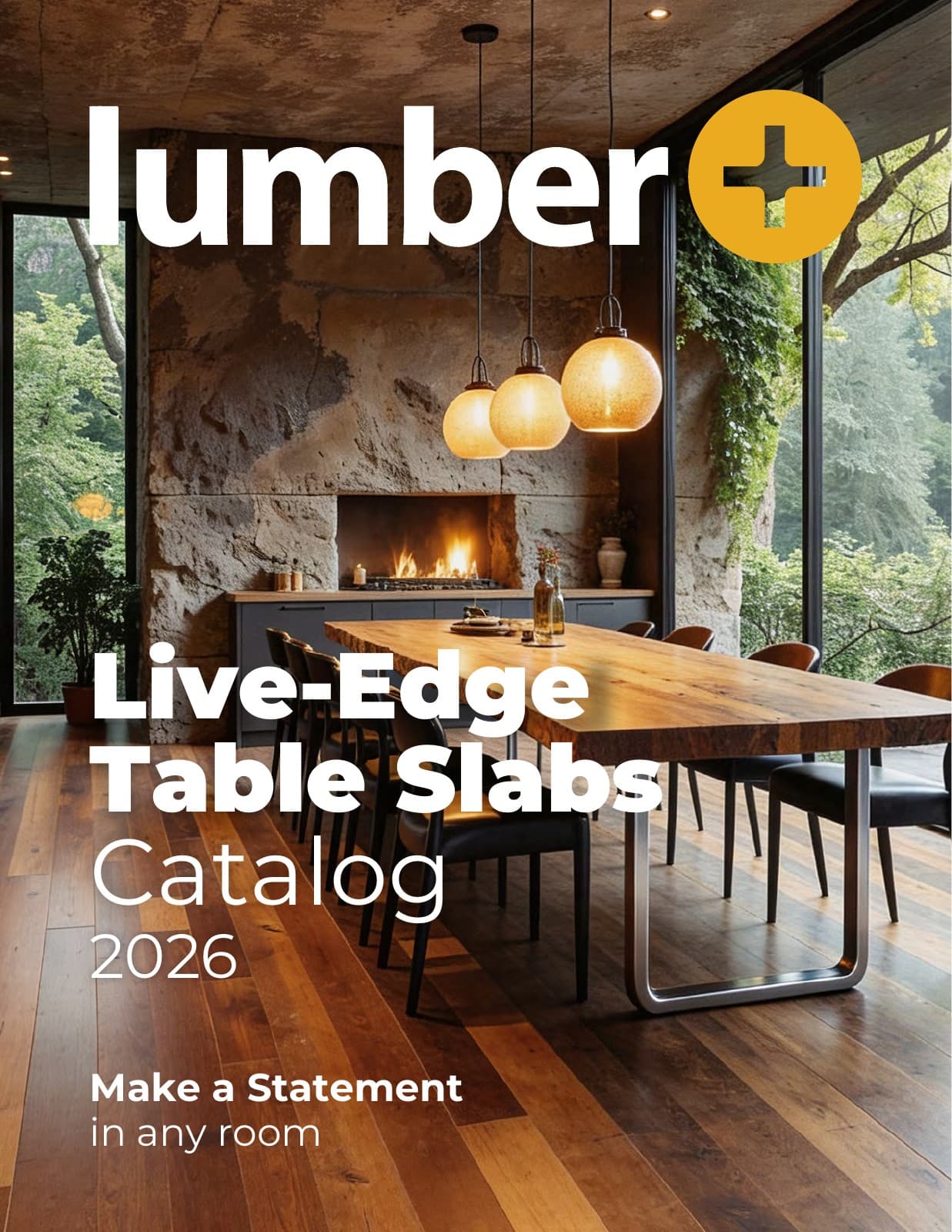
Request the current Lumber Plus live-edge slab catalog to see available species and dimensions. For specific slab details, photos, and to confirm availability for your project, contact your local branch. Provide your project dimensions, desired profile, and ZIP code for a material quote.
Request a material quote →