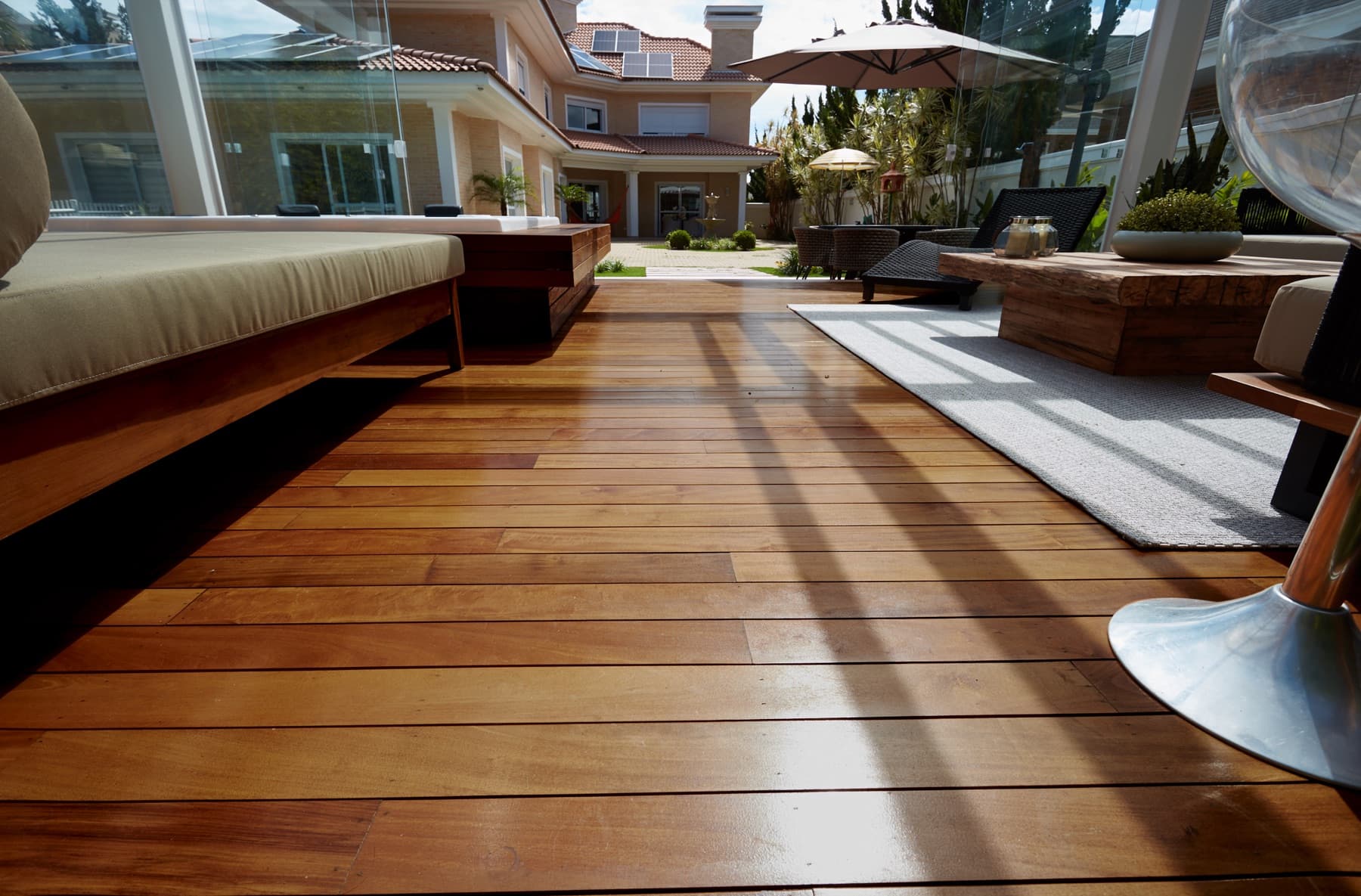
Assessing Your Existing Deck Frame
The first step in any deck renovation is to critically evaluate the existing framework. Hardwood decking, especially dense species like Ipe and Cumaru, can be heavier than other decking materials. Your existing joists, beams, and footings must be in sound condition and adequately spaced to support the new load. Look for signs of rot, particularly where wood contacts the ground or holds standing water. Check for insect activity, such as termite tunnels or carpenter ant damage.
Verify that joist spacing aligns with the manufacturer's recommendations for your chosen hardwood decking. If your current joist spacing is wider, you may need to add blocking or sister new joists to meet these requirements. This foundational review is essential for the longevity and safety of your renovated deck.
Why Consider Hardwood for Coastal Florida
For coastal areas like St. Petersburg, where decks are exposed to humidity, salt air, and strong sun, material choice is paramount. Hardwood decking, particularly tropical species, offers inherent properties that make it suitable for such conditions.
Species like Ipe and Cumaru are known for their natural density and oil content, which contribute to their resistance to rot, insects, and moisture absorption. This natural defense means they do not require chemical pressure treatment, relying instead on their inherent material characteristics to withstand environmental challenges.
Many hardwood species are also noted for their stability, resisting warping and cracking even with significant temperature and humidity fluctuations. This makes them a practical option for the variable weather patterns experienced in coastal Florida. Their dense nature also contributes to their overall durability and lifespan when properly maintained. (S2)
Ipe Hardwood: The Benchmark for Durability
Ipe (pronounced "ee-pay"), also known as Brazilian walnut, is often considered a benchmark for outdoor decking due to its exceptional durability and aesthetic appeal. It exhibits a color range from reddish-brown to olive-brown, developing a silvery-gray patina if left untreated. (S1)
Ipe is naturally resistant to rot, insects, and mold, making it a low-maintenance option for St. Petersburg's climate. Its density contributes to its stability and resistance to weathering, including exposure to moisture. While initial investment may be higher, its long-term performance and minimal need for chemical protection often make it a cost-effective choice over its service life. (S1)
Ipe is available in various profiles and lengths, typically ranging from 1x2 to 6x6 inches and 3 to 24 feet in length, in both air-dried (AD) and kiln-dried (KD) options. Always confirm current availability with your supplier. (S1)
Cumaru Hardwood: A Durable Alternative
Cumaru is another tropical hardwood that offers significant durability and resistance, making it a strong contender for deck renovations in St. Petersburg. It shares many characteristics with Ipe, including natural resistance to termites and weather changes. (S1)
Cumaru is known for its stiffness, strength, and hardness, with an air-dry density of 5.75 lbs/bf. It is naturally resistant to insects, rot, and fungi, and also carries a Class A fire resistance rating. When worked, Cumaru can emit a scent of cinnamon and vanilla. (S1)
Its appearance is also highly desirable, with a range of reddish-brown tones. (S1)
Worked Example: Decking a 10x12 Foot Area with Ipe
Let's consider a hypothetical renovation project: resurfacing a 10-foot by 12-foot deck area with Ipe decking boards. We will use 5/4x6 (nominal) Ipe boards, which typically measure around 1 inch thick by 5.5 inches wide (actual).
First, calculate the total square footage: 10 feet * 12 feet = 120 square feet. To determine the linear footage of decking needed, we divide the total area by the width of one board. Since the actual width is 5.5 inches (or 0.458 feet), we get 120 sq ft / 0.458 ft/board = approximately 262 linear feet of decking.
However, this is only the net material. You must account for waste due to cuts, end-matching, and potential imperfections. A common recommendation is to add 10-15% for waste. For 262 linear feet, adding 15% waste means 262 * 1.15 = approximately 301 linear feet. If boards are typically sold in even lengths (e.g., 8-foot, 10-foot, 12-foot), you would round up to the nearest full board length. For example, if you primarily use 12-foot boards, you would need 301 / 12 = 25.08 boards, rounded up to 26 boards. Always confirm available lengths and consult with your supplier for precise quantity recommendations.
This example does not include material for fascia, stair treads, or any picture-frame borders, which would need separate calculations based on your specific design.
Before you order
- Inspect existing deck frame for rot, insect damage, and structural integrity.
- Measure existing joist spacing and confirm compatibility with chosen hardwood decking.
- Determine desired aesthetic: will the hardwood be oiled to maintain its color or allowed to weather to a silvery-gray?
- Calculate total square footage of the deck surface.
- Add 10-15% for waste in linear footage calculations.
- Consider additional material needs for fascia, stairs, and borders.
- Research local building codes for any specific requirements in St. Petersburg, FL.
- Obtain a material quote including exact profiles, lengths, and current availability.
Confirm installation details, approved uses and warranty terms in the current instructions for the exact product and profile. Your installer should verify the substrate, structure and applicable project requirements.
This is a planning guide for projects in St. Petersburg, FL. Ask our team to confirm availability, delivery to your ZIP code and which branch can support your order.
Questions to help you decide
How does St. Petersburg's climate affect hardwood decking?
St. Petersburg's humid, coastal climate with salt air and strong sun requires decking materials with natural resistance to moisture, rot, and insects. Hardwoods like Ipe and Cumaru are well-suited due to their density and natural oils, which provide resilience against these environmental factors. While they resist weathering, proper ventilation beneath the deck is still important.
Can I install hardwood decking over my existing frame?
You can, provided your existing frame is structurally sound, free from rot or insect damage, and the joist spacing meets the requirements for the specific hardwood decking you choose. Always have a professional inspect your frame if you have any doubts.
What maintenance does hardwood decking require in a coastal environment?
Hardwood decking like Ipe and Cumaru is considered low maintenance. A yearly wash to remove dirt and debris is generally sufficient. If you wish to preserve the original reddish-brown tones, an annual application of a UV-blocking oil or sealer is recommended. If left untreated, the wood will naturally weather to a silvery-gray patina, which does not affect its structural integrity. (S1)
Ready to Upgrade Your St. Petersburg Deck?
For your deck renovation project, request a material quote today. Provide your project dimensions, desired hardwood profile, and ZIP code to confirm current availability and service options for your St. Petersburg, FL location. We can help you select the right hardwood decking for lasting beauty and performance.
Request a material quote →