Assess Your Existing Deck Frame and Substructure
Before selecting any decking material, a thorough inspection of your existing deck frame is crucial. This is the foundation of your renovation. Check for any signs of rot, insect damage, or structural weakness in the joists, beams, and ledger board. Hardwood decking, especially dense species like Ipe or Cumaru, is heavier than many common decking materials or older composites, so the frame must be robust enough to bear the additional load.
Verify that the joist spacing is appropriate for the hardwood decking you plan to install. If your current joist spacing is wider, you may need to add blocking or additional joists. Pay attention to fasteners; ensure they are in good condition and suitable for the new decking material. Any compromised elements should be repaired or replaced before proceeding.
Choosing Your Hardwood Species: Ipe, Cumaru, and More
Lumber Plus offers a range of Brazilian hardwood decking species, each with distinct characteristics suitable for outdoor applications. For renovation projects, factors like durability, appearance, and maintenance preferences will guide your choice.
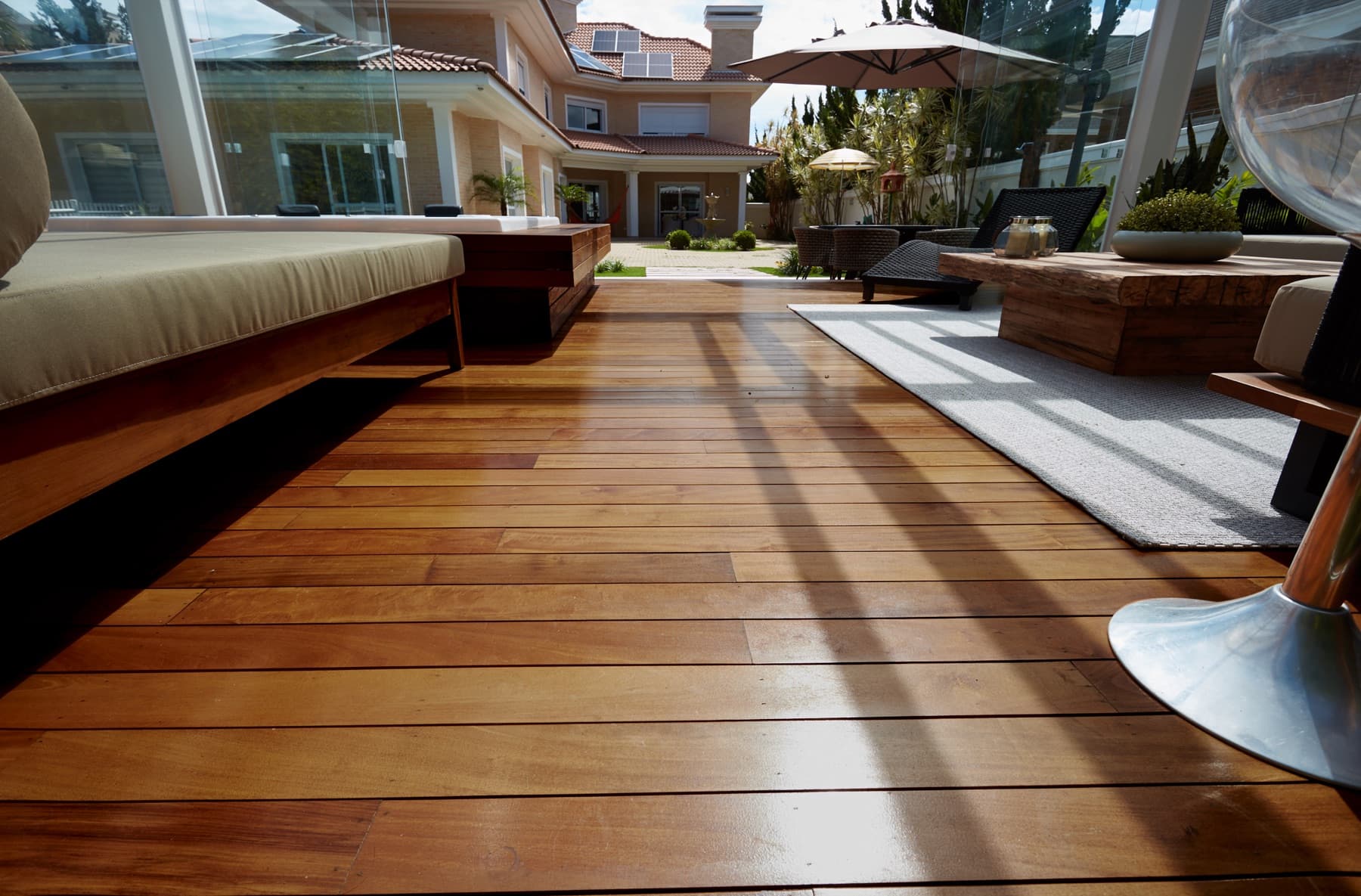
Ipe, also known as Brazilian walnut, is a benchmark hardwood. It is celebrated for its exceptional density and natural resistance to rot, insects, and weather changes. It can last for decades with proper care, making it a suitable choice for a long-term renovation. Its color ranges from reddish-brown to olive-brown. If left untreated, Ipe will weather to a silvery-gray patina. Regular cleaning and an optional UV-blocking sealer can help maintain its original color.
Cumaru is another very durable tropical hardwood. It offers stiffness, strength, and hardness, with natural resistance to termites and weather changes. Cumaru is a good option if you are looking for a material that offers similar performance to Ipe but at a different price point. It also weathers well and can be maintained with occasional cleaning and sealing.
Other species like Garapa, Tigerwood, Angelim, and Jatoba also offer various aesthetic and performance characteristics. Garapa provides a golden tone, while Tigerwood offers a dramatic striped figure. Each species brings its own advantages in terms of color, grain pattern, and natural properties.
Consider the existing architectural style of your Springfield home and your desired aesthetic when making your selection. The natural color and grain of hardwood can significantly impact the overall look and feel of your renovated outdoor space.
For specific profiles and lengths, it is recommended to confirm current availability, as these can vary. You can typically find hardwood decking in dimensions from 1"x2" up to 6"x6" and lengths ranging from 3 to 24 feet.
Material Takeoff: A Worked Example for Renovation
Let's consider a hypothetical deck renovation in Springfield, IL. Suppose you have an existing deck that measures 12 feet by 16 feet, and you plan to replace the decking surface with Ipe boards.
You've chosen 1x6 (nominal size, actual dimensions approximately 3/4 inch x 5 1/2 inches) Ipe decking boards. To calculate the number of boards needed, first determine the total square footage of your deck: 12 feet * 16 feet = 192 square feet.
Next, calculate the coverage per linear foot for a 5 1/2-inch wide board. In feet, this is 5.625 / 12 = 0.46875 feet. So, one linear foot of 1x6 board covers approximately 0.46875 square feet. To cover 192 square feet, you would need 192 / 0.46875 = 409.6 linear feet.
Since boards are sold in specific lengths, you'll need to round up to full board lengths. If you plan to use mostly 16-foot boards to minimize seams, you would need 409.6 linear feet / 16 feet/board = 25.6 boards. Always round up to the nearest whole number and add a waste factor, typically 10-15%, for cuts, potential defects, and future repairs. For this example, 26 boards * 1.15 (15% waste) = 29.9 boards, so you would purchase 30 boards of 16-foot Ipe decking.
Remember to account for fascia boards, stair treads, and any other trim pieces separately, as these often require different dimensions or profiles. For a picture-frame border, measure the perimeter of your deck and calculate the linear footage for those specific boards. This example assumes a straightforward, linear decking pattern.
Fastening Systems and Installation Considerations
Hardwood decking can be installed using either face-fastening or hidden fastening systems. Face-fastening involves screwing boards directly to the joists through the face of the board. This method is secure but leaves visible screw heads.
Hidden fastening systems offer a cleaner, uninterrupted surface. These systems typically involve clips or fasteners that attach to the sides or undersides of the boards, securing them to the joists without visible hardware on the deck surface. Due to the density of hardwoods like Ipe and Cumaru, pre-drilling is almost always required for both face-fastening and hidden fastening systems to prevent splitting and ensure proper screw engagement.
Proper board spacing is critical for drainage and ventilation, especially in the variable weather conditions of Springfield, IL. Hardwood decking requires specific spacing to allow for natural expansion and contraction with changes in humidity and temperature. Always follow the manufacturer's recommendations for board spacing to ensure the longevity of your deck. Inadequate spacing can lead to moisture retention and potential issues.
Professional installation is often recommended for hardwood decking due to the material's density and the specialized tools and techniques required. This helps ensure a precise and durable installation.
Maintenance and Longevity of Hardwood Decking
Hardwood decking, particularly species like Ipe and Cumaru, is known for its longevity and relatively low maintenance. A simple wash once a year is typically sufficient to keep the deck clean.
If you prefer to maintain the original rich brown tones of Ipe or Cumaru, an annual application of a UV-blocking sealer or oil is recommended. If left untreated, the wood will naturally weather to a soft, silvery-gray patina, which many homeowners find appealing. This natural weathering does not compromise the structural integrity or durability of the wood.
Regular removal of debris, such as leaves and dirt, and ensuring good air circulation under the deck will help prevent moisture buildup and extend the life of your decking. Hardwood's natural resistance to rot, insects, and mold means it requires minimal chemical treatments to protect it, contributing to a more natural outdoor environment.
Before you order
- Inspect existing deck frame for rot, insect damage, and structural integrity.
- Choose hardwood species based on durability, appearance, and maintenance preference (e.g., Ipe, Cumaru).
- Calculate deck surface area and estimate linear footage of decking boards, including waste factor.
- Account for fascia, stair treads, and other trim pieces in your material takeoff.
- Select a fastening system (face-fastening or hidden) and confirm compatibility with chosen hardwood.
- Plan for proper board spacing and ventilation under the deck.
- Consider professional installation due to hardwood density and specialized requirements.
- Decide on desired finish: natural silvering or regular oiling for color retention.
- Budget for annual cleaning and optional sealing/oiling.
Confirm installation details, approved uses and warranty terms in the current instructions for the exact product and profile. Your installer should verify the substrate, structure and applicable project requirements.
This is a planning guide for projects in Springfield, IL. Ask our team to confirm availability, delivery to your ZIP code and which branch can support your order.
Questions to help you decide
Can I reuse my existing deck frame for hardwood decking?
You can, but it requires a thorough inspection. Hardwood decking is denser than many other materials, so the existing frame must be structurally sound and capable of supporting the increased weight. Any damaged or improperly spaced components will need to be repaired or reinforced.
How much maintenance does hardwood decking require in Springfield, IL?
Hardwood decking like Ipe and Cumaru is considered low maintenance. A simple annual wash is often sufficient. If you wish to preserve the original rich color, an annual application of a UV-blocking sealer or oil is recommended. Without treatment, the wood will naturally weather to a silvery-gray patina, which does not affect its structural integrity.
What lengths and profiles of hardwood decking are available?
Hardwood decking is typically available in various profiles, often from 1"x2" up to 6"x6" in nominal dimensions. Lengths can range from 3 to 24 feet. Availability of specific profiles and lengths can vary, so it's best to confirm current stock with your supplier when planning your project.
Ready to Renovate Your Deck with Hardwood?
Contact us with your project dimensions, desired hardwood profile, and ZIP code to request a material quote. We can help you confirm current availability and service options for your Springfield, IL, project.
Request a material quote →