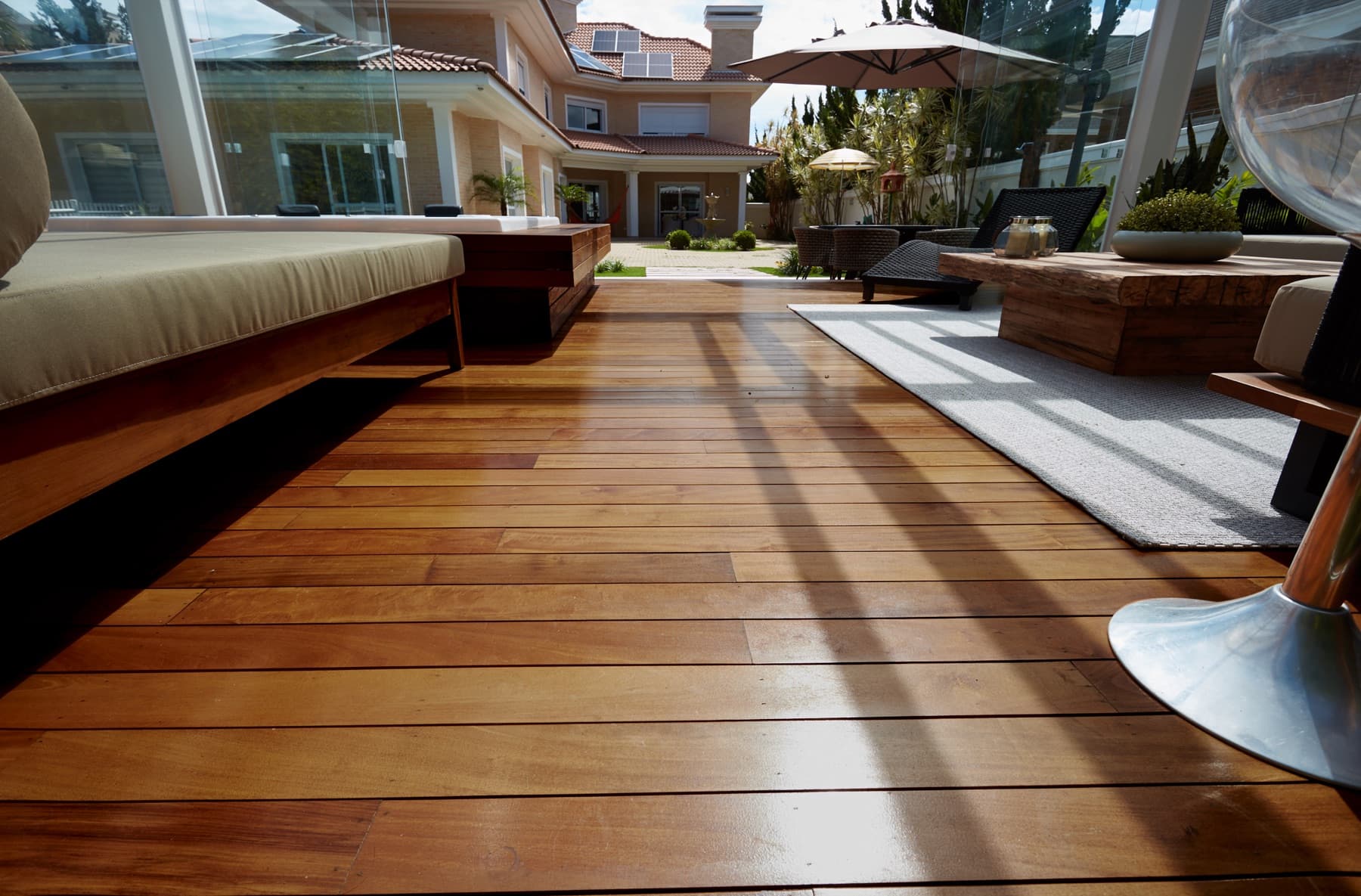
Assess Your Existing Deck Frame and Substructure
Before any new decking material is ordered, a professional inspection of your existing deck frame and substructure is essential. This step determines if the current framing can adequately support the weight and fastening requirements of hardwood decking. Hardwoods like Ipe and Cumaru are significantly denser and heavier than many common decking materials, requiring a robust and structurally sound foundation. Look for signs of rot, insect damage, or excessive deflection in joists, beams, and support posts. Any compromised elements must be repaired or replaced to ensure safety and longevity.
Consider the spacing of your joists. Hardwood decking often requires closer joist spacing than softer woods or composite materials to prevent flexing and ensure proper support. Standard spacing might be acceptable, but some hardwood profiles or installation methods may necessitate additional blocking or closer joist placement. Confirm the current joist material, size, and condition, as these factors directly impact the feasibility and cost of your renovation.
Selecting Hardwood Species for Sacramento's Climate
Sacramento's climate, characterized by hot, dry summers and mild, wet winters, influences the best choice for hardwood decking. Materials need to withstand significant temperature fluctuations and occasional moisture. Two popular and highly durable options are Ipe and Cumaru, both Brazilian hardwoods known for their resilience.
Ipe, also known as Brazilian Walnut, is highly regarded for its exceptional density, natural resistance to rot, insects, and mold, and minimal movement after installation. It boasts a reddish-brown to olive-brown color. Ipe is often considered the benchmark for outdoor hardwood decking due to its longevity. (S1)
Cumaru, another tropical hardwood, offers similar durability and resistance to termites and weather changes. It features a rich, reddish-brown hue and is noted for a subtle cinnamon and vanilla scent when worked. While slightly less dense than Ipe, Cumaru is still a very strong and durable option for demanding outdoor applications. (S1)
Board Profiles and Lengths for Renovation Planning
Hardwood decking is available in a variety of profiles and lengths. Common profiles include standard dimensional lumber sizes, with lengths typically ranging from 3 to 24 feet. For renovation projects, considering the available lengths is crucial for minimizing waste and optimizing the visual flow of your deck. Longer boards can reduce the number of end-to-end seams, creating a more continuous look.
When planning your layout, consider how board lengths will align with your existing frame and desired aesthetic. Some projects benefit from staggering board ends over joists, while others might aim for a more uniform appearance. Always account for cutting waste and order a sufficient overage. The specific profiles and lengths available can vary, so it's important to confirm current stock. (S1, S2)
Fastening Systems and Installation Considerations
The density of hardwood decking species like Ipe and Cumaru necessitates specific fastening techniques. Face-fastening, using screws driven through the face of the board, is a common and secure method. Pre-drilling is almost always required to prevent splitting due to the wood's hardness. Specialized deck screws designed for hardwoods are recommended.
Hidden fastening systems offer a cleaner, blemish-free surface by attaching boards from the side or underside. These systems can be more complex to install and may require specific board profiles or grooved edges. Whichever method you choose, ensure it is compatible with your chosen hardwood species and the structural requirements of your deck. Proper board spacing, as specified by the manufacturer, is also crucial for drainage and accommodating natural wood movement.
Worked Example: Renovating a 10' x 15' Deck in Sacramento
Let's consider a hypothetical deck renovation project for a 10-foot by 15-foot existing deck in Sacramento, totaling 150 square feet. We've confirmed the frame is sound and can support the new hardwood.
We plan to use Ipe decking boards, which are available in 1x6 inch (nominal) profiles. For simplicity, we'll assume an actual board width of 5.5 inches. To cover the 15-foot length of the deck, we'll need three 5-foot sections or two 8-foot sections for each run, allowing for cuts and waste.
For a 10-foot run, 33 boards of 10-foot length means 330 linear feet. With a 1x6 (nominal) board, this translates to approximately 165 board feet (330 linear feet * 0.5 board feet per linear foot for 1x6). Always add 10-15% for waste, cuts, and potential future repairs. For this project, a 15% waste factor would mean ordering approximately 190 board feet of Ipe. This calculation is a simplified example; actual material requirements will depend on precise measurements, desired layout, and specific board dimensions.
Before you order
- Have I had my existing deck frame professionally inspected for structural integrity?
- Is my existing joist spacing adequate for the chosen hardwood decking, or will modifications be needed?
- Which hardwood species (e.g., Ipe, Cumaru) best suits my aesthetic preferences and Sacramento's climate?
- Have I confirmed the available board profiles and lengths from my supplier?
- Have I calculated the necessary board footage, including a waste factor for cuts and errors?
- Which fastening system (face-fastened or hidden) is appropriate for my chosen hardwood and installation skill level?
- Have I planned for proper ventilation beneath the deck to prevent moisture issues?
- Am I prepared for the required maintenance to preserve the hardwood's color or allow it to patina naturally?
- Have I considered the overall project budget, including materials, fasteners, and potential labor costs?
Confirm installation details, approved uses and warranty terms in the current instructions for the exact product and profile. Your installer should verify the substrate, structure and applicable project requirements.
This is a planning guide for projects in Sacramento, CA. Ask our team to confirm availability, delivery to your ZIP code and which branch can support your order.
Questions to help you decide
How long can hardwood decking last in Sacramento's climate?
With proper installation and care, high-quality hardwood decking like Ipe can last for many decades, potentially 75 years or more. Cumaru also offers excellent longevity, often exceeding 25 years. Their natural density and resistance to rot, insects, and weather contribute to their extended lifespan, even in Sacramento's varying conditions. (S1, S2)
Does hardwood decking require special maintenance in Sacramento?
Hardwood decking is relatively low maintenance. A yearly wash is generally sufficient to keep it clean. If you wish to retain the original rich brown color of species like Ipe or Cumaru, you can apply a UV-blocking sealer or deck oil annually. If left untreated, the wood will naturally weather to a beautiful silvery-gray patina, which does not affect its structural integrity. (S1, S2)
Can I install hardwood decking over an existing concrete patio?
Installing hardwood decking over a concrete patio is possible, but it requires careful planning for drainage and ventilation. A sleeper system or a deck tile system is typically used to elevate the decking, allowing for airflow and preventing moisture buildup. Direct contact with concrete should be avoided. This type of installation would require specific substructure considerations beyond a traditional framed deck.
Ready to Plan Your Hardwood Deck Renovation?
For your Sacramento deck renovation project, request a material quote with your project dimensions, desired hardwood profile, and ZIP code. Our team can help confirm current availability and service options for your area. We recommend consulting with a professional contractor to ensure your existing frame is suitable for hardwood decking.
Request a material quote →