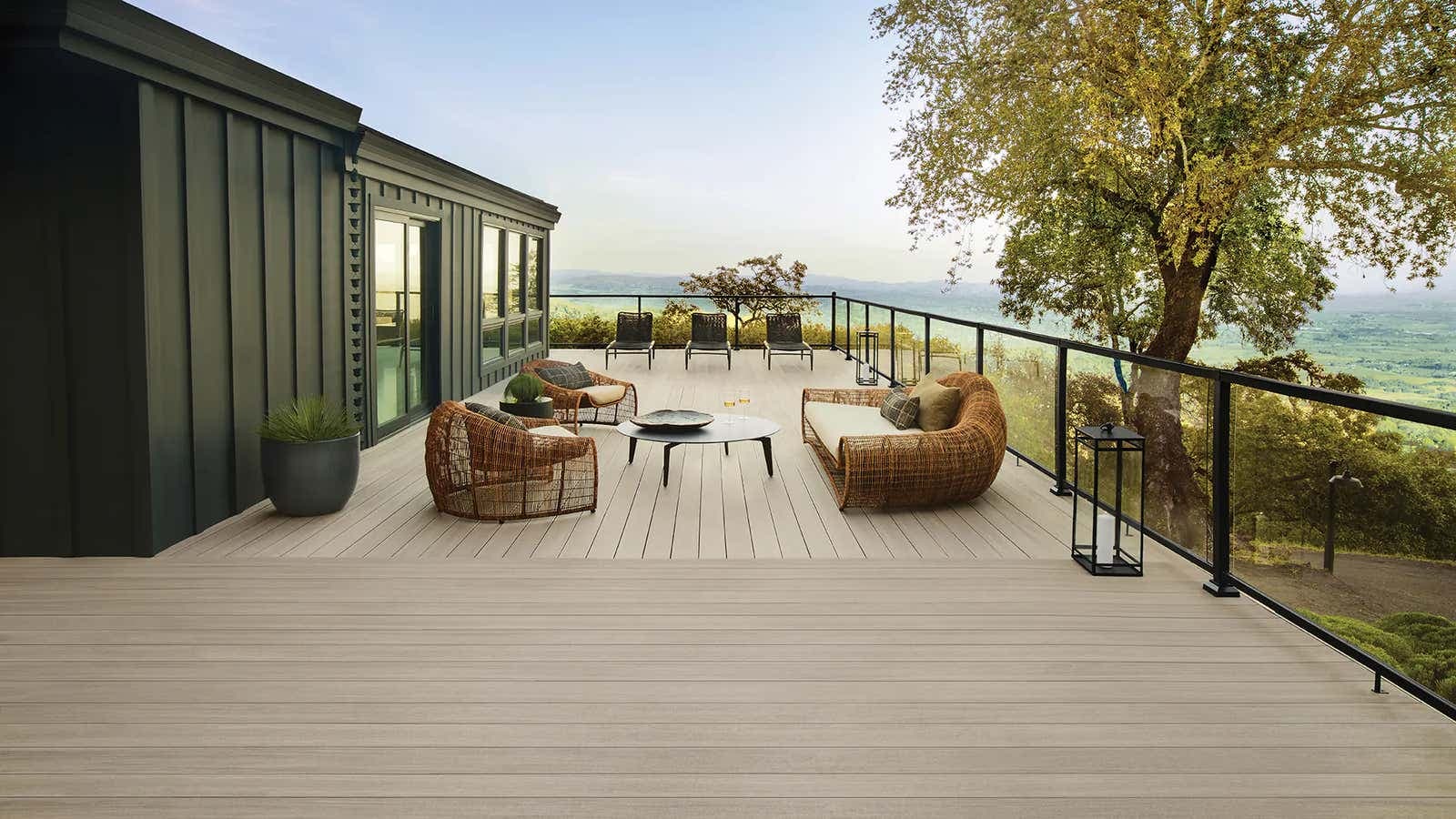
Maximizing Usable Space
In compact outdoor settings, every dimension matters. Composite decking boards are available in various widths and lengths, which can influence how efficiently you use the available area. Wider boards can sometimes make a small space feel more expansive by reducing the number of visible seams, while narrower boards might offer more design flexibility for intricate layouts or curves, if supported by the product system.
Consider the overall footprint of your project. For example, a standard 12-foot board might be suitable for a small balcony, but a shorter 8-foot or 10-foot board could minimize cuts and waste in a particularly tight spot. The direction of the deck boards can also create visual illusions, making a narrow space appear wider or a short space seem longer. Laying boards diagonally, for instance, can sometimes make a small area feel more dynamic and open, though this usually requires more material and careful planning for cuts.
Collection-Specific Support Details
Different composite decking collections, such as those from Trex, TimberTech, and Fiberon, have distinct installation requirements and support systems. Understanding these details is crucial, especially when working with limited space or existing structures.
For ground-level applications, some composite decking products are designed for direct installation over a prepared concrete slab, while others require a traditional substructure of joists and beams. Always consult the manufacturer's specific installation guide for the chosen collection to ensure proper support and ventilation. Adequate ventilation is particularly important for composite decking to prevent moisture buildup and ensure the longevity of the material. In compact spaces, this might mean designing a slightly raised deck or ensuring sufficient airflow around the perimeter.
Project Access and Logistics
Working in a compact outdoor space often presents logistical challenges. Consider how materials will be delivered and moved to the project site. Long composite decking boards can be difficult to maneuver through narrow gates, hallways, or up staircases. Planning for shorter board lengths or pre-cutting materials to manageable sizes before delivery might be necessary.
The presence of existing structures, such as walls, planters, or utility boxes, will also influence the installation process. Ensure there is enough clearance for tools and for installers to work comfortably. For elevated spaces like balconies, scaffolding or specialized lifting equipment might be required, which adds another layer of planning to the project. Confirming access routes and potential obstacles beforehand can help avoid delays and unexpected costs.
Worked Example: A 6x10 Foot Balcony Deck
Let's consider a hypothetical 6-foot by 10-foot balcony that needs a composite deck. The balcony is currently a bare concrete slab. The chosen composite boards are 5.5 inches wide and available in 12-foot lengths.
For the decking surface, running the 5.5-inch wide boards parallel to the 10-foot length, we would need roughly 13 boards (6 feet / 5.5 inches per board ≈ 13.09 boards). Since boards come in 12-foot lengths, we can cut these to 10 feet with 2 feet of offcut per board. This means we'd purchase 13 of the 12-foot boards. The offcuts could potentially be used for a picture frame border or other small elements if the product system allows for such use.
Delivery of 12-foot boards to a balcony might be challenging depending on the building's access. If stairs or elevators are too small, shorter, pre-cut lengths (e.g., 10-foot boards if available) might be preferable, or arrangements for direct crane lift might be necessary for larger projects or difficult access points.
Maintenance and Longevity in Compact Spaces
One of the key advantages of composite decking is its relatively low maintenance. Unlike natural wood, composite decking does not require regular sanding, staining, or sealing. A simple soap-and-water wash is typically sufficient for cleaning. This is particularly beneficial in compact spaces where performing extensive maintenance tasks can be cumbersome.
Manufacturers like Trex, TimberTech, and Fiberon offer composite decking products that are engineered for durability, resisting issues such as fading and staining. This longevity means that once installed, your compact outdoor deck will maintain its appearance with minimal effort, allowing you to enjoy your space rather than constantly maintaining it. Always refer to the specific manufacturer's cleaning and care guidelines for your chosen product to ensure proper upkeep.
Before you order
- Measure the exact dimensions of your compact outdoor space, noting any irregular shapes or fixed obstacles.
- Consider the desired visual effect: do you want to make the space feel wider, longer, or more dynamic?
- Review composite decking board widths and lengths available from different collections (Trex, TimberTech, Fiberon).
- Identify the specific substructure requirements for your chosen composite decking product (joist spacing, slab compatibility).
- Assess project access for material delivery and installation, including gates, stairwells, and any height restrictions.
- Plan for adequate ventilation underneath the deck, especially for ground-level or enclosed spaces.
- Factor in the long-term maintenance benefits of composite decking for a hassle-free outdoor area.
Confirm installation details, approved uses and warranty terms in the current instructions for the exact product and profile. Your installer should verify the substrate, structure and applicable project requirements.
This is a planning guide for projects in Sacramento, CA. Ask our team to confirm availability, delivery to your ZIP code and which branch can support your order.
Questions to help you decide
Can composite decking be installed directly over a concrete patio?
Some composite decking systems are designed for direct installation over a prepared concrete slab, while others require a traditional substructure of joists and beams. It is crucial to check the specific manufacturer's installation guidelines for the product you choose. Adequate drainage and ventilation are typically required even with direct installation.
What are the best board lengths for a small balcony deck?
The best board lengths depend on the dimensions of your balcony and the available product lengths. While longer boards might lead to less waste if cut precisely, shorter lengths (e.g., 8-foot or 10-foot) can be easier to transport and maneuver in compact spaces. Always compare the total linear footage needed against available board lengths to optimize your purchase and minimize waste.
How do I ensure proper ventilation for composite decking in a confined space?
Proper ventilation is vital for composite decking to prevent moisture accumulation and ensure material stability. In confined spaces, this may involve designing a slightly raised deck to allow airflow underneath, using perimeter gaps, or incorporating vents. Always follow the manufacturer's recommendations for minimum clearance and ventilation requirements specific to your chosen product.
Ready to Plan Your Compact Outdoor Deck?
Request a material quote with your project dimensions, exact profile, and ZIP code. We can help confirm current availability and service options for your Sacramento, CA project. Explore our full range of options at our composite decking page, or consider other materials like hardwood decking, Ipe hardwood, or PVC decking for your outdoor space.
Request a material quote →