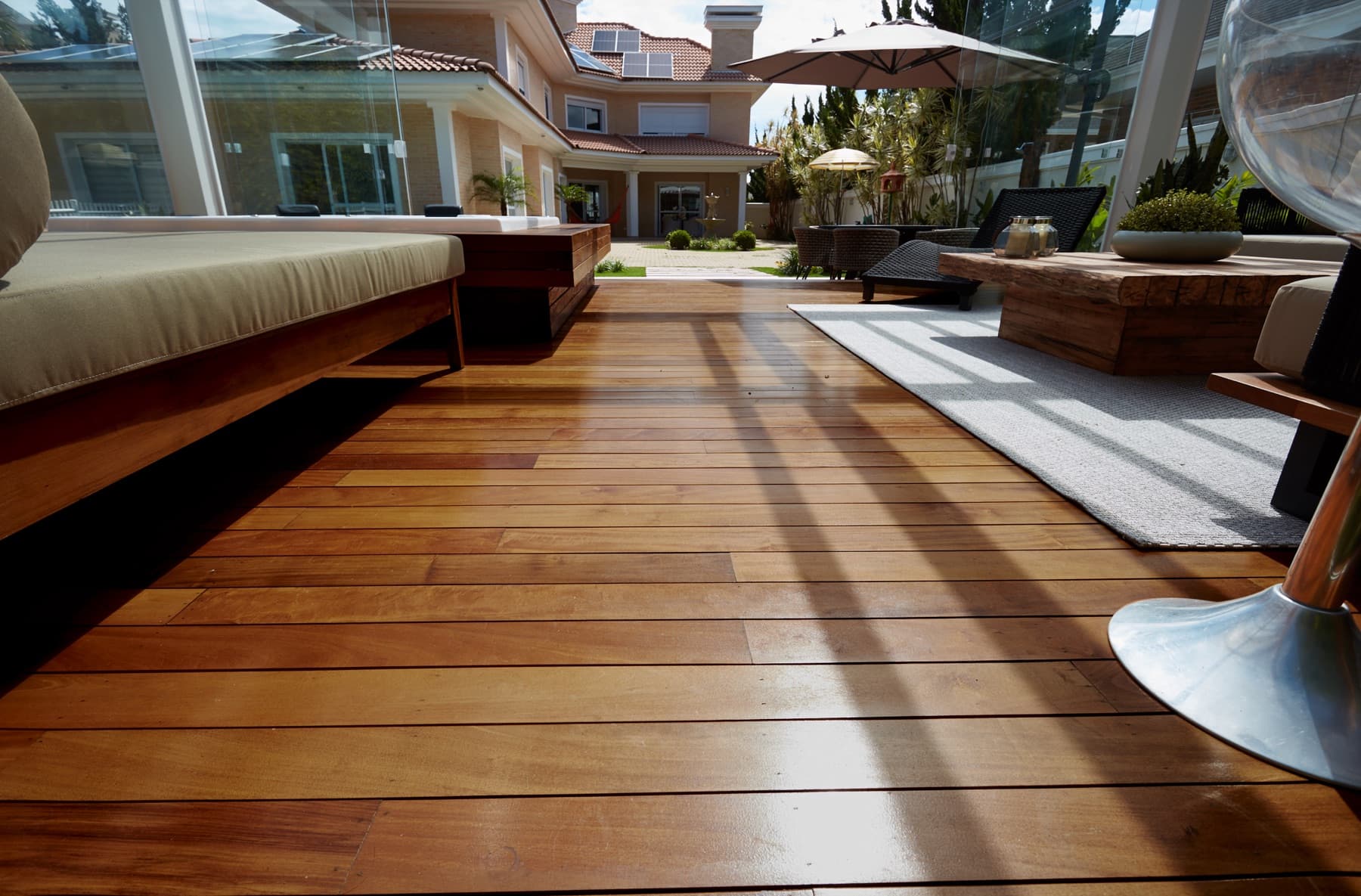
Assess Your Existing Deck Frame and Structure
Before selecting any new decking material, a thorough inspection of your existing deck frame is essential. Hardwood decking, particularly dense species like Ipe or Cumaru, can be heavier than some alternative materials. Your current joists, beams, and footings must be in sound condition and capable of supporting the increased load.
Look for any signs of rot, insect damage, or structural weakness in the wood. Check for loose connections, rusted fasteners, or excessive deflection. It's often prudent to consult with a qualified builder or engineer to ensure the integrity of your substructure, especially if the original deck is older or shows significant wear. This assessment will determine if the existing frame can be reused as-is, requires reinforcement, or needs complete replacement. If the frame needs significant work, consider the overall cost implications for your project.
Ensure that the spacing of your existing joists is compatible with hardwood decking installation requirements. Different board thicknesses and species may have specific span limitations. Always refer to the manufacturer's guidelines for the chosen hardwood species to confirm joist spacing suitability.
Comparing Hardwood Decking Species: Ipe and Cumaru
Lumber Plus offers a range of Brazilian hardwood decking options, with Ipe and Cumaru being popular choices for their resilience and appearance. Understanding their characteristics is key to making an informed decision for your renovation.
Ipe, also known as Brazilian walnut, is a dense and durable hardwood. It ranges from reddish-brown to olive-brown and is prized for its minimal movement post-installation and natural resistance to weather changes, mold, and termites. Ipe is often considered a benchmark for outdoor decking due to its longevity. (Source: S1)
Cumaru is another very durable tropical hardwood. It is resistant to termites and weather changes, making it suitable for a variety of applications. Cumaru offers stiffness, strength, and extreme hardness, along with natural resistance to insects, rot, and fungi. When worked, Cumaru can give off a scent of cinnamon and vanilla. (Source: S1)
Both Ipe and Cumaru are known for their ability to withstand the elements, including harsh winter conditions, and can be left untreated to weather to a silvery-gray patina or maintained with a UV-blocking sealer to preserve their original color. (Source: S1, S2)
Board Profiles and Lengths: Planning Your Layout
Hardwood decking is available in various profiles and lengths, which will influence your deck's appearance and installation process. Common profiles include standard decking boards, often with eased edges. When planning your renovation, consider how different board widths and lengths will work with your existing deck dimensions and desired aesthetic. Longer boards can reduce the number of end joints, creating a more seamless look, while shorter boards might be more economical for smaller, irregular areas.
For example, Ipe is available in dimensions from 1"x2" through 6"x6" and lengths from 3–24 feet. (Source: S1) This variety allows for flexibility in design, whether you're aiming for a classic linear layout or a more intricate pattern. Always confirm current profiles and lengths available for your chosen species before finalizing your design. (Source: S2)
Installation Considerations for Hardwood Decking
Installing hardwood decking, especially dense species like Ipe or Cumaru, requires specific tools and techniques. Due to their hardness, pre-drilling pilot holes is often necessary before fastening to prevent splitting. Specialized fasteners, including hidden fastening systems, are available to create a clean, screw-free surface. Discussing fastening options with your installer is crucial to ensure proper technique and a durable finish.
Proper ventilation beneath the deck is vital for hardwood decking, especially in climates with significant temperature and moisture fluctuations. Adequate airflow helps prevent moisture accumulation, which can lead to warping or cupping. Ensure that your deck design allows for sufficient cross-ventilation, particularly if you are enclosing the area beneath the deck or have low-to-grade sections.
Worked Example: Renovating a 10'x12' Deck in Pierre, SD
Let's consider a hypothetical renovation project for an existing 10-foot by 12-foot deck in Pierre, SD. The homeowner wants to replace worn composite decking with durable Ipe hardwood.
First, the existing decking is removed. A thorough inspection confirms the joists are sound. The homeowner chooses Ipe decking in a 1x6 (nominal, actual dimensions around 3/4" x 5.5") profile. To cover the 120 square feet, we calculate the number of boards. A 5.5-inch wide board means approximately 2.18 boards per linear foot of width (120 inches / 5.5 inches per board). So, for a 10-foot (120-inch) width, we'd need about 22 boards (120 / 5.5 = 21.8).
For the 12-foot length, if using 12-foot boards, 22 boards would be needed. Total linear footage: 22 boards * 12 feet/board = 264 linear feet. Accounting for potential cuts, waste, and a few extra boards for safety, ordering approximately 280-300 linear feet of 12-foot Ipe boards would be a reasonable starting point.
The project also includes new fascia boards for the perimeter. For a 10'x12' deck, this means two 10-foot lengths and two 12-foot lengths, totaling 44 linear feet of fascia. The homeowner plans to use a UV-blocking sealer to maintain the Ipe's rich reddish-brown color, which will be applied after installation. This example assumes standard joist spacing and a simple rectangular layout. More complex designs or irregular shapes would require a more detailed takeoff plan.
Before you order
- Inspect existing deck frame: Check joists, beams, and footings for rot, damage, and stability.
- Verify joist spacing: Ensure it's compatible with your chosen hardwood decking species and thickness.
- Choose hardwood species: Compare Ipe, Cumaru, Garapa, or other options based on durability, appearance, and budget.
- Select board profile and length: Consider how board dimensions will affect your deck's aesthetic and installation efficiency.
- Plan for fastening: Decide between face-fastening and hidden fastener systems and ensure appropriate tools and techniques.
- Consider ventilation: Confirm adequate airflow beneath the deck to prevent moisture issues.
- Determine desired finish: Decide if you will let the wood weather to gray or apply a UV-blocking sealer to maintain its color.
- Calculate material quantities: Accurately measure your deck and account for cuts and waste.
- Consult with professionals: Engage a builder or engineer for structural assessment and a skilled installer for installation.
Confirm installation details, approved uses and warranty terms in the current instructions for the exact product and profile. Your installer should verify the substrate, structure and applicable project requirements.
This is a planning guide for projects in Pierre, SD. Ask our team to confirm availability, delivery to your ZIP code and which branch can support your order.
Questions to help you decide
How does hardwood decking perform in Pierre, SD's winter conditions?
Hardwood species like Ipe and Cumaru are naturally dense and resistant to extreme weather changes, including cold temperatures and moisture. Their natural oils help protect them from cracking or warping, making them suitable for areas with winter exposure. (Source: S1)
Can I reuse my old deck frame with new hardwood decking?
It depends on the condition and structural integrity of your existing frame. Hardwood decking can be heavier than other materials, so a professional assessment is crucial to determine if your current joists, beams, and footings can safely support the new decking or if reinforcements are needed.
What maintenance does hardwood decking require in Pierre, SD?
Hardwood decking is relatively low maintenance. A wash once a year is typically sufficient. If you prefer to maintain the wood's original color, an annual application of a UV-blocking oil or sealer is recommended. If left untreated, the wood will naturally weather to a silvery-gray patina with no structural difference. (Source: S2)
Ready to Plan Your Hardwood Deck Renovation?
Request a material quote with your project dimensions, desired hardwood profile, and ZIP code. We can help confirm current availability and service options for your Pierre, SD project. Visit our product pages for more information on specific species like Ipe and Cumaru, or general hardwood decking. We also offer composite and PVC decking options for comparison.
Request a material quote →