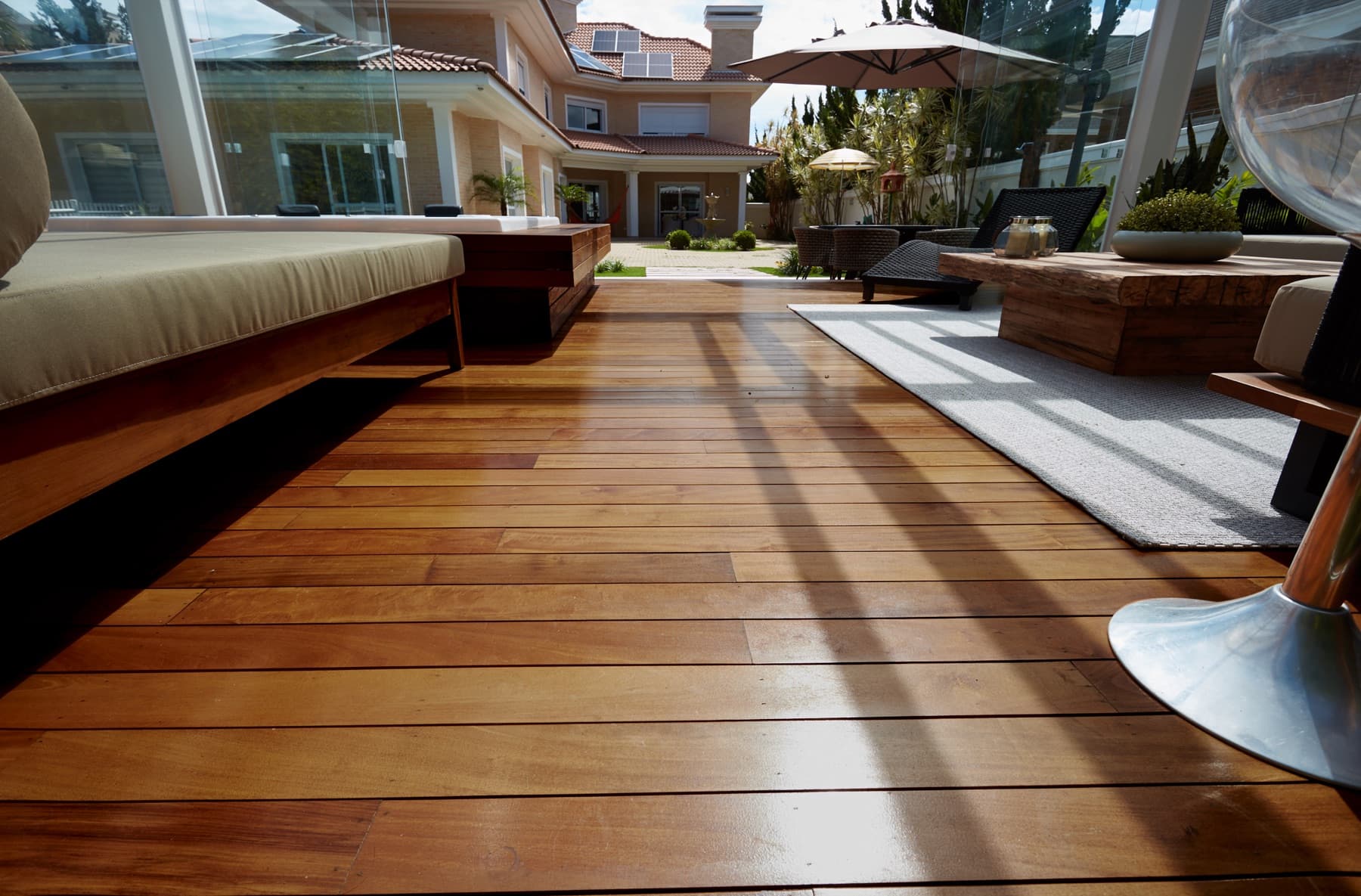
Assessing Your Existing Deck Structure
Before selecting any new decking material, a thorough inspection of your existing deck's substructure is crucial. In Missoula's climate, which can experience significant temperature fluctuations and moisture, wood frames should be checked for rot, insect damage, or excessive warping. Pay close attention to joists, beams, and support posts. Any compromised structural elements must be repaired or replaced before new decking is installed.
Verify that your current framing is robust enough to support the weight of hardwood decking. Hardwoods like Ipe and Cumaru are denser and heavier than many common softwoods or composite options. Consult with a qualified builder or engineer to ensure your existing frame can safely accommodate the increased load. This step is non-negotiable for safety and longevity.
Also, consider the spacing of your joists. Many hardwood decking profiles require specific joist spacing to ensure adequate support and prevent deflection. If your existing joist spacing does not meet the requirements for your chosen hardwood, modifications may be necessary.
Choosing Your Hardwood Species: Ipe vs. Cumaru
When considering hardwood for your Missoula deck renovation, Ipe and Cumaru are two prominent choices known for their exceptional durability and aesthetic appeal. Each offers distinct characteristics:
Ipe, often called Brazilian Walnut, is a benchmark for outdoor decking due to its extreme density and resistance to rot, insects, and weather changes. It features a rich reddish-brown to olive-brown color that can be maintained with an annual oil application or allowed to weather to a silvery-gray. Ipe's natural oils contribute to its resistance to cracking and warping. Its durability makes it a long-term investment for a Missoula deck.
Cumaru is another highly durable tropical hardwood, often compared to Ipe. It shares many of Ipe's advantages, including resistance to termites and weather changes, and a Class A fire resistance. It typically presents a reddish-brown hue and is known to emit a subtle cinnamon and vanilla scent when worked. Cumaru offers a strong alternative for projects where budget is a consideration while still desiring high performance.
Other hardwood options such as Garapa, Tigerwood, Angelim, and Jatoba are also available, each with unique characteristics in terms of color, grain, and density. Garapa, for instance, is noted for its golden tone and value, while Tigerwood offers dramatic grain patterns. Your choice will depend on the desired aesthetic, performance requirements, and budget for your Missoula project.
Planning for Ventilation and Drainage
Proper ventilation and drainage are critical for the longevity of any deck, especially in Missoula's climate, which can see both wet periods and snowmelt. Hardwood decking, while highly durable, still benefits from good airflow beneath to prevent moisture buildup and ensure the structural integrity of both the decking and the substructure.
Ensure there is adequate space between the bottom of the deck boards and the ground or any impermeable surface. This allows air to circulate, helping to dry out moisture. If your deck is low to the ground, consider adding vents or ensuring open sides to facilitate airflow. Proper spacing between individual deck boards is also essential for drainage and ventilation, allowing water to pass through and air to move freely.
Existing drainage patterns around and under your deck should also be reviewed. Reroute downspouts or grade the surrounding landscape if necessary to direct water away from the deck's foundation and substructure.
Considering Board Profiles and Lengths
Hardwood decking is available in various profiles and lengths, which can impact both the appearance and installation of your renovated deck. Common profiles include standard dimensional lumber, such as 1x4 or 5/4x6 boards. The choice of profile can influence the visual scale of your deck and the type of fastening system used.
Available lengths for hardwood decking can range from 3 to 24 feet. Planning your layout to minimize waste and visible seams is important. For a seamless look, longer boards are often preferred, but they may require more careful handling during installation. Consider how board lengths will align with your deck's dimensions and whether any special patterns, such as a diagonal layout or a picture-frame border, are desired.
When renovating, assess how new board profiles will integrate with any existing elements you plan to keep, such as railings or stairs. Consistency in material and finish can create a cohesive look. For specific profile and length availability, it is advisable to confirm current stock with a supplier, as this can vary.
Hypothetical Renovation Example: A Missoula Backyard Deck
Imagine a Missoula homeowner is renovating an existing 12-foot by 16-foot pressure-treated pine deck. The homeowner desires a durable, low-maintenance hardwood aesthetic.
After inspection, the existing pressure-treated joists are found to be sound and adequately spaced for most hardwood decking. The homeowner chooses Ipe decking in a 1x6 (nominal) profile, considering its longevity and resistance to Missoula's weather. The total deck area is 192 square feet.
For a 12-foot by 16-foot deck using 1x6 nominal boards (approximately 5.5 inches actual width), the homeowner would need approximately 350-370 linear feet of Ipe decking, accounting for cuts and waste. If using primarily 16-foot lengths, they would need around 22-24 boards (192 sq ft / (16 ft * 0.458 ft/board) = 26.1 boards, plus waste). For a 12-foot width, they would need 26 boards (12 ft / 0.458 ft/board = 26.2 boards). This suggests ordering in full 16-foot lengths where possible to minimize end cuts. For the 12-foot dimension, some boards will need to be cut, and careful planning is needed to use the offcuts efficiently for fascia or other smaller sections. The homeowner also plans for proper ventilation gaps between boards and ensures existing drainage directs water away from the foundation.
Before you order
- Have you had your existing deck substructure professionally inspected for integrity?
- Is your existing framing capable of supporting the increased weight of hardwood decking?
- Do your joist spacings meet the requirements for your chosen hardwood decking profile?
- Have you considered the long-term maintenance preferences (e.g., oiling for color retention, or allowing to silver)?
- Have you confirmed the availability of desired hardwood species, profiles, and lengths?
- Is there adequate ventilation and drainage planned for the renovated deck?
- Have you calculated the material quantities, including waste, for your project dimensions?
- Have you considered compatible fastening systems for your chosen hardwood?
- Are there any local building codes or permits required for deck renovation in Missoula?
Confirm installation details, approved uses and warranty terms in the current instructions for the exact product and profile. Your installer should verify the substrate, structure and applicable project requirements.
This is a planning guide for projects in Missoula, MT. Ask our team to confirm availability, delivery to your ZIP code and which branch can support your order.
Questions to help you decide
Can I install hardwood decking over my existing pressure-treated frame?
Yes, in many cases, provided the existing pressure-treated frame is in excellent structural condition, free from rot or significant damage, and adequately spaced to support the denser hardwood decking. A professional inspection is highly recommended to confirm its suitability.
How do I maintain the original color of my hardwood deck in Missoula?
To preserve the original rich color of hardwood decking like Ipe or Cumaru, you can apply a UV-blocking oil or sealer annually. If left untreated, the wood will naturally weather to a beautiful silvery-gray patina, which is structurally sound and requires less frequent maintenance.
What is the typical lifespan of hardwood decking in Missoula's climate?
With proper installation and care, hardwood decking species like Ipe can last up to 75 years, and Cumaru over 25 years. Their natural density and resistance to rot, insects, and weather changes make them exceptionally durable choices for Missoula's varied climate, often outperforming many synthetic alternatives.
Ready to Transform Your Missoula Deck?
Request a material quote with your project dimensions, exact profile, and ZIP code to confirm current availability and service options for hardwood decking. Our team can help you select the ideal materials for your renovation.
Request a material quote →