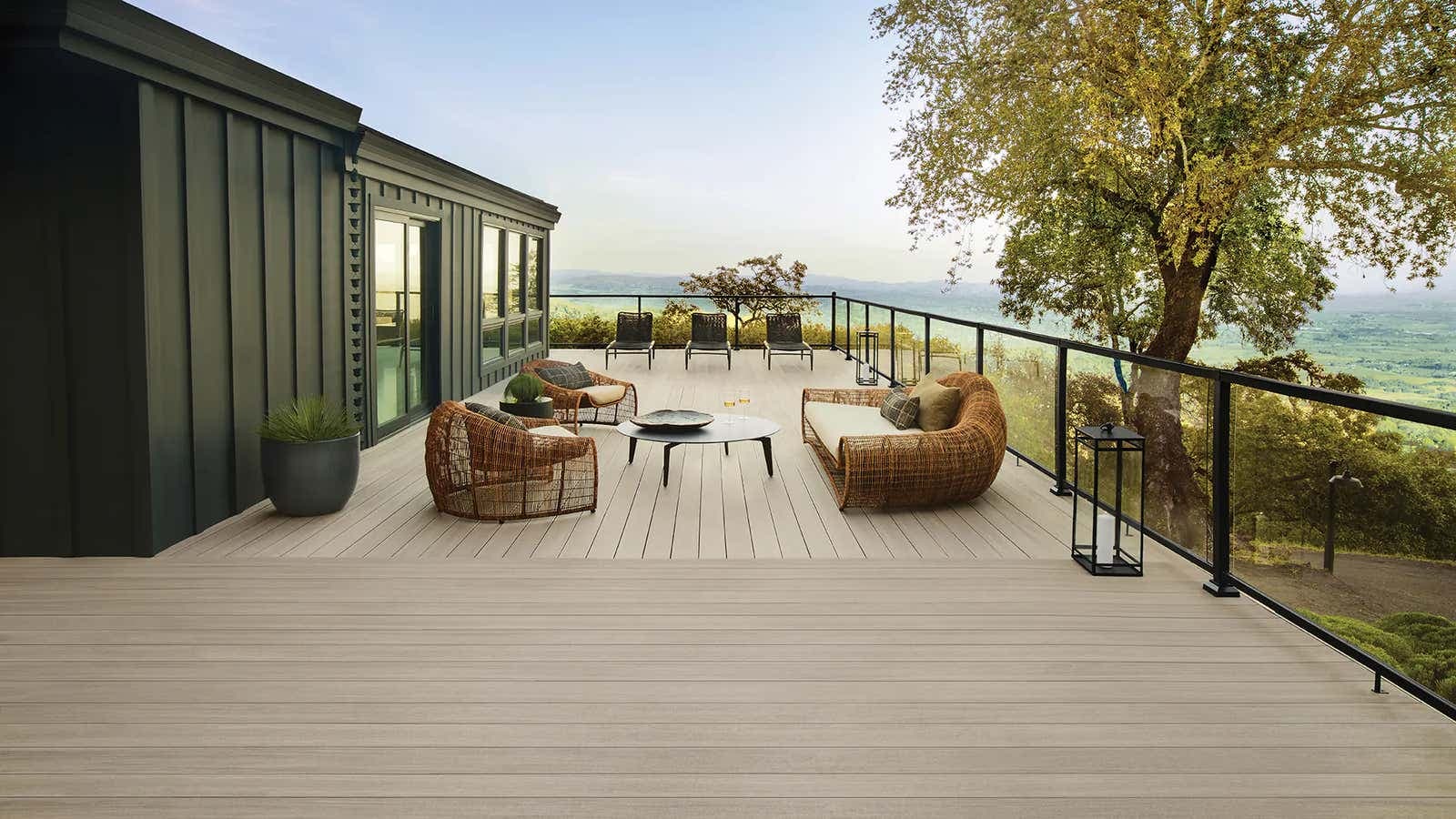
Understanding Your Compact Space: Balcony, Patio, or Courtyard?
Before selecting composite decking, define the exact nature of your compact outdoor space. Is it a narrow balcony, a small urban patio, or a more enclosed courtyard? Each type presents distinct considerations.
Balconies often have structural weight limitations and require materials that are relatively lightweight and easy to maneuver during installation. Patios on grade may need attention to drainage and sub-surface preparation. Courtyards, being more enclosed, might benefit from lighter colors to brighten the area or specific board layouts to create visual interest. The surrounding structures and existing access points will influence material delivery and installation logistics.
Choosing Composite Decking Collections for Small Spaces
Composite decking comes in various collections and profiles, each with different characteristics. For compact spaces, consider how these features impact the overall feel and practicality.
Some composite decking brands, such as Trex, TimberTech, and Fiberon, offer diverse collections. For example, a collection with a consistent, uniform grain and color (S1) can create a seamless look that visually expands a smaller area. Lighter colors can reflect more light, making a shaded courtyard feel brighter and more open. Conversely, darker tones can create a cozy, intimate atmosphere, particularly in spaces designed for evening use.
Consider the board width as well. While standard widths are common, some manufacturers offer narrower or wider boards. Narrower boards can sometimes make a small deck appear longer or wider, depending on the orientation, by increasing the number of visible lines. Wider boards can reduce the number of seams, offering a more monolithic surface that feels less cluttered.
Profiles and Their Impact on Usable Space
Composite decking profiles refer to the shape and thickness of the boards. Standard solid or grooved profiles are common. For compact spaces, the profile choice can have practical implications beyond aesthetics.
Solid boards generally offer a denser feel and can be face-fastened or used with hidden fasteners, depending on the specific product. Grooved boards are designed to work with hidden fastening systems, which result in a smooth, fastener-free surface. This clean appearance can be particularly beneficial in small areas where visual clutter should be minimized.
For projects requiring minimal elevation, some composite decking systems are designed for installation over low-profile substructures, or even directly over existing concrete in specific applications. Always verify the manufacturer's exact installation guidelines for your chosen product, especially regarding ventilation and support requirements, to ensure proper performance and warranty compliance.
Navigating Project Access and Delivery in Missoula, MT
Logistics for material delivery and project access are crucial for compact outdoor spaces, especially in urban settings like Missoula, MT. Consider how materials will be transported from the delivery truck to the installation site.
Narrow pathways, staircases, or limited street access can complicate delivery of long decking boards. It may be more practical to order shorter board lengths if available, or to arrange for staged delivery. Discuss potential access challenges with your supplier when requesting a quote. Confirming current lines, colors, and delivery timing with a local branch (S1) is also advisable.
For a project on a second-story balcony or a backyard with restricted entry, ensure there's a clear plan for moving materials without damaging existing landscaping or property. This planning can help prevent delays and additional costs.
Worked Example: A 10x8 Foot Missoula Courtyard Deck
Consider a hypothetical 10-foot by 8-foot courtyard deck project in Missoula, MT, totaling 80 square feet. The goal is to maximize the feeling of space and minimize maintenance.
To achieve this, we select a light-colored composite decking from a collection known for its consistent color and minimal grain pattern, such as a Trex or Fiberon collection (S1). Let's assume the chosen boards are 12 feet long and 5.5 inches wide (nominal).
For a 10-foot width, laying boards parallel to the 8-foot dimension would mean each 12-foot board could be cut to yield one 8-foot section, with a 4-foot offcut. However, to minimize seams and optimize material use across the 10-foot dimension, laying boards parallel to the 10-foot dimension is often preferred. This would mean cutting 12-foot boards to 10-foot lengths, leaving 2-foot offcuts.
A 10-foot wide deck (120 inches) with 5.5-inch wide boards would require approximately 120 / 5.5 = 21.8 boards. Rounding up, we'd need 22 full board widths. If each board is 10 feet long, and they come in 12-foot lengths, we would need 22 boards, each cut to 10 feet. This results in 22 x 12 = 264 linear feet of purchased material. The 2-foot offcuts from each board are unlikely to be reusable for the main deck surface but might be useful for small trim pieces if the product permits.
This approach minimizes visible seams and provides a continuous look, enhancing the sense of space. Using a hidden fastener system with grooved boards would further contribute to a clean, uncluttered surface, which is ideal for a compact area.
Before you order
- Determine the exact dimensions and type of your compact outdoor space (balcony, patio, courtyard).
- Assess project access for material delivery and installation (narrow paths, stairs, street access).
- Research composite decking collections for aesthetics (color, grain) and suitability for compact areas.
- Consider board width and length options to optimize material use and visual flow.
- Verify manufacturer installation requirements, especially for ventilation and support in low-clearance areas.
- Plan for hidden fasteners to achieve a clean, fastener-free surface.
- Request a material quote with exact dimensions, desired profile, and your Missoula ZIP code.
- Confirm current availability and service options with Lumber Plus.
- Factor in potential offcuts and their usability for trim or other small elements.
Confirm installation details, approved uses and warranty terms in the current instructions for the exact product and profile. Your installer should verify the substrate, structure and applicable project requirements.
This is a planning guide for projects in Missoula, MT. Ask our team to confirm availability, delivery to your ZIP code and which branch can support your order.
Questions to help you decide
Can composite decking be installed directly over an existing concrete patio in Missoula, MT?
Installing composite decking directly over concrete often requires specific conditions and a proper substructure to ensure adequate ventilation and drainage. Without proper airflow, moisture can become trapped, potentially affecting the decking or the underlying concrete. Always consult the manufacturer's installation guide for your specific composite decking product, as requirements vary. Some systems are designed for low-clearance applications, but a minimal air gap is usually necessary.
What maintenance is required for composite decking in a compact Missoula outdoor space?
Composite decking is known for its low maintenance requirements compared to natural wood. Generally, it requires an annual wash with soap and water to remove dirt, pollen, and debris (S1). Some manufacturers offer specific cleaning products, and it's important to use only compatible solutions to avoid damaging the surface. Unlike wood, composite decking does not require sanding, staining, or sealing (S1).
Are there lighter-colored composite decking options suitable for brightening a shaded courtyard?
Yes, many composite decking manufacturers offer a wide range of colors, including various shades of light gray, beige, and off-white. Lighter colors can reflect more sunlight, which can help brighten a shaded courtyard or a compact space that receives limited direct sun. When selecting a color, consider requesting samples to see how they appear in your specific lighting conditions throughout the day. Some collections also feature cooler-underfoot options (S1).
Plan Your Compact Composite Decking Project
Ready to transform your Missoula outdoor space? Request a material quote for composite decking. Provide your project dimensions, desired profile, and ZIP code to confirm current availability and service options.
Request a material quote →