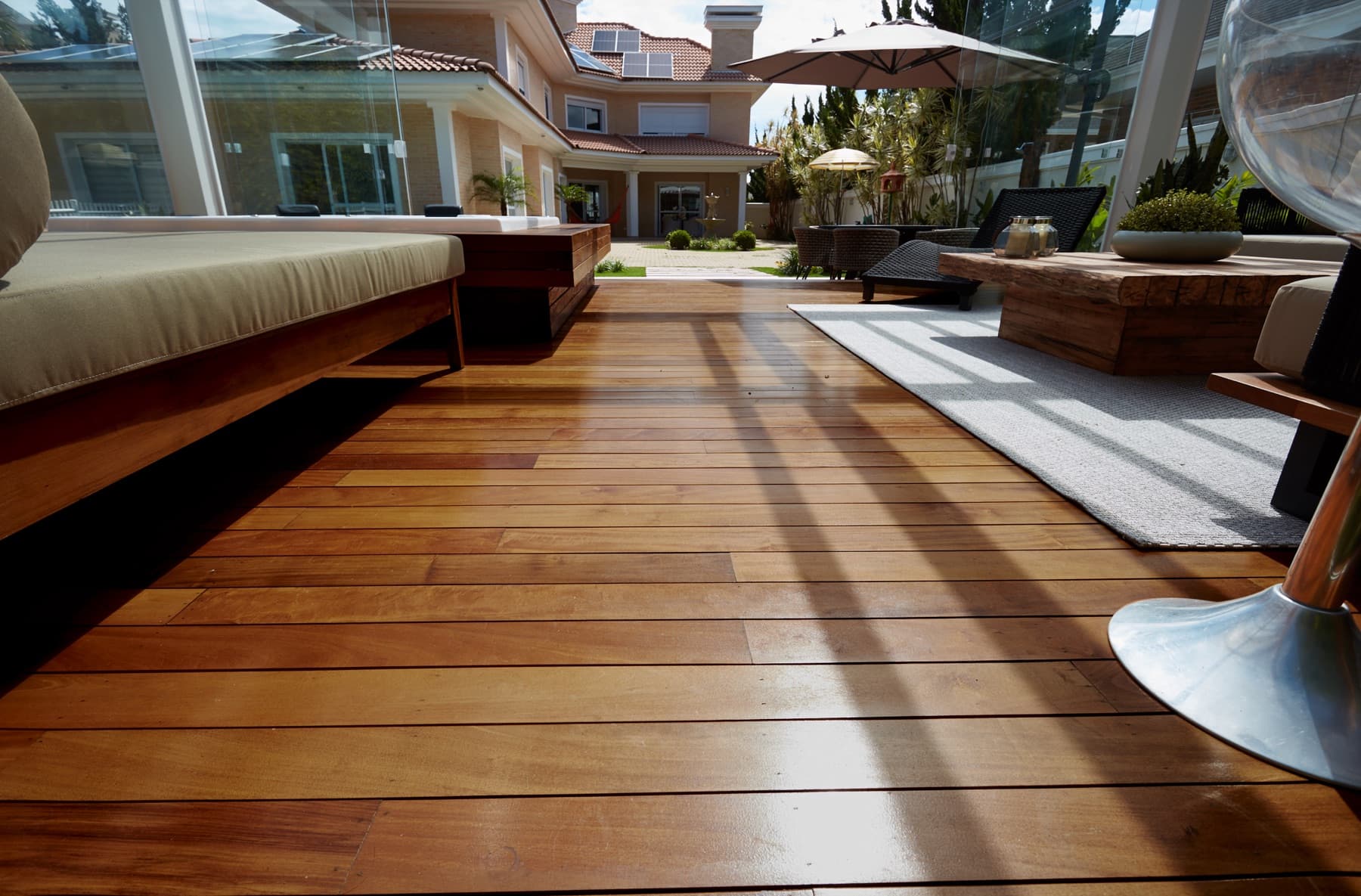
Assessing Your Existing Deck Frame for Hardwood
Before selecting any new decking material, a thorough inspection of your existing deck frame is paramount. Hardwood decking species like Ipe and Cumaru are significantly denser and heavier than common softwood alternatives. This added weight demands a robust substructure.
Begin by checking all joists, beams, and support posts for any signs of rot, insect damage, or structural compromise. Pay close attention to connections, fasteners, and areas where water may have accumulated. Ensure the ledger board, which attaches the deck to your house, is secure and free from decay. Any compromised elements must be repaired or replaced before new decking is installed.
Verify that your current framing meets local building codes for live and dead loads. While older decks might have met codes at the time of construction, modern standards often require greater strength. If your existing joists are widely spaced, you may need to add blocking or sister new joists to meet the spacing requirements for hardwood decking, which often specifies closer support.
Why Choose Hardwood for Your Renovation?
Hardwood decking offers distinct advantages for a renovation project, particularly in climates with varied seasons like Milwaukee. Species such as Ipe and Cumaru are recognized for their exceptional durability and natural resistance.
It is often cited for its longevity and minimal movement after installation.
These hardwoods do not require chemical pressure treatment, relying on their natural density and oils for protection. They also offer a premium aesthetic, with colors ranging from reddish-brown to olive-brown for Ipe, and a spectrum of brown tones for Cumaru.
While the upfront material cost for hardwood can be higher, its extended lifespan and reduced need for chemical maintenance can contribute to lower long-term ownership costs compared to many other decking materials. For a Milwaukee deck that endures seasonal changes, from humid summers to cold winters, this natural resilience can be a significant benefit.
Hardwood Species Spotlight: Ipe and Cumaru
When considering hardwood for your deck renovation, Ipe and Cumaru are two prominent choices, each with specific characteristics.
Ipe (Handroanthus spp.) is recognized as a benchmark for outdoor decking. It's extremely dense, with an air dry density of 5.75 lbs/bf. Its natural oils contribute to its resistance to warping, cracking, and insect infestation. Ipe's color deepens with a UV-blocking sealer or can be allowed to weather to a silvery-gray patina without affecting its structural integrity. It is available in various profiles and lengths, typically from 1"x2" to 6"x6" dimensions and 3–24 ft lengths.
Cumaru (Dipteryx odorata) is another highly durable tropical hardwood. It shares Ipe's resistance to rot, insects, and fungi, and is also known for its strength and hardness. Cumaru's color ranges from light to dark brown, and it can exhibit a unique scent of cinnamon and vanilla when worked. Like Ipe, it performs well in challenging outdoor conditions and can be maintained to retain its original color or allowed to weather naturally.
Both species are sourced with consideration for sustainable forestry practices by many suppliers. Your choice between them may come down to specific aesthetic preferences, available profiles, and budget.
Calculating Material Needs for a Hardwood Deck Renovation
Accurate measurements are crucial for any renovation. For a deck, you'll need the total square footage of the deck surface. Measure the length and width of each section of your deck to determine the area. For example, a rectangular deck that is 10 feet wide by 15 feet long is 150 square feet.
Hardwood decking is typically sold by the linear foot or board foot. To convert square footage to linear feet, you need to know the width of the boards you plan to use. Common decking board widths include 4-inch and 6-inch nominal sizes. For a 5.5-inch actual width board, you would need approximately 2.18 linear feet per square foot (12 inches / 5.5 inches). So, for a 150 sq ft deck, you'd need about 327 linear feet of decking (150 sq ft * 2.18 LF/sq ft).
Always account for waste due to cuts, irregular shapes, and potential imperfections. A standard waste factor of 10-15% is often recommended for decking projects. For our 150 sq ft example, adding 15% waste means ordering approximately 376 linear feet (327 LF * 1.15).
Consider board lengths. While hardwood decking is available in a range of lengths (e.g., 3-24 ft), planning your layout to minimize cuts and maximize the use of full boards can be cost-effective. Sketching a simple deck plan can help visualize where seams will fall and how many full boards versus cut pieces you'll need. Don't forget to include material for fascia boards or any trim if you plan to replace those as well.
Installation Considerations for Hardwood Decking
Installing hardwood decking, especially dense species like Ipe and Cumaru, requires specific tools and techniques. Due to their hardness, pre-drilling pilot holes for fasteners is generally necessary to prevent splitting. Specialized fasteners, including hidden fastening systems or appropriate face screws, should be used according to manufacturer recommendations.
Proper ventilation beneath the deck is vital to prevent moisture accumulation and ensure the long-term stability of the wood. Ensure there is adequate airflow to allow the decking to dry evenly after rain or snow. This is particularly important in a climate like Milwaukee, where humidity and precipitation levels can vary significantly.
Allow for proper spacing between deck boards to accommodate natural expansion and contraction due to changes in humidity and temperature. The exact spacing will depend on the specific product and local climate conditions; always consult the manufacturer's installation guidelines.
While it is possible for experienced DIYers, professional installation is often recommended for hardwood decking due to its density and the precision required for a successful and durable outcome. An experienced installer will be familiar with the nuances of working with these materials and ensuring proper structural integration with your renovated frame.
Maintaining Your Hardwood Deck in Milwaukee's Climate
Hardwood decking, while durable, benefits from consistent, albeit minimal, maintenance to preserve its appearance and extend its lifespan. In Milwaukee's climate, which includes cold winters and humid summers, understanding seasonal care is important.
The primary maintenance task is annual cleaning. A simple wash with water and a soft-bristle brush can remove dirt, pollen, and mildew. Avoid harsh chemicals or high-pressure washers, which can damage the wood fibers.
If you prefer to maintain the original rich color of your hardwood deck, apply a UV-blocking oil or sealer annually or as needed. If left untreated, Ipe and Cumaru will naturally weather to a silvery-gray patina, which does not impact their structural integrity. This silvering is a desirable aesthetic for many and requires less frequent treatment.
In winter, ensure snow and ice are cleared promptly to prevent prolonged moisture exposure. Avoid using rock salt or harsh de-icing chemicals, which can potentially stain or harm the wood. Proper ventilation under the deck also helps manage moisture year-round, preventing issues like cupping or warping.
Before you order
- Assess existing deck frame for structural integrity (joists, beams, posts, ledger board).
- Verify existing frame meets local building codes for live and dead loads.
- Determine if joist spacing is adequate for hardwood decking (often requires closer support than softwood).
- Measure total deck surface area accurately for material calculation.
- Choose hardwood species (e.g., Ipe, Cumaru) based on durability, aesthetic, and budget.
- Account for waste factor (10-15%) in material order.
- Plan board layout to minimize cuts and optimize lengths.
- Confirm required fasteners (hidden or face) and acquire appropriate tools.
- Ensure adequate under-deck ventilation for moisture management.
- Confirm desired board spacing for expansion/contraction based on product guidelines.
- Plan for annual cleaning and optional UV-blocking oil application.
- Consider professional installation due to hardwood density and specialized techniques.
Confirm installation details, approved uses and warranty terms in the current instructions for the exact product and profile. Your installer should verify the substrate, structure and applicable project requirements.
This is a planning guide for projects in Milwaukee, WI. Ask our team to confirm availability, delivery to your ZIP code and which branch can support your order.
Questions to help you decide
How do I know if my existing deck frame can support hardwood decking?
You should have a qualified professional inspect your existing frame for structural integrity, rot, and insect damage. They can also assess if the joist spacing and overall design meet current local building codes for the increased weight of hardwood. If any part of the frame is compromised or insufficient, it must be reinforced or replaced.
Does hardwood decking require special tools for installation?
Yes, due to its density, hardwood decking typically requires specialized tools. This includes carbide-tipped saw blades for cutting, and often requires pre-drilling pilot holes for fasteners to prevent splitting the wood. Specific fastening systems, whether hidden or face-fastened, also require the correct tools and installation techniques.
Will hardwood decking fade in the Milwaukee sun?
If left untreated, hardwood species like Ipe and Cumaru will naturally weather to a silvery-gray patina over time due to UV exposure. This is a natural process and does not affect the wood's structural integrity. If you prefer to maintain the original rich color, you will need to apply a UV-blocking oil or sealer periodically.
Ready to Upgrade Your Milwaukee Deck with Hardwood?
Contact us with your project dimensions, desired hardwood profile, and ZIP code to request a material quote. Our team can help confirm current availability and service options for your deck renovation.
Request a material quote →