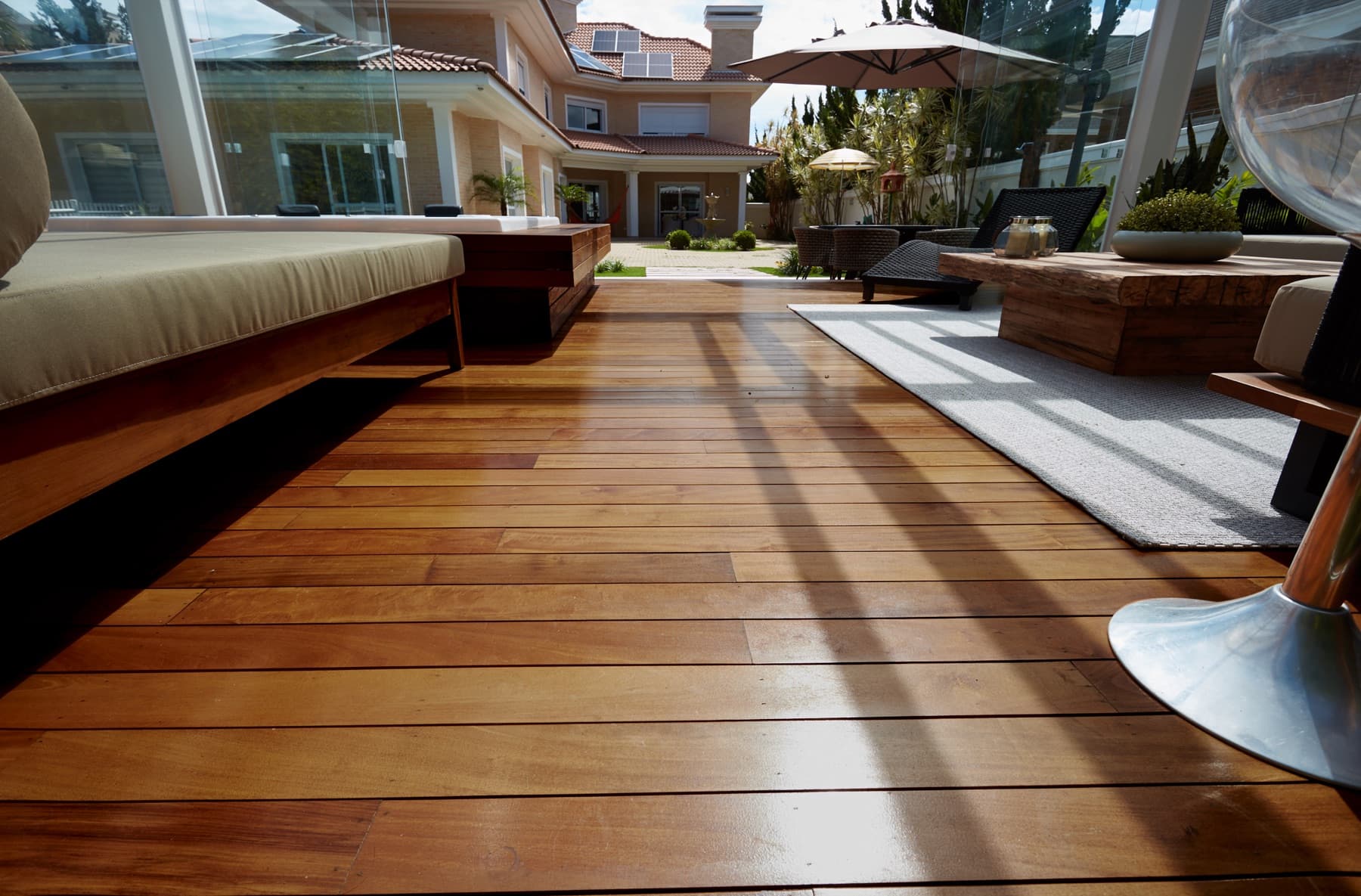
Evaluating Your Existing Deck Frame for Hardwood
Before selecting any new decking material, a thorough inspection of your existing deck frame is essential. Hardwood decking, particularly dense species like Ipe and Cumaru, can be heavier than many common decking materials. Your frame must be structurally sound and capable of supporting the increased load.
Check for signs of rot, insect damage, or excessive deflection in joists, beams, and support posts. Verify that the spacing of your joists aligns with the requirements for your chosen hardwood decking profile. An experienced contractor can assess the frame's integrity and recommend any necessary repairs or reinforcements.
Choosing Hardwood Species: Ipe vs. Cumaru
For renovation projects, two popular Brazilian hardwood species stand out: Ipe and Cumaru. Both are known for their exceptional durability and natural resistance to various environmental factors, making them suitable for the climate conditions in Dover, DE.
Ipe (Handroanthus spp.), also known as Brazilian Walnut, is often considered the benchmark for hardwood decking. Its color ranges from reddish-brown to olive-brown. Ipe is naturally resistant to rot, insects, mold, and weather changes. It can last for decades with proper care.
Cumaru (Dipteryx odorata) is another very durable tropical hardwood. Cumaru is resistant to termites and weather changes, and it can give off a subtle scent of cinnamon and vanilla when worked.
Both species can be left untreated to weather to a silvery-gray patina or maintained with a UV-blocking sealer to preserve their original rich brown tones. This choice allows for flexibility in aesthetic decisions based on your preferred outdoor look.
Considering Board Profiles and Lengths
Hardwood decking is available in a variety of profiles and lengths. Common profiles include standard dimensional lumber sizes, such as 1x4, 1x6, and 5/4x6. The choice of profile can influence the overall appearance and feel of your renovated deck.
Longer board lengths can minimize the number of butt joints, creating a more continuous and seamless look. However, longer boards may also be heavier and require more careful handling during installation. When planning your layout, consider how board lengths will align with your existing frame and whether you prefer to minimize waste through careful cutting or opt for more frequent joints to simplify installation. Availability of specific profiles and lengths can vary, so it is important to confirm current stock before finalizing your design.
Fastening Systems for Hardwood Decking
The choice of fastening system impacts both the aesthetics and long-term performance of your hardwood deck. Two primary methods are face-fastening and hidden fastening.
Face-fastening involves screwing or nailing the boards directly through the face into the joists. This method is generally robust and provides strong holding power. However, the fasteners will be visible on the deck surface. Pre-drilling is typically required for hardwood to prevent splitting, and specific screws designed for dense hardwoods are recommended.
Hidden fastening systems create a clean, fastener-free surface. These systems typically involve clips or specialized fasteners that attach to the sides or underside of the boards, securing them to the joists. While offering a premium aesthetic, hidden fastening systems may require specific board profiles or grooves, and installation can sometimes be more intricate. Always verify the compatibility of your chosen hardwood decking with the hidden fastener system you intend to use.
Worked Example: Calculating Hardwood Decking for a Renovation
Let's consider a hypothetical deck renovation project in Dover, DE. You plan to replace the decking surface with 1x6 Ipe boards, which are typically available in random lengths ranging from 3 to 24 feet. For this example, we will assume an average board length of 12 feet for estimation purposes, recognizing actual purchase will be in varying lengths.
First, calculate the total deck area: 12 ft x 16 ft = 192 square feet. A 1x6 board is nominally 5.5 inches wide when milled. To find out how many linear feet of decking you need, divide the total width of the deck (12 feet or 144 inches) by the width of one board (5.5 inches): 144 inches / 5.5 inches/board = approximately 26.18 boards across the 12-foot dimension. Round up to 27 boards to ensure full coverage.
Now, multiply the number of boards by the length of the deck (16 feet): 27 boards x 16 feet/board = 432 linear feet. To account for cuts, waste, and potential board imperfections, it's prudent to add 10-15% to your estimate. For a 10% waste factor: 432 linear feet * 1.10 = 475.2 linear feet. If purchasing in 12-foot average lengths, you would need approximately 40 boards (475.2 / 12 = 39.6).
For actual purchase, you would order the total linear footage needed, and the supplier would provide a mix of available lengths that add up to or exceed this quantity. Always confirm the actual net coverage of the boards, as nominal dimensions can differ from actual milled sizes.
Before you order
- Assess existing deck frame integrity (rot, insect damage, deflection).
- Verify joist spacing compatibility with chosen hardwood profile.
- Choose hardwood species (Ipe, Cumaru, etc.) based on durability, appearance, and budget.
- Select desired board profile (e.g., 1x4, 1x6) and consider length availability.
- Decide on fastening method: face-fastening for strength/visibility or hidden fasteners for a clean look.
- Calculate required linear footage, adding a waste factor (10-15%).
- Plan for proper ventilation beneath the deck to ensure long-term performance.
- Consider the desired finished appearance: natural weathering or sealed color retention.
Confirm installation details, approved uses and warranty terms in the current instructions for the exact product and profile. Your installer should verify the substrate, structure and applicable project requirements.
This is a planning guide for projects in Dover, DE. Ask our team to confirm availability, delivery to your ZIP code and which branch can support your order.
Questions to help you decide
How do I know if my existing deck frame can support hardwood decking?
A qualified contractor or structural engineer should inspect your frame for soundness, joist spacing, and load-bearing capacity. Hardwoods are dense, so ensuring the frame can handle the weight is crucial for safety and longevity. Look for signs of rot, insect damage, or excessive flex.
What is the primary difference between Ipe and Cumaru for a renovation?
Both Ipe and Cumaru are exceptionally durable hardwoods. Ipe generally has a higher Janka hardness rating and a longer estimated lifespan, making it a top-tier choice. Cumaru offers comparable durability and resistance properties at a generally different price point, making it an excellent alternative if budget is a key consideration. Both weather similarly to a silvery-gray or can maintain their original color with sealing.
Do I need to treat hardwood decking in Dover, DE?
Hardwood decking like Ipe and Cumaru is naturally resistant to rot, insects, and decay, so pressure treatment is not required. You can choose to apply a UV-blocking oil or sealer annually to maintain the original rich color, or you can allow the wood to naturally weather to a silvery-gray patina. This weathering does not affect the structural integrity of the wood.
Ready to Transform Your Dover Deck?
Request a material quote for your project. Provide your project dimensions, desired hardwood profile, and ZIP code to confirm current availability and service options for hardwood decking materials.
Request a material quote →