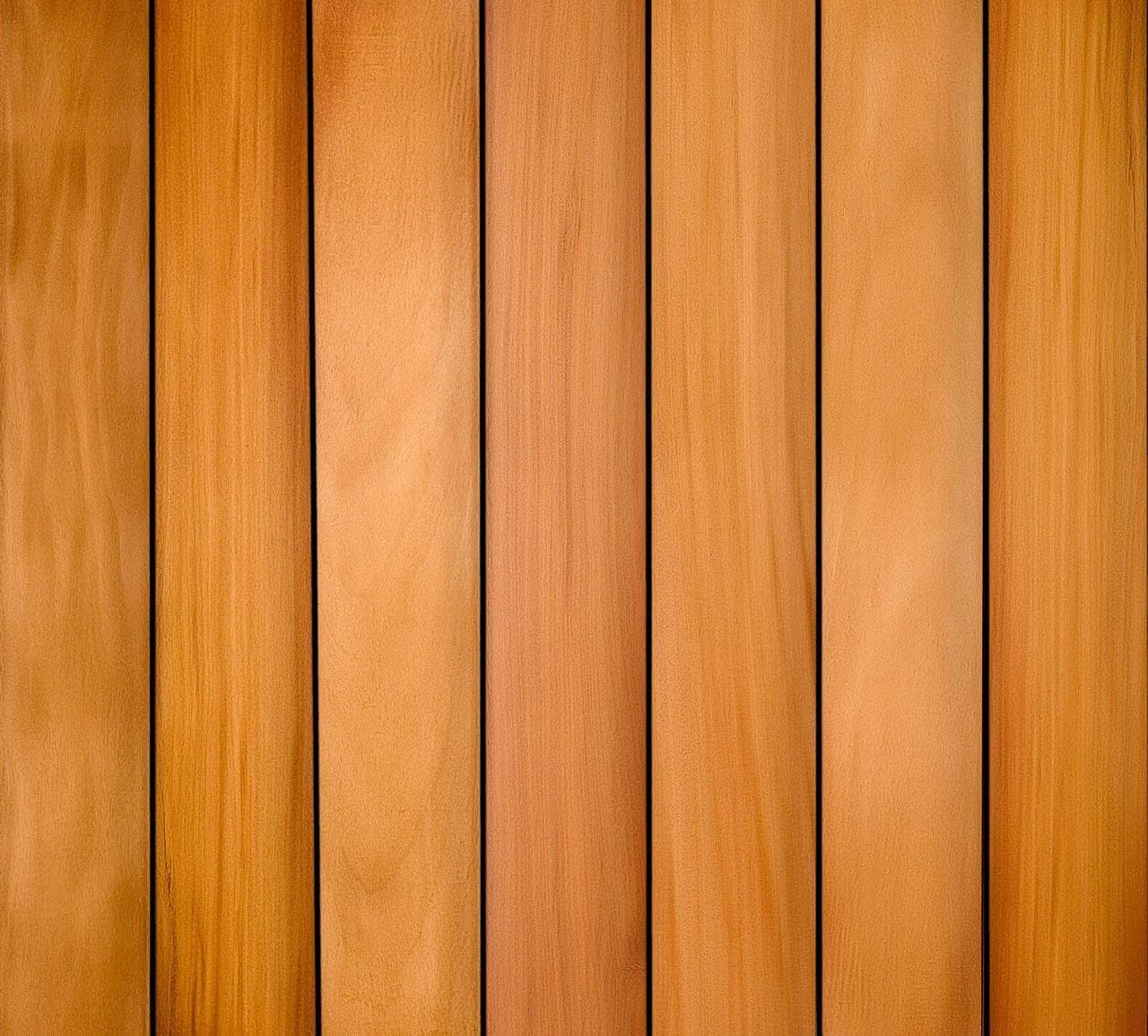
Understanding Garapa Hardwood
Garapa, botanically known as Apuleia leiocarpa, is a Brazilian hardwood recognized for its golden color. This natural hue can bring warmth and a modern architectural element to exterior spaces. It is classified as a very durable wood with an air dry density of 4.11 lbs/bf.
A notable characteristic of Garapa is its natural resistance to termites and weather changes, which contributes to its suitability for outdoor applications. This inherent resistance means it does not require constant chemical treatments to withstand mold and decay. Garapa is also described as easy to work with, though its density and interlocking grain suggest the use of sharp tools for cutting and shaping. While resistant to nailing and screwing, it glues easily.
Garapa's attributes make it a material often considered for decking, exterior joinery, and other outdoor carpentry where durability and a specific aesthetic are desired. Its golden tone is a key visual identifier, which can be maintained with UV-inhibiting finishes or allowed to gradually silver over time when exposed to the elements.
Available profiles typically include 5/4"x6" (1" x 5.5" actual dimensions), with grooved options often available to accommodate hidden fastening systems. Lengths generally range from 3 to 24 feet, and the material is kiln-dried (KD).
Terrace Design Considerations for Dover, DE
Designing a terrace in Dover, DE involves balancing aesthetic preferences with practical considerations related to local climate and usage. Garapa's golden color can serve as a bright, inviting foundation for an outdoor living area. When planning your terrace, consider its primary function: is it for dining, lounging, or a combination? This will influence the overall layout and any integrated features.
For terraces, especially those at ground level or slightly elevated, proper drainage and ventilation beneath the deck are important. Hardwood decking requires air circulation to prevent moisture accumulation. The typical board spacing for hardwood allows for some air movement, but the under-deck area should not trap water. Sloping the ground away from the structure and ensuring clear pathways for air are good practices.
The orientation of your terrace relative to the sun will affect how the Garapa decking appears throughout the day and how it weathers over time. A sun-exposed terrace may see its golden color mellow faster if left unfinished, developing a silver-gray patina. If you prefer to maintain the golden hue, regular application of a UV-inhibiting finish will be necessary. For shaded terraces, the natural resistance of Garapa to rot and decay is an advantage, but good air circulation remains vital.
Selecting Garapa Board Profiles and Lengths
Garapa decking is commonly available in a 5/4"x6" profile, which translates to an actual dimension of 1" x 5.5". This standard size offers a robust feel and a classic appearance for most decking projects. The choice between smooth and grooved boards depends on your fastening preference; grooved boards are designed for hidden fastener systems, providing a clean, screw-free surface, while smooth boards can be face-fastened.
When selecting board lengths, planning for efficiency is key. Garapa boards are typically available in a range from 3 to 24 feet. For a terrace, try to optimize board lengths to minimize waste. Longer boards can reduce the number of butt joints, creating a more continuous look. However, extremely long boards can be harder to handle during installation. A balance between minimizing cuts and ease of installation is often the best approach.
Consider the layout of your terrace. For example, if your terrace is 12 feet deep, using 12-foot or 24-foot boards lengthwise would minimize cuts. If the width is not a multiple of common board lengths, you will need to plan for staggered butt joints. These joints should always occur over a joist or support to ensure stability and proper fastening.
Material Takeoff Example: A Hypothetical Terrace
Let's consider a hypothetical terrace project in Dover, DE, measuring 15 feet by 20 feet. This terrace will use 5/4"x6" Garapa decking boards (actual 1" x 5.5").
First, calculate the total area: 15 feet * 20 feet = 300 square feet.
Next, determine how many 5.5-inch wide boards are needed across the 15-foot (180-inch) width. Divide the total width by this figure: 180 inches / 5.625 inches/board = 32 boards. Since we can't have a fraction of a board, we need 32 boards running the 20-foot length.
For the 20-foot length, if we use 20-foot long boards, we would need 32 boards * 20 feet/board = 640 linear feet. Given that Garapa boards are available in various lengths, we would purchase 32 boards at 20 feet each. It is always prudent to add an extra 5-10% for cuts, waste, and future repairs. For this project, an additional 5% would be 32 linear feet, bringing the total to approximately 672 linear feet. This translates to 34 boards of 20-foot length, or an equivalent combination of shorter lengths that sum to at least 672 linear feet.
This calculation assumes a straightforward parallel layout. More complex designs, such as diagonal patterns or picture-frame borders, will require more detailed planning and may increase waste factors. Always verify permitted edge cuts and support requirements with your installer or product documentation.
Maintenance and Longevity of Garapa Decking
This inherent resilience means it does not require constant chemical treatments or maintenance to withstand mold and decay.
To maintain Garapa's golden color, periodic application of a UV-inhibiting oil finish is recommended. If left unfinished, the wood will naturally weather to a silver-gray patina, a common and often desired characteristic of many hardwoods. This weathering does not compromise the structural integrity of the wood, but it does alter its appearance.
Routine cleaning, such as sweeping and occasional washing with a mild cleaner, can help keep the decking looking its best and prevent the buildup of dirt and organic matter. Avoid harsh chemicals or high-pressure washers, which can damage the wood fibers. Regular inspection for any loose fasteners or signs of wear is also a good practice to ensure the longevity of your terrace.
Garapa is also noted for being scratch and slip resistant, with minimal splintering, contributing to a comfortable and safe walking surface. While it has a great fire rating, comparable to steel, it is essential to follow all local building codes and fire safety guidelines for your specific project.
Before you order
- Determine the primary function of your terrace (dining, lounging, mixed-use).
- Assess sun exposure and desired aesthetic (golden hue vs. silver patina).
- Plan for adequate drainage and ventilation beneath the deck.
- Choose between smooth or grooved 5/4"x6" Garapa boards based on fastening preference.
- Optimize board lengths (3–24 ft) to minimize waste and butt joints.
- Calculate linear footage needed, including 5-10% for waste and cuts.
- Consider the type of finish: UV-inhibiting oil for color retention, or allow natural weathering.
- Plan for routine cleaning and maintenance to ensure longevity.
- Confirm local building codes and specific requirements for deck construction in Dover, DE.
Confirm installation details, approved uses and warranty terms in the current instructions for the exact product and profile. Your installer should verify the substrate, structure and applicable project requirements.
This is a planning guide for projects in Dover, DE. Ask our team to confirm availability, delivery to your ZIP code and which branch can support your order.
Questions to help you decide
What color is Garapa decking and does it change over time?
Garapa decking has a natural golden color. If left unfinished and exposed to sunlight, it will gradually weather to a silver-gray patina over time. To maintain the golden hue, a UV-inhibiting oil finish can be applied periodically.
Does Garapa decking require special treatment for insects or rot?
Garapa hardwood has natural resistance to rot, decay, and insects. It does not require constant chemical treatments to withstand these elements, contributing to its long lifespan.
What are the common dimensions available for Garapa decking?
Garapa decking is commonly available in a 5/4"x6" profile, which measures 1" x 5.5" (actual). Boards typically come in lengths ranging from 3 feet to 24 feet. Some suppliers may offer grooved options for hidden fastening systems.
Ready to Plan Your Garapa Terrace in Dover, DE?
Request a material quote with your project dimensions, desired Garapa profile, and ZIP code to confirm current availability and service options for your Dover, DE terrace project.
Request a material quote →