Assess Your Existing Deck Frame: Foundations and Footings
Before considering new decking material, inspect your deck's foundations and footings. Look for any signs of settling, cracking, or deterioration in concrete footings. Wooden posts should be checked for rot, insect damage, or excessive movement where they connect to the footings. In coastal environments like Atlantic City, consistent moisture exposure can accelerate wear.
Ensure that the footings are adequate to bear the increased weight of hardwood decking, which is generally denser than common softwood or composite options. If any issues are found, these structural elements must be repaired or replaced before proceeding with new decking.
Evaluate Joists and Beams for Hardwood Decking
The joists and beams form the primary support for your decking. Examine them for signs of sagging, twisting, or rot. Pay close attention to areas where joists meet beams and where beams connect to posts or the house ledger board. Hardwood decking species like Ipe and Cumaru are significantly heavier than many other decking materials.
For example, Ipe has an air dry density of 5.75 lbs/bf. This density translates to substantial weight, requiring a strong and stable substructure. If your existing joists are undersized or spaced too far apart for hardwood, you may need to add additional joists or reinforce the existing ones.
Check for proper flashing and water diversion around the ledger board where the deck attaches to your house, especially in a climate that experiences varied weather conditions.
Choosing Hardwood Species: Ipe vs. Cumaru
When selecting hardwood for your Atlantic City deck renovation, Ipe and Cumaru are two prominent choices known for their durability and appearance.
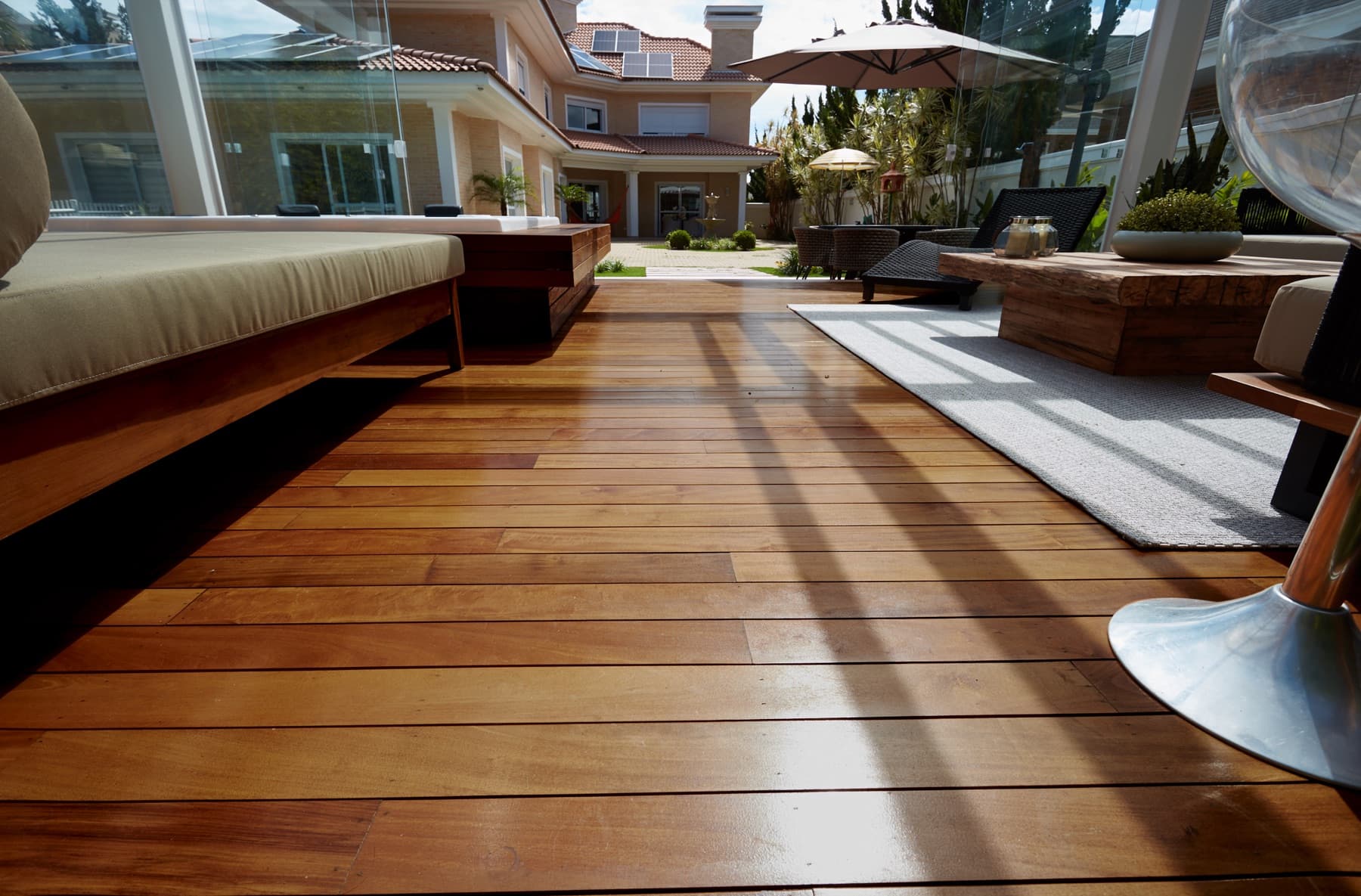
Ipe, also known as Brazilian walnut, is a dense and durable hardwood. It ranges from reddish-brown to olive-brown and is highly resistant to weather changes, mold, and termites. Ipe is often considered a benchmark for outdoor decking due to its longevity. With proper care, it can last for decades. (S1)
Cumaru is another very durable tropical hardwood, resistant to termites and weather changes. It offers stiffness, strength, and extreme hardness. Cumaru is known for its warm, reddish-brown tones and a distinct cinnamon and vanilla scent when worked. It provides a robust option for demanding builds. (S1)
Both species are suitable for coastal environments. Ipe and Cumaru are marine-grade standards for docks and boardwalks, demonstrating their resistance to salt air and spray. (S2)
Planning for Ventilation and Drainage in Coastal Environments
Proper ventilation and drainage are critical for any deck, especially in a humid, coastal environment like Atlantic City. Ensure there is adequate airflow beneath your deck to prevent moisture buildup, which can lead to rot and mildew, even with durable hardwoods. Clear any obstructions that might impede air circulation.
The deck's design should also facilitate efficient water runoff. Ensure that the decking boards are installed with appropriate spacing to allow water to drain through, preventing pooling on the surface. This is particularly important for decks exposed to rain and sea spray.
Worked Example: Renovating a 10' x 12' Deck with Ipe
Let's consider a hypothetical 10-foot by 12-foot deck renovation project. You plan to use 1x6 (nominal size) Ipe decking boards, which are approximately 5.5 inches wide.
First, you would need to reinforce the existing joist system. You would need to purchase additional joist lumber, fasteners, and potentially new joist hangers.
For the decking material, a 10-foot by 12-foot area is 120 square feet. With 5.5-inch wide boards, a 12-foot length of decking covers 5.5 inches x 12 feet = 0.458 feet x 12 feet = 5.5 square feet. To cover 120 square feet, you would need approximately 120 / 5.5 = 21.8 boards. Rounding up and accounting for cuts and waste, you might plan for 24-26 boards of 12-foot length. This calculation assumes a straight lay. A professional contractor can help refine these quantities and create a detailed cut plan.
Remember to factor in the weight of the Ipe. If the original deck was built with lighter materials in mind, the foundation and beams may also need reinforcement to safely support the heavier hardwood.
Before you order
- Inspect existing foundations and footings for stability and signs of damage.
- Check ledger board attachment and flashing for water intrusion.
- Consider the density and weight of hardwood species (e.g., Ipe, Cumaru) and plan for structural reinforcement if needed.
- Ensure proper ventilation and drainage beneath the deck, especially in coastal areas.
- Measure your deck dimensions accurately to estimate material quantities, accounting for waste.
- Determine if you prefer the natural silvering patina or plan for regular oiling to maintain original color.
- Consult with a structural engineer or experienced contractor for complex renovations or structural concerns.
Confirm installation details, approved uses and warranty terms in the current instructions for the exact product and profile. Your installer should verify the substrate, structure and applicable project requirements.
This is a planning guide for projects in Atlantic City, NJ. Ask our team to confirm availability, delivery to your ZIP code and which branch can support your order.
Questions to help you decide
How much maintenance does hardwood decking require in Atlantic City?
Hardwood decking like Ipe and Cumaru is relatively low maintenance. A wash once a year is generally sufficient. If you wish to preserve the original reddish-brown or olive-brown color, an annual application of a UV-blocking sealer or oil is recommended. If left untreated, the wood will naturally weather to a silvery-gray patina, which does not affect its structural integrity.
Can I reuse my existing deck frame for hardwood decking?
Reusing your existing deck frame is possible, but it requires a thorough inspection by a qualified professional. Hardwood decking is denser and heavier than many other materials, so your frame must be robust enough to support the increased load. Any signs of rot, damage, or inadequate support must be addressed before installing new hardwood.
Are Ipe and Cumaru suitable for coastal homes in Atlantic City?
Yes, both Ipe and Cumaru are highly suitable for coastal environments. They are known for their natural resistance to rot, insects, and the corrosive effects of salt air and spray. These species are frequently used in marine applications like boardwalks and docks due to their exceptional durability and stability in harsh weather conditions. (S2)
Request a Material Quote for Your Hardwood Deck Renovation
Ready to upgrade your Atlantic City deck with durable hardwood? Request a material quote by providing your project dimensions, desired hardwood profile, and ZIP code. We'll help you confirm current availability and service options for your renovation project. Visit our contact page to get started.
Request a material quote →