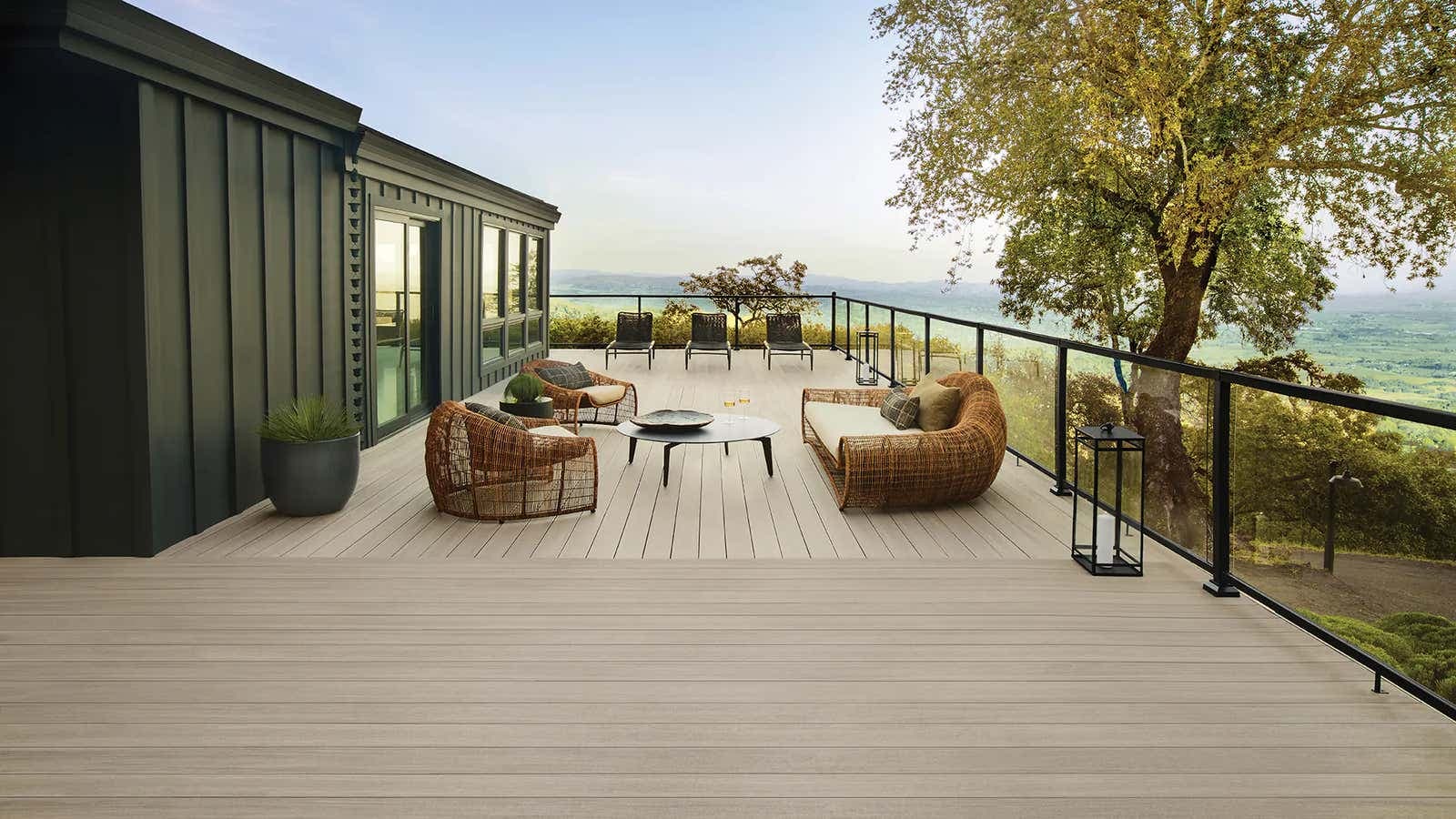
Understanding the Unique Needs of Compact Spaces
Compact outdoor spaces, whether a cozy balcony overlooking the boardwalk or a discreet patio behind a row home, demand materials that perform without overwhelming the area. For these projects, factors like board width, color, and finish can significantly influence the perceived size and usability of the deck. Unlike sprawling backyards, every design choice in a small space is magnified.
Consider how the decking will integrate with existing structures, railings, and landscaping. The goal is to create an inviting extension of your living area, not just an outdoor platform. This often involves careful planning of furniture placement and traffic flow from the outset.
Choosing the Right Composite Decking Collection
Composite decking is available from brands like Trex, TimberTech, and Fiberon, each offering various collections that differ in appearance, composition, and installation requirements. For compact spaces, certain characteristics become more important.
Some composite collections feature a capped shell, which can be beneficial in humid or salt-air environments common in coastal areas like Atlantic City, as it helps resist moisture and staining. Other collections emphasize recycled content, which might align with specific project goals. It's important to review the specific product documentation for each collection to understand its particular attributes and recommended applications.
While many composite decks are designed for minimal maintenance, typically requiring only a soap-and-water wash, understanding the nuances of each collection's care instructions is key. Some may offer cooler-underfoot options, which could be a consideration for sun-exposed balconies.
Maximizing Usable Space with Board Dimensions and Layout
In compact areas, the choice of composite decking board dimensions and layout can create an illusion of greater space or define distinct zones. Standard board widths are common, but some manufacturers offer narrower profiles that can make a small deck feel less cluttered. A diagonal layout, while potentially generating more cuts, can sometimes visually expand a narrow space.
For a small balcony measuring 8 feet by 10 feet, using standard 12-foot composite decking boards would minimize waste if laid parallel to the 8-foot dimension. If boards are 5.5 inches wide, approximately 22 boards would be needed for the 10-foot length (120 inches / 5.5 inches per board 21.8, so 22 boards). This approach optimizes material use while providing a clean, linear look. For a 10-foot by 10-foot area with 12-foot boards, you would need 22 boards (22 x 12 linear feet = 264 linear feet of decking).
Consider picture-frame borders to provide a finished edge, especially where the deck meets a wall or railing. This detail can elevate the appearance of a small space and clearly define its boundaries without adding bulk. Always consult the manufacturer's specific guidelines for board spacing to ensure proper drainage and expansion.
Planning for Project Access and Logistics in Densely Built Areas
Atlantic City, with its mix of urban residences and commercial properties, often presents unique logistical challenges for construction projects, especially for compact outdoor spaces. Delivering long decking boards to a second-story balcony or a backyard accessed only through a narrow alley requires careful planning.
Before ordering, assess the path from the delivery truck to the installation site. Are there tight corners, staircases, or gates that might impede the movement of 12-foot or 16-foot boards? Discuss these potential access issues with your material supplier. Sometimes, shorter board lengths or pre-cut pieces might be a more practical, albeit potentially more costly, option to avoid on-site cutting in confined spaces.
Storage of materials on-site is another consideration. Compact projects may not have ample space for staging materials, so coordinating delivery timing precisely with the installation schedule can be critical. Confirm current lines, colors, and delivery timing with your supplier.
Complementary Products and Finishing Touches
To complete your compact composite deck, consider how other elements will integrate. Railings are often a necessity for safety and can also serve as a design feature. Many composite decking manufacturers offer matching or complementary railing systems. For smaller spaces, slim-profile railings or cable railings can maintain an open feel.
Lighting is another key component. Integrated LED lighting in steps or along the perimeter can enhance usability and ambiance, especially for evening use. Finally, carefully select outdoor furniture that fits the scale of your deck without overcrowding it. Multifunctional pieces, such as benches with storage, can be particularly useful.
Explore complementary products like hardwood decking for accent features, PVC decking for specific applications, or a broader range of decking options to find the perfect match for your compact space. These choices can help define the character and utility of your small outdoor area.
Before you order
- Measure your compact outdoor space precisely, noting all obstructions and access points.
- Consider the board width and layout (e.g., linear, diagonal) to optimize space perception and material use.
- Review specific composite decking collections for features like capped shells for coastal environments or cooler-underfoot options.
- Plan for material delivery and on-site storage, considering any access limitations specific to Atlantic City.
- Account for complementary elements such as railings, lighting, and appropriately scaled furniture.
- Obtain a material quote based on exact dimensions, preferred profile, and your project ZIP code.
Confirm installation details, approved uses and warranty terms in the current instructions for the exact product and profile. Your installer should verify the substrate, structure and applicable project requirements.
This is a planning guide for projects in Atlantic City, NJ. Ask our team to confirm availability, delivery to your ZIP code and which branch can support your order.
Questions to help you decide
Can composite decking be installed over an existing concrete patio in Atlantic City?
Yes, composite decking can often be installed over an existing concrete patio, but it requires a proper substructure to ensure adequate ventilation and drainage. A sleeper system or a low-profile deck framing system would typically be used to create the necessary air gap and support the decking boards. Consult the specific manufacturer's installation guidelines for details on installation over concrete to ensure proper assembly and longevity, especially in a coastal environment.
What are the best composite decking colors for a small, sun-exposed balcony in Atlantic City?
For a sun-exposed balcony, lighter colors tend to absorb less heat, potentially making the deck surface cooler underfoot. Many composite decking collections offer lighter grays, tans, or off-white options. Some manufacturers also offer specific 'cooler-underfoot' technology within certain lines. While darker colors can add a sophisticated look, they will generally retain more heat. Always check the specific product's heat retention properties and consider how direct sunlight affects the space throughout the day.
How do I calculate the amount of composite decking needed for a small, irregular-shaped patio?
For an irregular-shaped patio, it's best to break the area down into simple geometric shapes (rectangles, squares, triangles) and calculate the square footage of each. Add these together for the total area. Then, factor in waste for cuts, especially if there are many angles or curves. A common waste factor for irregular shapes can be 10-15%. Divide your total square footage by the square footage per board (e.g., a 12-foot board of 5.5-inch width is 5.5 sq ft) to get a baseline number of boards, then add the waste factor. It's always advisable to round up and consider ordering a few extra boards for future repairs or unexpected cuts. Requesting a material quote with your precise dimensions will help your supplier provide an accurate estimate.
Ready to Plan Your Compact Composite Deck?
Request a material quote today with your project dimensions, exact profile, and ZIP code to confirm current availability and service options for your Atlantic City project.
Request a material quote →