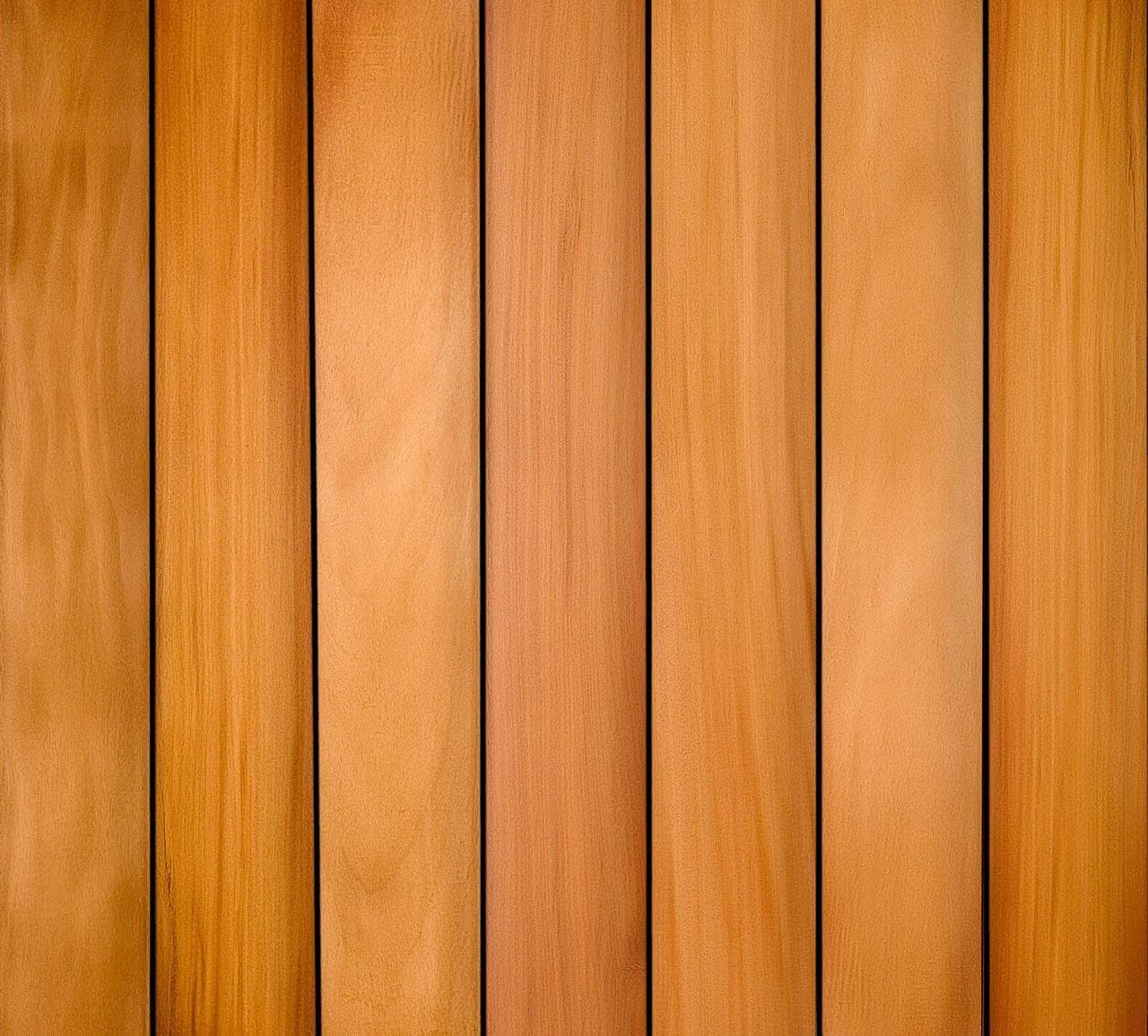
Understanding Garapa Decking for Stair Treads
Garapa (Apuleia leiocarpa), often referred to as Brazilian Ash, is a very durable hardwood with an air dry density of 4.11 lbs/bf. Its natural resistance to termites and weather changes makes it a robust choice for exterior applications, including deck stairs. Garapa is also noted for being scratch and slip resistant, with minimal splintering, which are favorable characteristics for walking surfaces.
When considering Garapa for stair treads, it's important to recognize that a single decking board may not meet the required tread depth or structural load for code compliance. Most decking boards are typically 5/4"x6" (actual 1" x 5.5"). Standard stair treads often require greater depth and thickness, or multiple boards secured together over appropriate stringer spacing.
Stair Design and Material Selection
Deck stairs typically consist of stringers, treads, and risers. Stringers are the angled structural supports that carry the load. Treads are the horizontal surfaces you step on, and risers are the vertical boards between treads. While Garapa decking boards are ideal for treads and risers due to their durability and appearance, the stringers are usually constructed from pressure-treated lumber or other structural materials.
For treads, common approaches include using a single wide board, two narrower boards, or a combination. If using multiple Garapa boards for a single tread, ensure they are securely fastened and supported to prevent movement or gaps. The choice of board width for treads should align with the desired aesthetic and the structural requirements for tread depth. Garapa is available in 5/4"x6" (1" x 5.5") profiles, which can be utilized individually or in combination. Grooved options are also available for hidden fastener systems on the deck surface, but face fastening is typically used for stair treads to ensure secure attachment.
Supporting Garapa Stair Treads
The structural support for your Garapa stair treads is critical for safety and longevity. Stringers must be adequately sized and spaced to support the anticipated load without excessive deflection. The span of the Garapa tread boards will dictate the maximum allowable spacing between stringers.
Garapa is resistant to nailing and screwing due to its density. Pre-drilling is recommended for all fasteners to prevent splitting and ensure a secure connection to the stringers. High-quality stainless steel fasteners are advised for their corrosion resistance in outdoor environments, preventing unsightly staining and ensuring long-term holding power.
Local Building Codes and Safety Considerations
Adhering to local building codes is paramount for any stair construction. These codes specify critical dimensions such as tread depth, riser height, handrail requirements, and stringer spacing. Typical residential codes might require a minimum tread depth of 10 inches and a maximum riser height of 7 3/4 inches, with consistent dimensions for all steps.
Before beginning construction, consult your local building department for specific requirements in your area. This includes obtaining necessary permits and ensuring your design meets all safety standards. For instance, open risers may have restrictions on the size of the opening to prevent small objects or feet from passing through. Handrails and guardrails are also essential safety features, and their design and attachment points should be planned in conjunction with your Garapa stairs.
Worked Example: Designing a Two-Board Garapa Tread
Let's consider a hypothetical stair design requiring a finished tread depth of 10.5 inches. Using Garapa 5/4"x6" (actual 1" x 5.5") decking boards, we can achieve this depth with two boards. The first board would be installed flush with the front edge of the stringer, providing 5.5 inches of depth. The second board would then be installed behind it, overlapping slightly to achieve the total 10.5-inch depth.
For a stair run with 5 steps, each with a 10.5-inch tread depth, and assuming a width of 36 inches, you would need to calculate the total linear footage of Garapa. Each step requires two 36-inch boards, totaling 72 inches (6 feet) per step. For 5 steps, this would be 30 linear feet of Garapa. Given that Garapa is available in lengths from 3 to 24 feet, you would purchase boards that minimize waste. For example, five 6-foot boards would provide exactly 30 linear feet. Remember to account for cut waste and any slight variations in length when ordering. Ensure adequate stringer support for the combined width of the two boards.
Before you order
- Verify local building codes for stair dimensions (tread depth, riser height, stringer spacing).
- Determine the desired finished tread depth and plan how Garapa boards will achieve it.
- Select appropriate structural materials for stringers (e.g., pressure-treated lumber).
- Calculate the linear footage of Garapa needed for treads and risers, accounting for cuts and waste.
- Choose a fastening method (pre-drilled stainless steel screws are recommended for Garapa).
- Plan for handrail and guardrail integration, if required by code or design.
- Confirm ventilation and drainage considerations for stair components.
Confirm installation details, approved uses and warranty terms in the current instructions for the exact product and profile. Your installer should verify the substrate, structure and applicable project requirements.
Questions to help you decide
Can I use single Garapa decking boards for stair treads?
While Garapa decking boards are durable, a single 5/4"x6" (actual 1" x 5.5") board may not meet the minimum tread depth required by local building codes, which often specify 10 inches or more. You may need to use two boards per tread, or a wider custom profile, to comply with safety standards and provide adequate foot placement.
What kind of fasteners should I use for Garapa stair treads?
Due to Garapa's density and resistance to nailing and screwing, pre-drilling pilot holes is essential before fastening. Hidden fasteners are generally not suitable for stair treads; face fastening provides the necessary strength.
How do I ensure my Garapa stairs are code compliant?
The most crucial step is to consult your local building department for specific stair code requirements. Pay close attention to minimum tread depth, maximum riser height, consistent rise and run, handrail height and grip size, and guardrail specifications. Ensure your stringer spacing and tread thickness meet structural load requirements for safety.
Ready to Plan Your Garapa Deck Stairs?
Request a material quote with your project dimensions, desired Garapa profile, and ZIP code. Confirm current availability and service options for your Garapa decking and stair materials. Explore related products like our other hardwood decking options: Ipe Decking, Composite Decking, and PVC Decking.
Request a material quote →