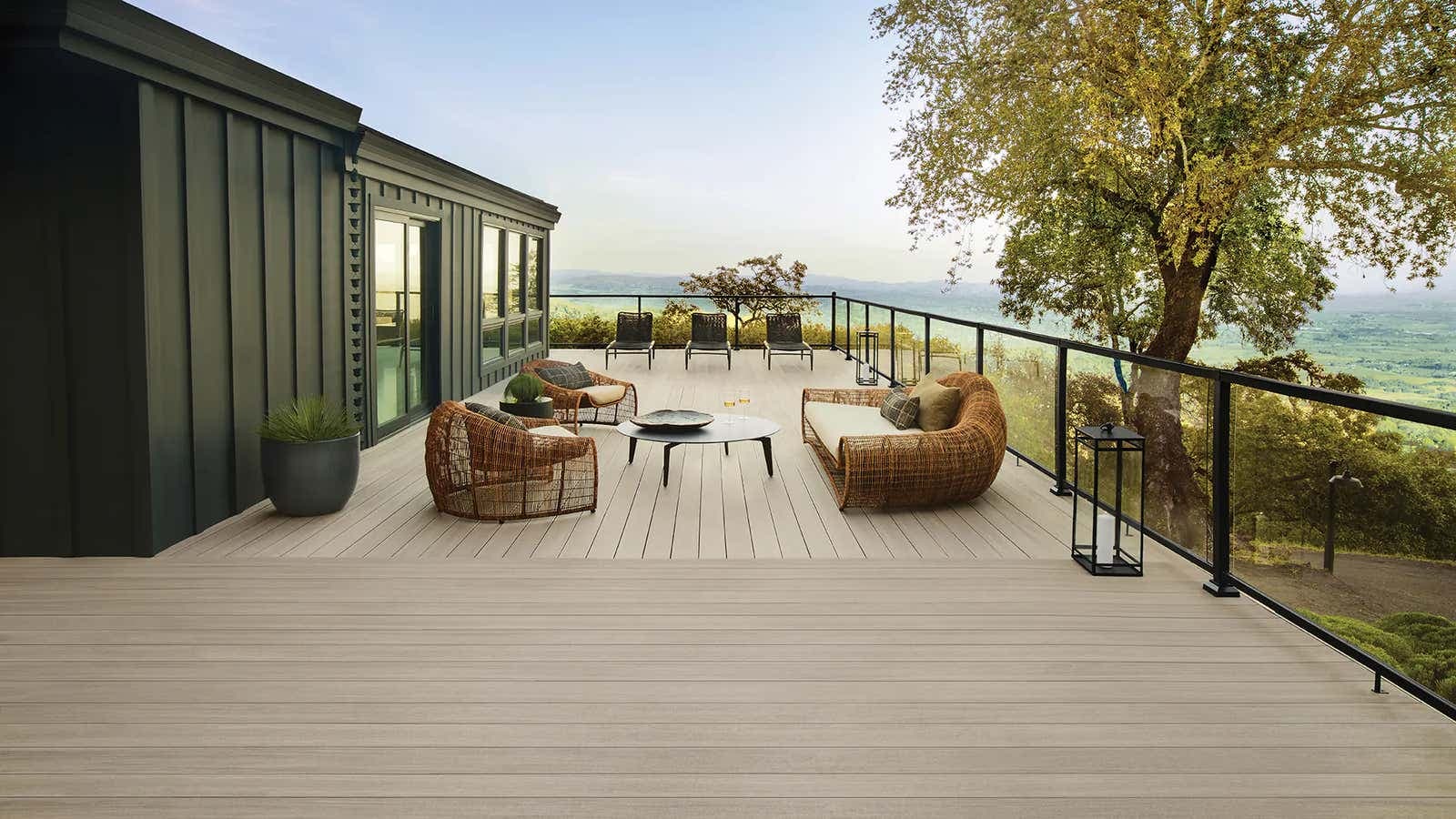
Understanding Your Compact Space: Balconies, Patios, and Side Yards
Before selecting any material, precisely define the boundaries and characteristics of your compact outdoor space. Is it a balcony with specific weight-bearing limits? A small ground-level patio requiring minimal site preparation? Or a narrow side yard that needs to serve multiple functions, like access and a seating area?
Each type of space has unique requirements. Balconies often have strict load limits and may require lighter materials or specific support systems. Ground-level patios might benefit from a low-profile decking system that seamlessly integrates with existing landscaping. Side yards often demand a durable, easy-to-clean surface that can withstand foot traffic and potentially serve as a pathway.
Why Composite Decking Suits Smaller Footprints
Composite decking offers several advantages that make it suitable for compact outdoor areas. Its consistent board dimensions simplify planning and minimize waste, which is particularly beneficial when working with precise measurements.
The low-maintenance nature of composite decking means less time spent on upkeep and more time enjoying your space. Unlike natural wood, composite boards do not require regular sanding, staining, or sealing. A simple soap-and-water wash is typically sufficient for cleaning, which is a practical benefit for spaces that might be harder to access for extensive maintenance.
Manufacturers like Trex, TimberTech, and Fiberon offer a range of colors and textures, allowing you to select a finish that complements your home's exterior and makes the small space feel larger or more inviting. Some collections also offer cooler-underfoot options, which can be a comfort in sun-exposed areas.
Many composite decking products incorporate recycled content, aligning with sustainable building practices. For example, Trex uses up to 95% recycled content, including sawdust and plastic film. This can be a consideration for environmentally conscious projects.
Selecting Board Profiles and Finishes for Visual Impact
For compact spaces, the choice of board profile and finish can significantly impact the perceived size and overall aesthetic. Narrower board widths can sometimes make a small area feel more expansive, drawing the eye along the length of the boards. Conversely, wider boards can create a bolder, more contemporary look, but should be used thoughtfully in very confined areas.
Consider the visual texture and color. Lighter colors can help a small space feel brighter and more open, reflecting light rather than absorbing it. Smooth, consistent finishes tend to create a modern, uncluttered look, while wood-grain textures can add warmth and character. Many composite decking lines offer consistent color and grain, ensuring a predictable appearance board after board.
Always review physical samples to understand how colors and textures will appear in your specific outdoor lighting conditions in Salem, OR. A color that looks subtle in a showroom might appear very different under direct sunlight or in a shaded corner of your balcony.
Worked Example: A 6-foot by 10-foot Balcony Deck
Let's consider a hypothetical balcony project in Salem, OR, measuring 6 feet wide by 10 feet long. This 60 square foot area requires careful planning to maximize usability and ensure structural integrity.
Assume we select a composite decking board with a nominal width of 5.5 inches (actual width) and available lengths of 12 feet. For a 6-foot width (72 inches), we can fit approximately 13 boards (72 inches / 5.5 inches per board = 13.09 boards). We would need to purchase 14 boards to ensure full coverage and account for any edge cuts or minor adjustments. For the 10-foot length, we can use the 12-foot boards, cutting them to size. Each 12-foot board yields one 10-foot section with a 2-foot offcut. These offcuts might be usable for a small step or a decorative border, depending on the project.
Total boards needed: 14 boards. Each board is 12 feet long. This provides 14 x 12 = 168 linear feet of decking. This calculation assumes a straight lay. If a picture-frame border is desired, additional boards will be needed for the perimeter, and the inner field dimensions will adjust slightly. Always confirm the exact assembly and support requirements for your chosen product, as balconies often have specific structural considerations.
Installation Considerations for Confined Spaces
Working in compact areas means job site access and material storage are critical. Ensure there's a clear path for delivering and temporarily storing decking boards without obstructing pedestrian traffic or common areas. Long boards, even if cut down later, can be challenging to maneuver in tight stairwells or elevators.
Consider the fastening system. Hidden fasteners create a clean, seamless surface, which can enhance the sophisticated look of a small space. Face-fastening might be simpler for DIY projects but will result in visible screws. Always follow the manufacturer's specific guidelines for board spacing and fastening to ensure proper ventilation and thermal expansion, especially important in climates with temperature fluctuations.
Proper ventilation underneath the deck is crucial for composite materials. Even in compact spaces, ensure there is adequate airflow to prevent moisture buildup. This is particularly important for ground-level patios where moisture can accumulate.
Complementary Materials for a Complete Look
To complete your compact outdoor space, consider complementary materials that work well with composite decking. For railings, options like aluminum or composite railing systems can provide safety and style without adding visual bulk. For ground-level patios, integrate your deck with surrounding landscaping using decorative gravel, pavers, or low-maintenance plantings.
Explore options such as composite fascia boards (https://www.lumberplus.com/decking/composite) for a finished edge, or consider low-voltage LED lighting to extend the usability of your space into the evening. These details can transform a simple deck into a functional and inviting outdoor room.
Other decking options, such as hardwood decking (https://www.lumberplus.com/decking/hardwood) or PVC decking (https://www.lumberplus.com/decking/pvc), could also be considered depending on specific project requirements, but composite often provides a balance of aesthetics and low maintenance suitable for smaller, high-use areas.
Before you order
- Measure your space precisely: length, width, and any obstructions.
- Verify structural capacity, especially for balconies or elevated decks.
- Consider desired aesthetic: light or dark colors, smooth or textured finish.
- Choose board width: narrow for expansive feel, wider for modern look.
- Evaluate access for material delivery and installation in confined areas.
- Select a fastening system: hidden for clean look, face-fastened for simplicity.
- Plan for ventilation beneath the deck, even in small spaces.
- Identify complementary railing, lighting, and landscaping elements.
Confirm installation details, approved uses and warranty terms in the current instructions for the exact product and profile. Your installer should verify the substrate, structure and applicable project requirements.
This is a planning guide for projects in Salem, OR. Ask our team to confirm availability, delivery to your ZIP code and which branch can support your order.
Questions to help you decide
Can composite decking be installed directly over an existing concrete patio?
Installing composite decking directly over concrete requires specific preparation to ensure proper drainage and ventilation. A sleeper system or a pedestal system is typically needed to create an air gap between the concrete and the decking boards. This prevents moisture buildup and allows for proper thermal expansion and contraction of the composite material. Always consult the manufacturer's installation guide for specific requirements for your chosen product.
What are the maintenance requirements for composite decking in a small space?
Composite decking is known for its low maintenance. For most products, regular cleaning with soap and water is sufficient to remove dirt, pollen, and other debris. Avoid using harsh chemicals or abrasive cleaners unless specifically approved by the manufacturer, as these can damage the surface. Occasional sweeping or leaf blowing can keep the surface clear, especially in a compact space where debris might accumulate quickly.
Are there lighter composite decking options for balconies with weight restrictions?
While composite decking is generally denser than some natural wood options, specific collections and profiles can be lighter. Manufacturers are continuously innovating, so it's best to check the specifications of different composite decking lines from brands like Trex, TimberTech, and Fiberon. Always confirm the weight per linear foot or square foot with your supplier and compare it against your balcony's structural capacity limits. For very strict weight limits, PVC decking (https://www.lumberplus.com/decking/pvc) might be an alternative to consider.
Ready to Transform Your Compact Outdoor Space?
Request a material quote for your project. Provide your project dimensions, desired composite decking profile, and project ZIP code to confirm current availability and service options.
Request a material quote →