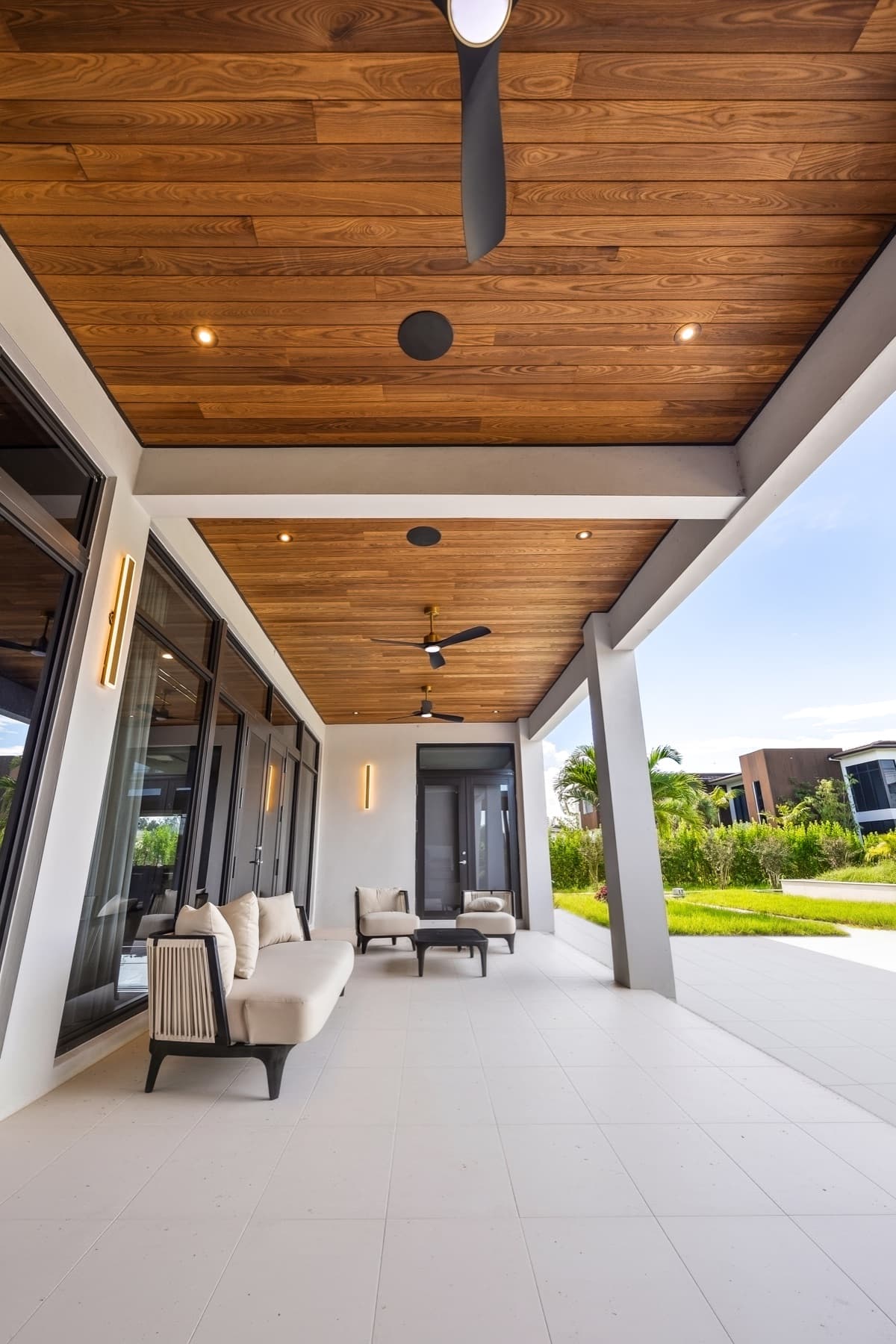
Understanding Your Porch Environment in San Diego
San Diego's coastal influence brings unique environmental factors to consider for outdoor building materials. While generally mild, direct sun exposure, occasional humidity, and proximity to salt air for some properties can impact material longevity and appearance. Materials must be chosen not only for their visual appeal but also for their ability to withstand these conditions over time.
A porch ceiling is exposed to indirect weather, but its underside is subject to varying temperatures and humidity, especially if the porch is open. Ventilation is key for both the porch structure and the roof system above it. Proper airflow helps prevent moisture buildup and heat accumulation, which can affect the performance of your chosen ceiling and soffit materials.
Consider how much direct sunlight your porch receives throughout the day. Lighter materials can help reflect heat, while darker finishes might absorb more. The material's stability in fluctuating temperatures is also a factor, particularly for natural wood products.
Material Options for Porch Ceilings and Soffits
Lumber Plus offers a range of materials suitable for porch ceilings and soffits, each with distinct advantages. These include thermally modified wood, various hardwoods, and Norx composite options.
Thermally modified wood, such as Ayous or Ash, undergoes a heat treatment process that enhances its stability and durability. This process makes the wood less prone to expansion and contraction due to changes in humidity, and it offers a consistent, attractive appearance. Scandinavian thermally modified wood is noted for its Nordic character, providing a clean grain for contemporary ceilings. Maximo Accoya is another acetylated wood option that offers enhanced durability and stability for ceiling and soffit applications.
Hardwood options like Ipe, Cumaru, Garapa, Angelim, Jatoba, and Tigerwood provide natural beauty and inherent durability. These species vary in color, grain pattern, and density. Garapa, for instance, can brighten a space with its golden tones, while Ipe and Cumaru offer deep brown hues. The choice of hardwood can significantly influence the aesthetic of your porch.
Norx composite materials offer an alternative with consistent color and reduced maintenance. These engineered products are designed to withstand outdoor conditions, making them a practical choice for many homeowners seeking a uniform look without the natural variations of wood. The Norx Oxford Gray, for example, can provide a contemporary feel.
Coordinating Proportions and Appearance
The size and scale of your porch will influence the optimal board width and profile. For smaller porches, narrower boards might make the space feel larger and more open. For expansive porches, wider boards can create a grander, more substantial look. The direction of the board installation also plays a role in perception; running boards parallel to the house can elongate the porch, while perpendicular installation can widen it.
Consider the overall architectural style of your San Diego home. A rustic home might benefit from a more textured, natural wood finish, while a modern design could be complemented by the clean lines of thermally modified Ash or a uniform composite material. The color of your ceiling material should harmonize with your home's exterior paint, trim, and roofing.
For example, a traditional Spanish Colonial home might look best with the warm tones of Cumaru or Jatoba, installed in a classic tongue-and-groove profile. A contemporary home might opt for the sleek, uniform appearance of a thermally modified Ayous ceiling or Norx Oxford Gray composite, possibly in a hidden fastener system for a seamless look.
Integrating Lighting and Ventilation
Porch ceilings are often where lighting fixtures are installed. Planning for recessed lighting, ceiling fans, or pendant lights needs to happen concurrently with material selection. Ensure that your chosen material can accommodate the necessary cutouts and support the weight of any fixtures. For wood products, consider how the light will interact with the grain and finish.
Soffit ventilation is crucial for the health of your roof system, especially in San Diego's climate, where heat can build up in attic spaces. If your porch soffit is part of the attic ventilation system, ensure that the chosen material and installation method allow for adequate airflow. Vented soffit panels are available in some material lines, or specific installation techniques can be employed to maintain proper ventilation.
Always consult with a qualified contractor or architect to ensure that your porch ceiling and soffit choices meet local building codes and do not impede necessary roof ventilation. Improper ventilation can lead to moisture issues, mold, and reduced energy efficiency.
Worked Example: Mid-Century Modern Porch in Point Loma
Imagine a mid-century modern home in Point Loma with a 10-foot by 16-foot covered porch. The homeowner wants a clean, minimalist look that complements the home's architecture, with integrated recessed lighting. They also need to maintain existing attic ventilation through the soffit.
**Dimensions:** Porch area = 10 ft x 16 ft = 160 square feet. Existing soffit depth = 24 inches.
**Material Choice:** Thermally modified Ayous in a nominal 1x6 (actual 5.25 inches wide) profile, installed perpendicular to the house to visually widen the porch. Ayous offers a clean, light appearance suitable for mid-century modern aesthetics.
**Quantity Calculation (Hypothetical):** For a 16-foot length, 10 feet wide: 10 feet * 12 inches/foot = 120 inches. 120 inches / 5.25 inches/board = 22.86 boards. Rounding up, 23 boards are needed for the width. Each board is 16 feet long. Total lineal feet = 23 boards * 16 feet/board = 368 lineal feet. Assuming boards are sold in 8, 10, 12, 14, and 16-foot lengths, and to minimize waste, purchasing 23 boards at 16 feet is the most straightforward approach, yielding 368 lineal feet.
**Lighting Integration:** The homeowner plans for six recessed LED lights, evenly spaced. The Ayous wood is easily cut for these fixtures, and its stability ensures the integrity of the cutouts.
This approach provides a durable, aesthetically pleasing, and functional porch ceiling that meets the specific requirements of the home and local environment.
Before you order
- Assess your porch's exposure to sun, humidity, and salt air (if coastal).
- Determine your desired aesthetic: modern, traditional, rustic, etc.
- Consider the scale of your porch and how board width will impact its appearance.
- Plan for integrated lighting and ceiling fans.
- Verify existing or required roof ventilation and how it will be maintained.
- Evaluate material durability and maintenance requirements.
- Confirm compatibility with existing or planned exterior finishes.
- Review local building codes for any specific requirements.
Confirm installation details, approved uses and warranty terms in the current instructions for the exact product and profile. Your installer should verify the substrate, structure and applicable project requirements.
This is a planning guide for projects in San Diego, CA. Ask our team to confirm availability, delivery to your ZIP code and which branch can support your order.
Questions to help you decide
What is thermally modified wood, and why is it good for porch ceilings in San Diego?
Thermally modified wood undergoes a high-temperature treatment process without chemicals, which changes the wood's cellular structure. This makes it more stable, less prone to moisture absorption, and more resistant to decay. For San Diego porch ceilings, this means improved performance against humidity and temperature fluctuations, reducing warping or cupping and providing a durable, attractive finish. It also offers a consistent color and grain.
Can I use natural hardwoods like Ipe or Cumaru for a porch ceiling?
Yes, natural hardwoods like Ipe, Cumaru, Garapa, and others are excellent choices for porch ceilings. They offer natural beauty, unique grain patterns, and inherent durability. These woods are naturally dense and resistant to decay, making them suitable for outdoor applications, including covered porches. They can be left to weather naturally to a silver-gray patina or maintained with an appropriate finish to preserve their original color.
How do I ensure proper ventilation when installing a new porch ceiling or soffit?
Proper ventilation is critical for roof health and to prevent moisture issues. If your porch soffit is part of your attic ventilation system, ensure that any new materials or installation methods do not block airflow. This might involve using vented soffit panels, incorporating hidden ventilation gaps, or working with a contractor to design a system that allows continuous airflow. Always consult with a professional to ensure your ventilation meets local building codes and functions effectively.
Ready to Transform Your San Diego Porch?
Request a material quote with your project dimensions, exact profile preferences, and ZIP code to confirm current availability and service options for your San Diego porch ceiling and soffit materials. We're here to help you select the perfect materials for your home.
Request a material quote →