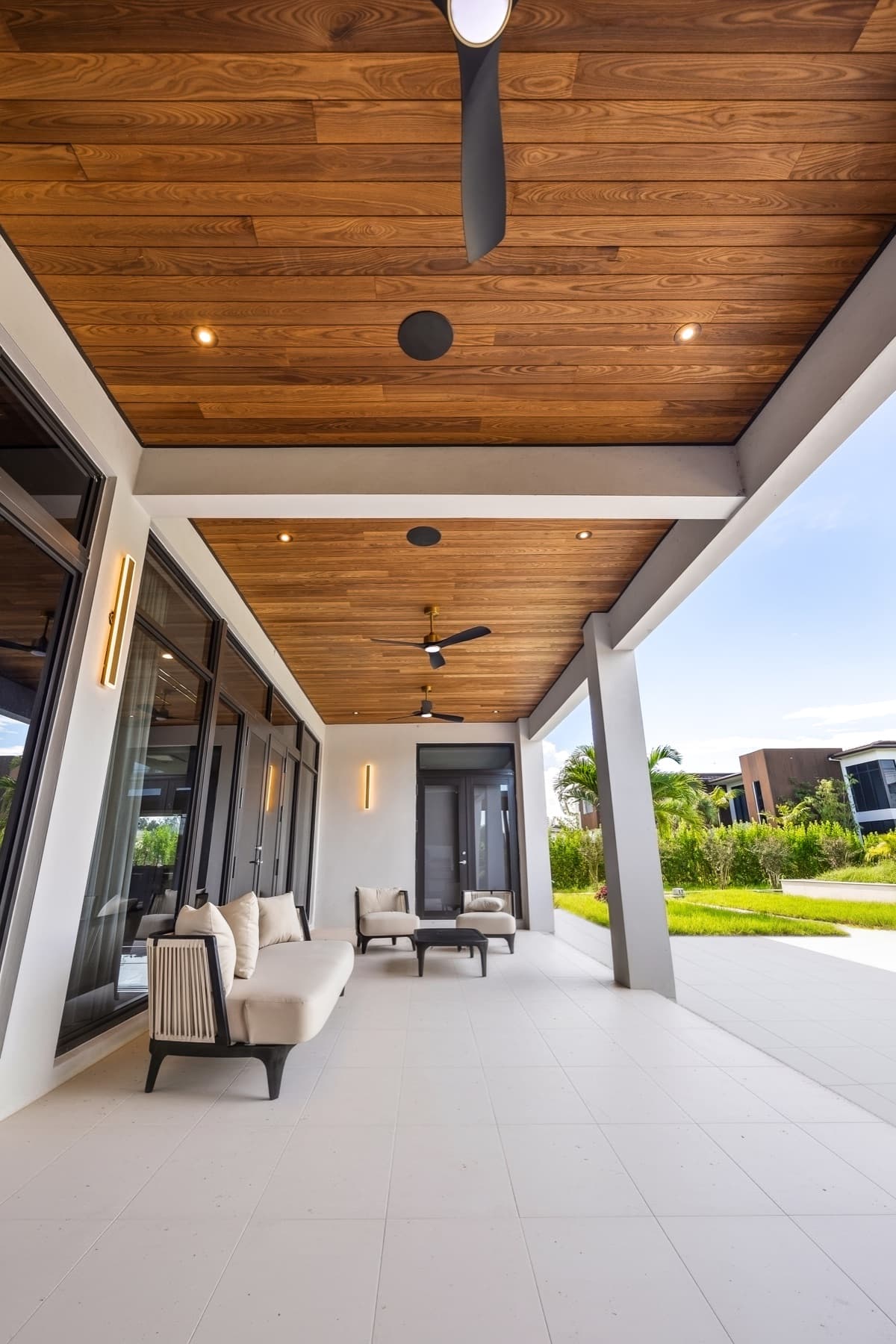
Understanding the Hilton Head Island Environment
Hilton Head Island's climate presents unique challenges for exterior building materials. High humidity levels, salt spray from the ocean, and intense UV radiation can accelerate the wear and tear on less resilient materials. Wood products, in particular, need to be selected for their inherent stability and resistance to moisture and decay. While many wood types can be used, some offer superior performance in these conditions.
Considerations for material selection should include how well the product resists warping, checking, and fungal growth. The finish applied to the material is also critical, as it provides an additional layer of protection against the elements. Regular maintenance, tailored to the chosen material and finish, will be essential for longevity.
Material Spotlight: Thermally Modified Wood for Porch Ceilings
Thermally modified wood is a popular choice for porch ceilings and soffits due to its enhanced stability and durability. This wood undergoes a high-heat treatment process that alters its cellular structure, making it more resistant to moisture absorption, decay, and insect infestation. The process also imparts a consistent, rich brown tone throughout the wood, which can be maintained with appropriate finishes or allowed to weather naturally.
For coastal applications like those in Hilton Head Island, the reduced hygroscopicity (tendency to absorb moisture) of thermally modified wood is a significant advantage. It means less expansion and contraction with changes in humidity, leading to a more stable and longer-lasting ceiling or soffit. Options like thermally modified Ayous or Ash, with their clean grain, can offer a contemporary aesthetic, while Scandinavian thermally modified wood provides a Nordic character. Explore more at our Thermally Modified Wood page: https://lumberplus.com/thermally-modified-wood.
Hardwoods: Durability and Natural Beauty
Brazilian hardwoods such as Ipe, Cumaru, Garapa, Angelim, and Jatoba are renowned for their natural density, hardness, and resistance to decay and insects. These characteristics make them suitable for exterior applications, including porch ceilings and soffits. Their natural color variations, from deep browns to golden hues, can provide a distinctive and luxurious look.
While hardwoods offer excellent natural resistance, they still benefit from proper installation and finishing in a coastal environment. Regular cleaning and reapplication of appropriate finishes can help preserve their color and protect against UV degradation. The weight of some dense hardwoods should also be considered during installation planning to ensure adequate support. For a comprehensive overview of our ceiling and soffit materials, visit: https://lumberplus.com/ceiling-and-soffit.
Integrating Lighting and Ventilation with Your Porch Ceiling
Beyond material selection, the functional aspects of a porch ceiling are crucial. Proper lighting integration can enhance the usability and ambiance of your porch, especially in the evenings. Recessed lighting is a common choice, offering a clean look that doesn't obstruct the ceiling's surface. When planning, ensure that the chosen ceiling material can accommodate the necessary cutouts and electrical boxes.
Soffit ventilation is also vital for maintaining a healthy roof structure, particularly in humid climates. Ensure that any solid soffit panels are strategically placed to allow for adequate airflow into the attic space, working in conjunction with roof vents. If using a vented soffit material, verify its airflow capacity meets local building requirements and the needs of your roof system. Coordinating with your roofer or contractor early in the design process can help ensure proper ventilation is maintained.
Project Example: A Coastal Porch Ceiling Renovation
Imagine a hypothetical front porch in Hilton Head Island, measuring 16 feet wide by 8 feet deep, with a standard flat ceiling. The homeowner wants to replace an aging painted plywood ceiling with a more durable and aesthetically pleasing material that complements their home's natural coastal aesthetic. They choose thermally modified Ayous ceiling boards, which are typically available in various widths and lengths, for example, 5.5-inch face width and lengths up to 16 feet.
To calculate the material needed, first determine the total area: 16 ft x 8 ft = 128 square feet. If using 5.5-inch (0.458 ft) wide boards, and assuming minimal waste for cuts across the 8-foot depth, you would need approximately 128 sq ft / 0.458 ft = 279.47 linear feet of board. Given that boards are supplied in specific lengths, such as 16 feet, you would divide the total linear footage by the board length: 279.47 ft / 16 ft = 17.47 boards. Rounding up to ensure enough material, you would likely need to purchase 18 boards, each 16 feet long. This calculation assumes a straightforward installation without complex cuts or significant waste, so it's always advisable to add a waste factor (typically 10-15%) for cuts, mistakes, and future repairs. For this example, adding 10% waste means 18 boards * 1.10 = 19.8, so 20 boards would be a safer purchase quantity. The homeowner also plans for two recessed light fixtures and a ceiling fan, requiring careful planning for wiring and support within the new ceiling structure.
Before you order
- Assess the specific environmental exposure (direct sun, salt spray, humidity) of your porch.
- Determine the desired aesthetic: natural wood grain, uniform color, or specific finish.
- Evaluate material stability and resistance to moisture, decay, and insects.
- Consider the weight of the material and its impact on the existing support structure.
- Plan for integration of lighting fixtures and ceiling fans.
- Ensure adequate soffit ventilation is maintained or improved.
- Confirm compatibility of chosen finishes with the material and coastal conditions.
- Factor in maintenance requirements for the selected material and finish.
- Measure your porch dimensions accurately and calculate material needs with a waste factor.
- Review local building codes for any specific requirements for porch ceilings and soffits.
Confirm installation details, approved uses and warranty terms in the current instructions for the exact product and profile. Your installer should verify the substrate, structure and applicable project requirements.
This is a planning guide for projects in Hilton Head Island, SC. Ask our team to confirm availability, delivery to your ZIP code and which branch can support your order.
Questions to help you decide
What is the best type of wood for a porch ceiling in Hilton Head Island?
For Hilton Head Island's coastal climate, thermally modified wood (such as Ayous or Ash) is an excellent choice due to its enhanced stability and resistance to moisture and decay. Dense hardwoods like Ipe or Cumaru also offer natural durability. The 'best' choice depends on your aesthetic preference, budget, and specific performance requirements.
How do I maintain a wood porch ceiling in a coastal environment?
Maintenance typically involves regular cleaning to remove salt residue and dirt. For finished wood, periodic reapplication of a suitable exterior finish (like a UV-protective oil or sealant) is crucial to protect against sun and moisture. Unfinished wood, especially thermally modified or hardwoods, may be allowed to weather to a silver-gray patina, but will still benefit from cleaning.
Can I install recessed lighting in a wood porch ceiling?
Yes, recessed lighting can be integrated into a wood porch ceiling. It's important to plan the layout carefully, ensure adequate clearance for the fixtures, and use IC-rated (insulation contact) fixtures if there's insulation above the ceiling. Consult with an electrician to ensure proper wiring and adherence to electrical codes.
Ready to Select Your Porch Ceiling Materials?
For a material quote tailored to your project dimensions, exact profile, and ZIP code, or to confirm current availability and service options, contact us. We can help you find the right ceiling and soffit materials for your Hilton Head Island home.
Request a material quote →