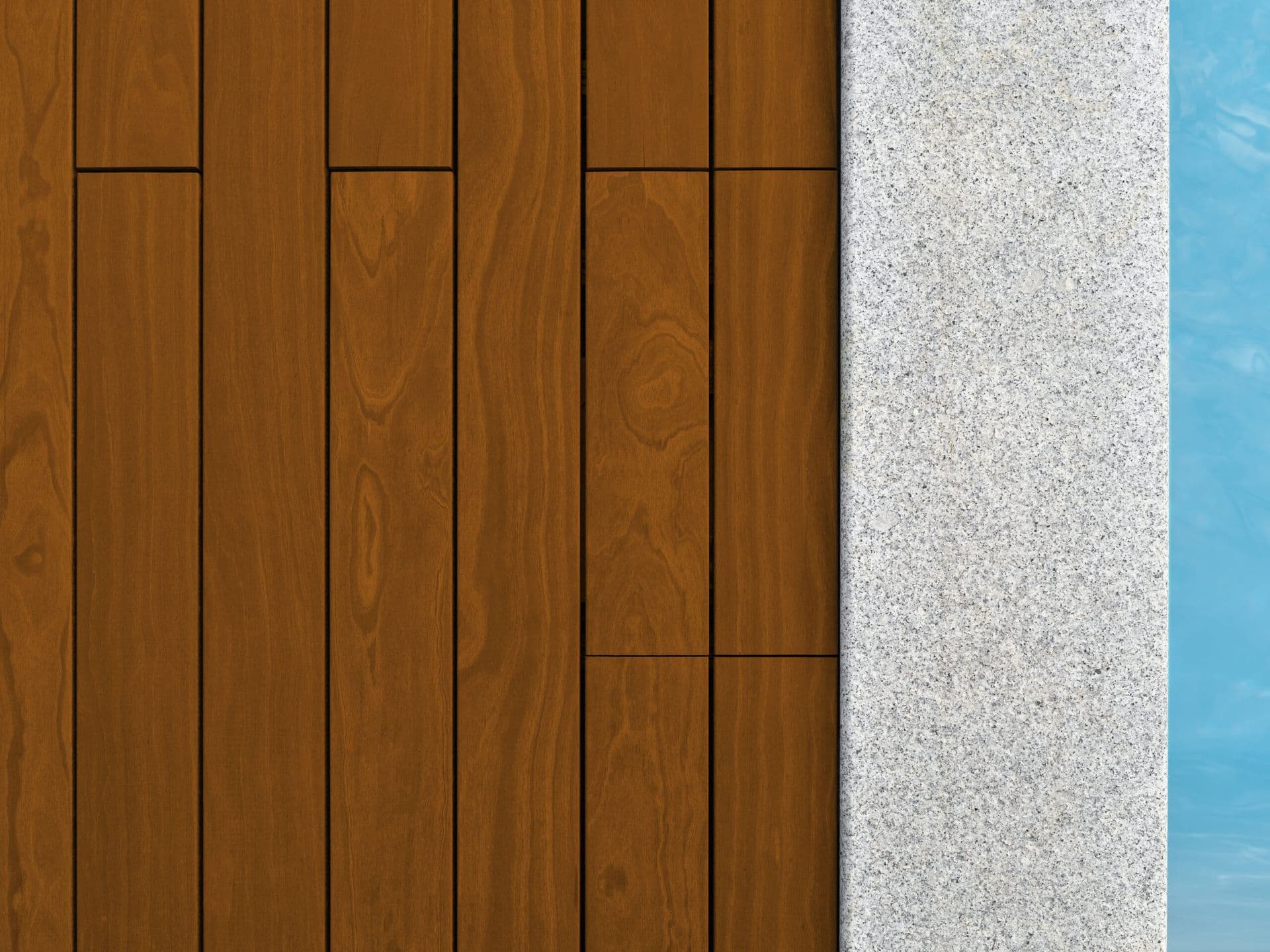
Understanding Maximo Accoya in Direct Sunlight
Maximo Accoya is a modified wood engineered to resist the warping, twisting, and cupping often seen in traditional timber when exposed to challenging exterior conditions. This enhanced stability is a key advantage for sun-exposed elevations, where temperature fluctuations and UV radiation can accelerate material degradation.
The modification process alters the wood's cellular structure, reducing its ability to absorb water and making it less susceptible to dimensional changes. This inherent stability means Maximo Accoya is designed to maintain its form even when subjected to intense sunlight and temperature variations, which is crucial for cladding applications.
While highly stable, any material, including modified wood, will experience some degree of thermal expansion and contraction. Proper detailing and installation techniques are essential to accommodate this movement, preventing stress on fasteners and adjacent materials. This is especially important on elevations that cycle between direct sun and shade throughout the day or across seasons.
Color and Finish Selection for Sun-Exposed Walls
The choice of color and finish plays a significant role in how Maximo Accoya performs and appears on a sun-exposed elevation. Darker colors absorb more solar radiation, leading to higher surface temperatures and potentially greater thermal movement compared to lighter finishes. This is a common principle for all cladding materials, including wood.
Maximo Accoya is available in Maximo Accoya Grey, Ipe Brown, and Natural. The Natural option provides a clean, adaptable starting point, while Grey and Ipe Brown offer distinct aesthetic directions. Each of these finishes will interact differently with direct sunlight.
For elevations with intense, prolonged sun exposure, careful consideration of finish durability is recommended. While Maximo Accoya is stable, any applied finish will be subject to UV degradation over time. Lighter finishes may show less fading or chalking compared to darker, more pigmented options, though this varies by specific product. Regular maintenance, as outlined by the finish manufacturer, is key to preserving the chosen aesthetic. Digital color is a reference only; confirm the final selection with a physical sample before ordering.
Designing for Thermal Movement: Gaps and Fastening
Even with Maximo Accoya's stability, planning for thermal movement is crucial. Cladding planks will expand and contract slightly with temperature changes. To accommodate this, it is essential to leave appropriate gaps between boards and at ends, as specified by the manufacturer or installer. These gaps allow the material to move without creating undue stress or buckling.
Fastening methods also contribute to managing thermal movement. Hidden fastening systems often allow for some degree of movement, while face-fastened applications require careful placement to ensure the fasteners do not restrict natural expansion and contraction. Always follow the recommended fastening schedule and type for Maximo Accoya to maintain the integrity of the installation.
Consulting with an experienced installer or reviewing detailed installation guides for Maximo Accoya is recommended to ensure that movement joints and fastening practices are appropriate for the specific project and its exposure conditions. This proactive planning helps prevent long-term issues such as board distortion or fastener pull-out.

Worked Example: South-Facing Maximo Accoya Cladding
Consider a hypothetical project for a residential facade measuring 20 feet wide by 10 feet high on its south-facing elevation. This wall receives direct sunlight for a significant portion of the day. The design calls for Maximo Accoya cladding in a horizontal layout, using a profile that creates a distinct shadow line.
For this 200 square foot (20' x 10') section, the primary considerations would include:
1. **Finish Selection:** The client is considering Maximo Accoya Ipe Brown for a warm, rich appearance. Given the south-facing orientation, the client should be advised that darker finishes may experience higher surface temperatures. A physical sample should be reviewed to understand the color depth and potential for UV-induced changes over time, and a maintenance schedule for the specific finish should be planned.
At vertical corners and around window/door openings, a similar expansion gap would be maintained to allow for material movement.
3. **Fastening:** A hidden fastening system would be selected to maintain a clean aesthetic while allowing the boards to expand and contract freely. This system would ensure that each board is securely held but not rigidly fixed, preventing stress accumulation.
4. **Substructure:** The substructure would be designed to provide continuous support and proper ventilation behind the cladding, mitigating heat buildup and promoting moisture drainage, which are beneficial for any sun-exposed wall. A rainscreen assembly is often specified for such applications.
Complementary Products for Sun-Exposed Installations
When designing a sun-exposed elevation with Maximo Accoya, consider integrating other products that enhance overall performance and aesthetics. A robust rainscreen system, for instance, helps manage moisture and provides a ventilated air gap behind the cladding, which can help regulate temperature and improve drying.
High-quality fasteners specifically designed for exterior wood applications are critical. These should be corrosion-resistant and compatible with Maximo Accoya's properties to ensure long-term stability and prevent staining. Choosing the right fasteners contributes to the structural integrity of the entire cladding system.
Finally, for a complete exterior package, consider complementing Maximo Accoya cladding with other thermally modified wood products, such as those used for soffits or trim, to maintain a consistent aesthetic and performance profile across all exterior elements. Explore [Siding and Cladding](/siding-and-cladding) and [Thermally Modified Wood](/thermally-modified-wood) options for a comprehensive approach.
Before you order
- Assess the orientation and degree of sun exposure for each elevation.
- Consider the impact of darker vs. lighter Maximo Accoya finishes on surface temperature and UV stability.
- Plan for appropriate expansion gaps between boards and at project boundaries.
- Select a fastening system that accommodates thermal movement.
- Ensure the substructure provides adequate ventilation and drainage.
- Review manufacturer guidelines for installation on high-exposure walls.
- Plan for a maintenance schedule tailored to sun-exposed surfaces and chosen finish.
Confirm installation details, approved uses and warranty terms in the current instructions for the exact product and profile. Your installer should verify the substrate, structure and applicable project requirements.
Questions to help you decide
Does Maximo Accoya fade in direct sunlight?
Like all natural wood products, Maximo Accoya will undergo some change in appearance when exposed to direct sunlight and weathering. The rate and degree of change depend on the specific finish applied, the intensity of UV exposure, and environmental conditions. Unfinished Maximo Accoya will gradually weather to a silver-grey patina. Applied finishes are designed to slow this process, but they will require periodic maintenance to retain their original color.
How do I clean Maximo Accoya on a sun-exposed wall?
General cleaning for Maximo Accoya typically involves mild soap and water, along with a soft brush or cloth, to remove surface dirt and grime. For sun-exposed walls, it's important to avoid harsh chemicals or high-pressure washing, which can damage the wood fibers or the finish. Always follow the cleaning recommendations provided by the finish manufacturer. Regular cleaning helps maintain the appearance and can extend the life of the finish.
Can Maximo Accoya be painted for sun-exposed applications?
Yes, Maximo Accoya is a suitable substrate for various paints and coatings. When selecting a paint for a sun-exposed elevation, choose a high-quality exterior-grade product specifically formulated for wood and UV resistance. Lighter paint colors can help reflect more solar radiation, potentially reducing surface temperatures. Always prepare the surface according to the paint manufacturer's instructions for optimal adhesion and longevity.
Ready to Plan Your Sun-Exposed Maximo Accoya Project?
Request a material quote for Maximo Accoya. Provide your project dimensions, desired profile, and ZIP code to confirm current availability and service options. Visit our product page for more details: [Maximo Accoya](/products/maximo-accoya).
Request a material quote →