What is a Rainscreen Assembly?
A rainscreen assembly is an exterior wall system that includes an outer cladding layer, a ventilated air cavity, and a weather-resistive barrier (WRB) over the structural sheathing. The primary purpose of this design is to protect the building from water penetration by creating a drainage plane and allowing air circulation to promote drying.
Unlike traditional siding, which often relies on a perfect seal to prevent water entry, a rainscreen acknowledges that some moisture will inevitably get past the exterior cladding. The air cavity provides a path for this moisture to drain down and out, while also allowing the wall components to dry. This systematic approach contributes to the longevity and performance of the entire wall structure.
Components of a Maximo Accoya Rainscreen Wall
A complete Maximo Accoya rainscreen assembly typically includes several layers, each with a specific function:
1. **Interior Wall Structure:** This includes the studs, insulation, and interior finishes.
2. **Sheathing:** Structural sheathing, such as plywood or OSB, provides rigidity and a substrate for other layers.
3. **Weather-Resistive Barrier (WRB):** Applied over the sheathing, the WRB acts as the primary defense against water penetration, shedding any moisture that bypasses the outer cladding. It must be continuous and properly flashed at openings and penetrations.
4. **Drainage Mat (Optional but Recommended):** A drainage mat creates a consistent space for water to drain and air to circulate between the WRB and the furring strips, enhancing the system's drying potential.
5. **Furring Strips:** These vertical or horizontal strips create the air cavity. They are typically fastened through the WRB into the structural studs. The thickness of the furring strips determines the depth of the drainage and ventilation cavity.
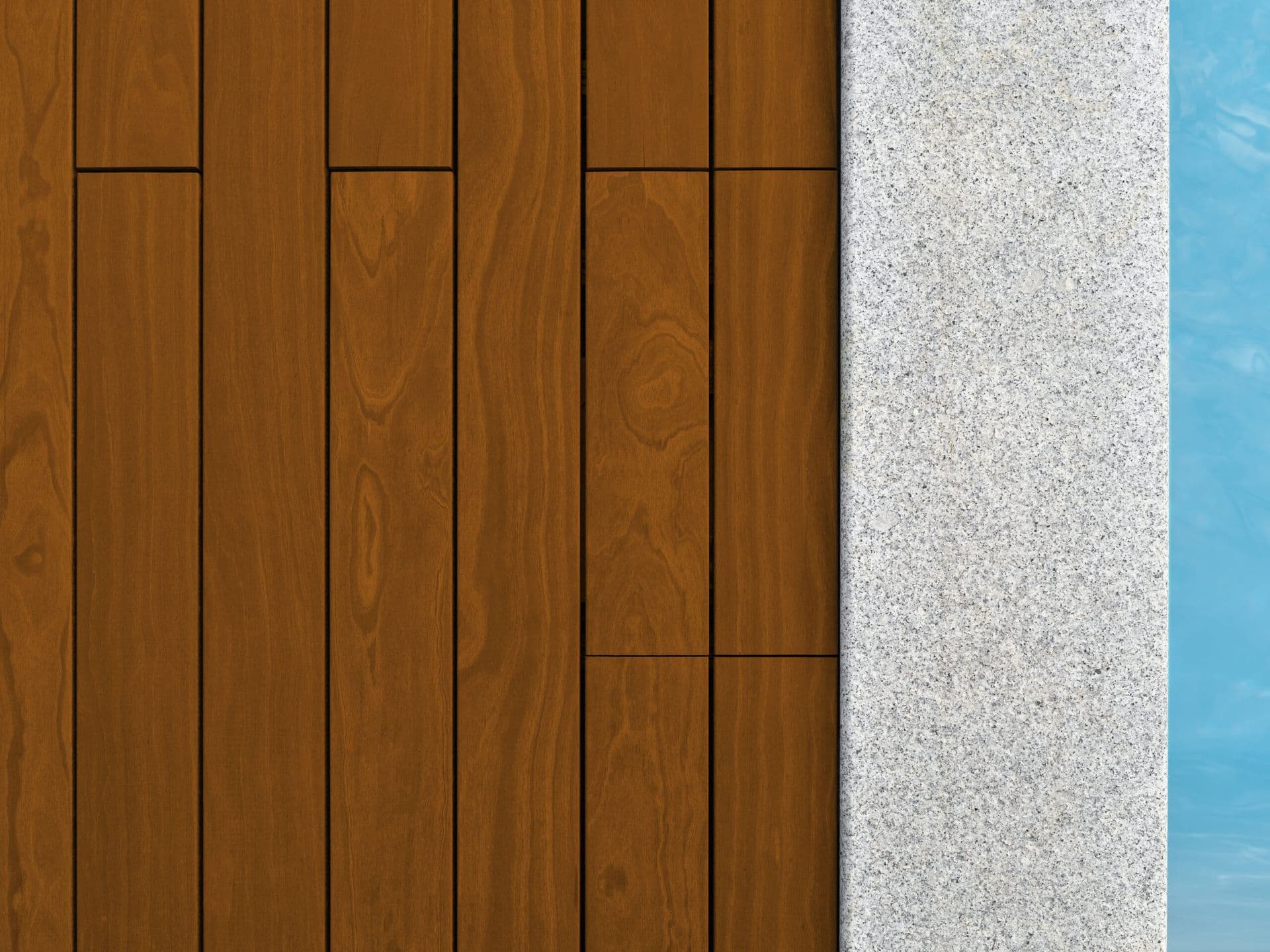
6. **Maximo Accoya Cladding:** The outermost layer, Maximo Accoya, provides aesthetic appeal and initial protection against weather elements. Maximo Accoya is a modified wood product available in various profiles, including Grey, Ipe Brown, and Natural finishes, offering dependable stability for exterior applications. It is engineered to resist warping, twisting, and cupping. See the Maximo Accoya product page for profile options: Maximo Accoya.
7. **Insect Screen/Ventilation Strips:** Installed at the top and bottom of the air cavity, these components allow air movement while preventing insects and debris from entering the cavity.
The Importance of the Drainage Cavity
The drainage cavity is a critical element of any rainscreen assembly. It is the space between the back of the Maximo Accoya cladding and the weather-resistive barrier. This gap, typically created by furring strips, serves several vital functions:
**Water Management:** It allows any water that penetrates the cladding to drain freely down the face of the WRB and exit the wall system at the base. This prevents water from becoming trapped within the wall, which can lead to moisture damage, rot, and mold.
**Ventilation and Drying:** The cavity promotes airflow, which helps to dry out any moisture that may accumulate within the wall assembly. This continuous drying action is crucial for maintaining the integrity of the sheathing, WRB, and furring strips.
**Pressure Equalization:** In some advanced rainscreen designs, the cavity can help equalize air pressure between the exterior and the interior of the cladding, reducing the driving force of wind-driven rain into the assembly.
The depth of the drainage cavity is typically specified by local building codes or manufacturer guidelines, but a minimum of 3/4 inch is commonly recommended for effective drainage and ventilation.
Selecting Your Weather-Resistive Barrier (WRB)
The WRB is the unsung hero of the rainscreen assembly, providing the primary waterproof layer for your wall. When selecting a WRB for a Maximo Accoya rainscreen, consider these factors:
**Water Resistance:** The WRB must effectively shed water and prevent it from reaching the sheathing.
**Vapor Permeability:** A permeable WRB allows water vapor to escape from the wall cavity, promoting drying, while still resisting liquid water entry from the exterior. This is often referred to as a "breathable" membrane.
**Durability:** The WRB must be robust enough to withstand installation and potential exposure during construction.
**Compatibility:** Ensure the WRB is compatible with other components of the wall system, including sealants, tapes, and fasteners. Always follow the WRB manufacturer's installation instructions, including proper lapping, sealing of seams, and flashing details around openings.
Worked Example: Designing a Rainscreen for a 100 sq ft Wall
Let's consider a hypothetical 10-foot by 10-foot exterior wall that will be clad with Maximo Accoya. This example illustrates the components and basic quantity considerations for a rainscreen assembly. Assume a standard stud framing at 16 inches on center.
**1. Sheathing:** For a 100 sq ft wall, you would typically use plywood or OSB sheets (e.g., 4x8 ft). This would require 4 sheets (4x8 = 32 sq ft per sheet, 100/32 = 3.125 sheets, so 4 sheets to account for cuts and waste).
**2. Weather-Resistive Barrier (WRB):** For 100 sq ft, you would need approximately 110-120 sq ft of WRB material to account for overlaps and waste. A standard roll might cover 500 sq ft, so one roll would be sufficient. Ensure all seams are properly taped.
**3. Furring Strips:** To create a 3/4-inch drainage cavity, you would typically use 1x3 or 1x4 lumber for furring strips. If installed vertically over studs spaced 16 inches on center, you would need approximately 8-foot strips for each stud bay. For a 10-foot wide wall, this means 8 studs (including ends). 8 strips x 10 feet = 80 linear feet of furring. Adding for horizontal strips at top and bottom for ventilation, and potential window/door detailing, plan for 100-120 linear feet. Consider using a product like Thermally Modified Wood Furring Strips for enhanced durability, or specific Norx furring strips: Thermally Modified Wood.
**4. Maximo Accoya Cladding:** If using a Maximo Accoya profile with an effective coverage width of 5 inches (0.416 feet) and an 8-foot length, each board covers 3.33 sq ft. For 100 sq ft, you would need 100 / 3.33 = approximately 30 boards. Always add 10-15% for waste, cuts, and future repairs, bringing the total to around 33-35 boards. Maximo Accoya is available in various finishes; for this example, let's assume the Maximo Accoya Natural profile: Maximo Accoya.
**5. Fasteners:** Appropriate fasteners for each layer, specifically stainless steel fasteners for the Accoya cladding, are crucial. The type and length will depend on the furring strip and sheathing thickness.
**6. Insect Screen:** Strips of insect screen at the top and bottom of the cavity, approximately 10 linear feet for each, for a total of 20 linear feet. This prevents pests from entering the drainage cavity while maintaining airflow.
Before you order
- Confirm local building code requirements for rainscreen cavity depth and WRB type.
- Select a suitable weather-resistive barrier (WRB) that is vapor permeable and durable.
- Determine the appropriate thickness and material for furring strips to create the drainage cavity.
- Plan for ventilation openings at the top and bottom of the rainscreen, incorporating insect screening.
- Ensure proper flashing details around all windows, doors, and penetrations.
- Choose the Maximo Accoya profile and finish that aligns with your design aesthetic.
- Specify appropriate corrosion-resistant fasteners for all layers, especially for the Maximo Accoya cladding.
- Consider the use of a drainage mat to enhance moisture management within the cavity.
Confirm installation details, approved uses and warranty terms in the current instructions for the exact product and profile. Your installer should verify the substrate, structure and applicable project requirements.
Questions to help you decide
Why is a drainage cavity necessary with Maximo Accoya cladding?
A drainage cavity is essential because it allows any moisture that penetrates the outer Maximo Accoya cladding to drain away from the wall structure. It also promotes airflow, which helps to dry out the wall assembly, preventing moisture accumulation, rot, and mold, thereby extending the lifespan of the entire wall system.
Can I use Maximo Accoya directly over the sheathing without a rainscreen?
While Maximo Accoya is a durable material, installing it directly over sheathing without a rainscreen assembly is generally not recommended for exterior applications. A rainscreen provides crucial protection against moisture, allows for drying, and contributes to the long-term performance and health of the building envelope. Always consult local building codes and manufacturer guidelines for proper installation methods.
What kind of maintenance does a Maximo Accoya rainscreen assembly require?
The Maximo Accoya cladding itself is designed for low maintenance, resisting warping and cupping. However, the entire rainscreen system benefits from periodic inspection. Check for any blockages in the ventilation openings at the top and bottom of the cavity, ensure flashing is intact, and look for any signs of damage to the cladding or other components. Regular cleaning of the cladding can also help maintain its appearance.
Ready to Specify Your Maximo Accoya Rainscreen?
Contact us to request a material quote for Maximo Accoya cladding, furring strips, and other related components for your project. Provide your project dimensions, desired Maximo Accoya profile, and ZIP code to confirm current availability and service options.
Request a material quote →