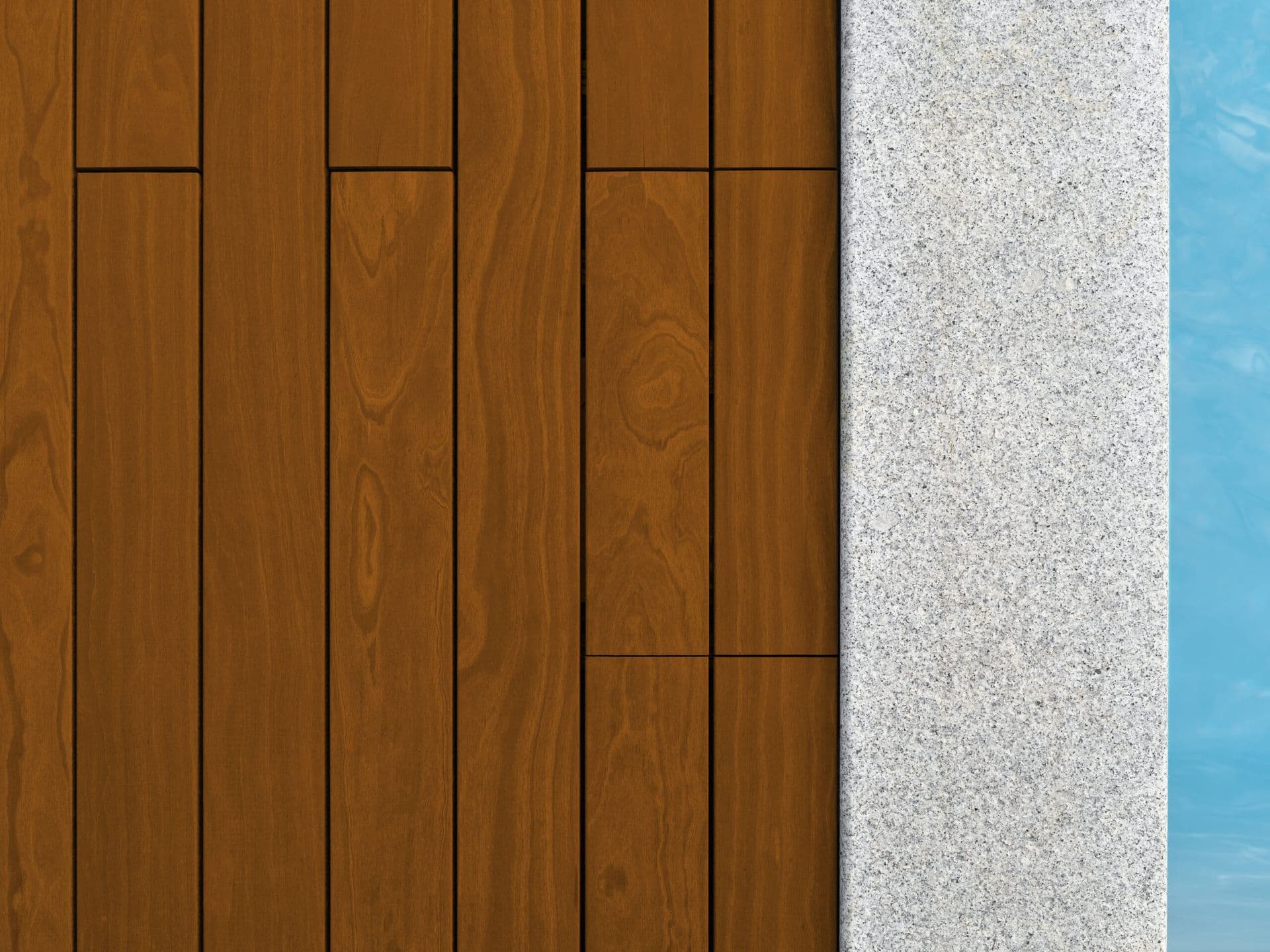
Understanding Maximo Accoya for Exterior Applications
Maximo Accoya is a modified wood product known for its stability and resistance to warping, twisting, and cupping. This modification process enhances the wood's performance, making it a dependable choice for demanding exterior installations. For a privacy screen, where exposure to sun, rain, and temperature fluctuations is constant, material stability is crucial to maintain the screen's integrity and appearance over time.
The material is available in several appearances, including Maximo Accoya Grey, Ipe Brown, and Natural, offering design flexibility to complement various architectural styles and landscape palettes. These options allow for a specific visual direction, whether a contemporary weathered look or a warm, tropical hardwood aesthetic. While the material itself is robust, the design of the privacy screen, including framing and spacing, will determine its ultimate performance and visual impact.
Maximo Accoya is specified for applications such as decking, siding, ceilings, windows, doors, trim, and molding, indicating its versatility and suitability for outdoor exposure. When considering it for a privacy screen, the focus shifts from a flat surface application like siding to a more open, often slatted structure that requires careful attention to individual board support and overall structural design.
Design Considerations for a Maximo Accoya Privacy Screen
Designing a privacy screen with Maximo Accoya involves more than just selecting the wood. The overall structure, including posts, rails, and fasteners, must be planned to support the Maximo Accoya boards effectively. Since privacy screens often feature gaps or open patterns, each board is more exposed to the elements and requires secure fastening to prevent movement.
The spacing between boards is a critical design element. Wider gaps allow more light and air, creating a semi-private feel, while narrower gaps offer greater visual obstruction. These gaps also influence wind load. While Maximo Accoya is stable, the entire screen structure must be designed to withstand local wind conditions. The profile of the Maximo Accoya boards (e.g., thickness and width) will influence the screen's visual weight and the required support structure.
Consider the desired level of privacy and light filtration. A slatted design using Maximo Accoya can create dynamic shadow lines throughout the day, adding visual interest. The choice of finish – whether allowing the wood to weather naturally or applying a specific color – will also impact the long-term aesthetic. Always review the catalog finish and request a current physical sample, as digital colors are for reference only.
Structural Support and Fastening
The stability of Maximo Accoya means it resists the warping and twisting often seen in untreated woods, which is beneficial for maintaining consistent gaps and straight lines in a privacy screen. However, this inherent stability does not negate the need for a robust support structure.
Posts, whether wood or metal, must be adequately sized and anchored to support the weight of the Maximo Accoya boards and resist wind forces. Horizontal or vertical rails provide attachment points for the Maximo Accoya. The type and spacing of fasteners are crucial. Fasteners should be corrosion-resistant and appropriate for exterior wood applications. Avoid relying on the boards themselves for structural integrity; they are cladding elements, not primary structural members.
When planning cut ends and field cuts for Maximo Accoya, ensure that any exposed end grain is properly treated if a specific finish is desired, to maintain a consistent appearance and protect the wood. While Maximo Accoya is designed for durability, consistent detailing contributes to the overall longevity and aesthetic of the privacy screen.
Hypothetical Project Example: A Slatted Privacy Screen
Imagine a hypothetical project: a homeowner wants a privacy screen, 8 feet tall and 12 feet long, to screen a patio from a neighboring property. They choose Maximo Accoya Natural for a clean, adaptable look that will weather over time.
Setting this equal to 144 inches: 5.5N + 0.75N - 0.75 = 144. This simplifies to 6.25N = 144.75, so N is approximately 23.16.
For an 8-foot height, standard 8-foot Maximo Accoya boards would be suitable, assuming no ground contact. Support would be provided by three equally spaced horizontal rails (top, middle, bottom) attached to two robust posts. Each slat would be fastened to each rail, ensuring stability against wind. This example highlights the need for precise measurements and a detailed plan to determine material quantities and structural requirements.
Complementary Materials and Design Integration
A Maximo Accoya privacy screen can integrate with other materials to enhance its design and functionality. Consider pairing it with metal posts or a stone base for a contrasting texture. The natural tones of Maximo Accoya can complement a variety of landscaping elements, from lush greenery to minimalist hardscaping.
Explore related products like siding and cladding to create a cohesive look if the privacy screen is near a building. Thermally modified wood products can also offer a similar aesthetic and performance for other outdoor features. The goal is to create a unified outdoor space where the privacy screen functions both practically and aesthetically as a key design element.
Before you order
- Confirm the desired level of privacy and light filtration for the screen.
- Determine the exact dimensions (height and length) of the privacy screen.
- Select the Maximo Accoya appearance (Grey, Ipe Brown, or Natural) and desired profile.
- Plan the spacing between individual Maximo Accoya boards.
- Design the structural support system (posts, rails, anchoring) to withstand environmental loads.
- Choose appropriate corrosion-resistant fasteners for exterior wood applications.
- Consider the need for any specific finishes or treatments for cut ends.
- Evaluate how the privacy screen will integrate with existing landscaping and architectural elements.
Confirm installation details, approved uses and warranty terms in the current instructions for the exact product and profile. Your installer should verify the substrate, structure and applicable project requirements.
Questions to help you decide
Does Maximo Accoya require special treatment for outdoor use in a privacy screen?
Maximo Accoya is modified wood engineered for demanding exterior applications, including those exposed to the elements. It is designed to resist warping, twisting, and cupping. While it does not require special treatment for durability, you may choose to apply a finish for specific aesthetic reasons or to maintain a particular color. If left unfinished, it will naturally weather over time.
What profiles of Maximo Accoya are suitable for a privacy screen?
Maximo Accoya is available in profiles suitable for decking, cladding, trim, and molding. For a privacy screen, you would typically use profiles similar to those for siding or trim, such as flat boards or battens. The specific thickness and width should be chosen based on the desired visual effect and the requirements of your support structure. Lumber Plus can assist in selecting appropriate profiles.
How do I calculate the quantity of Maximo Accoya needed for a privacy screen?
To calculate the quantity, you need the total length and height of your screen, the chosen width of the Maximo Accoya boards, and the planned spacing between them. Always add a percentage for cuts and waste, and confirm board lengths available. A detailed material takeoff is recommended.
Plan Your Maximo Accoya Privacy Screen
Ready to design your privacy screen with Maximo Accoya? Request a material quote with your project dimensions, desired profile, and ZIP code. We can confirm current availability and service options to help you get started.
Request a material quote →