Understanding Maximo Accoya's Natural Base
Maximo Accoya is a modified wood product, meaning its properties have been enhanced through a non-toxic acetylation process. This modification improves the wood's stability and durability, making it suitable for demanding exterior applications like siding. Crucially, this process does not alter the fundamental appearance of the wood grain itself. The original wood character, including knots and variations, remains visible, providing an authentic foundation for a natural look.
The base material has a light, consistent color that serves as an adaptable starting point for various design palettes. This inherent neutrality allows for a range of finishing options, from transparent to opaque, while still allowing the wood's natural texture to contribute to the overall aesthetic.
Maximo Accoya Natural Finish: The Original Appearance
For projects where the goal is to highlight the wood itself without significant color alteration, Maximo Accoya offers a "Natural" finish option. This finish is designed to protect the wood while allowing its original appearance to be the primary visual element. It is a clean, adaptable starting point for projects that want to preserve the inherent beauty of the timber.
Opting for the Natural finish means that the wood's inherent variations in tone and grain will be prominent. This choice is often favored for contemporary designs seeking a minimalist aesthetic, or for traditional styles where the warmth of natural wood is desired.
Exploring Alternative Natural-Inspired Finishes
While the "Natural" finish offers the most direct interpretation of a natural look, Maximo Accoya also provides other pre-finished options that can complement a natural aesthetic. The "Grey" finish, for example, is developed to mimic the weathered patina that natural wood can develop over time, offering a calm, contemporary exterior palette. This can be a strategic choice for projects aiming for an aged, organic appearance from the outset.
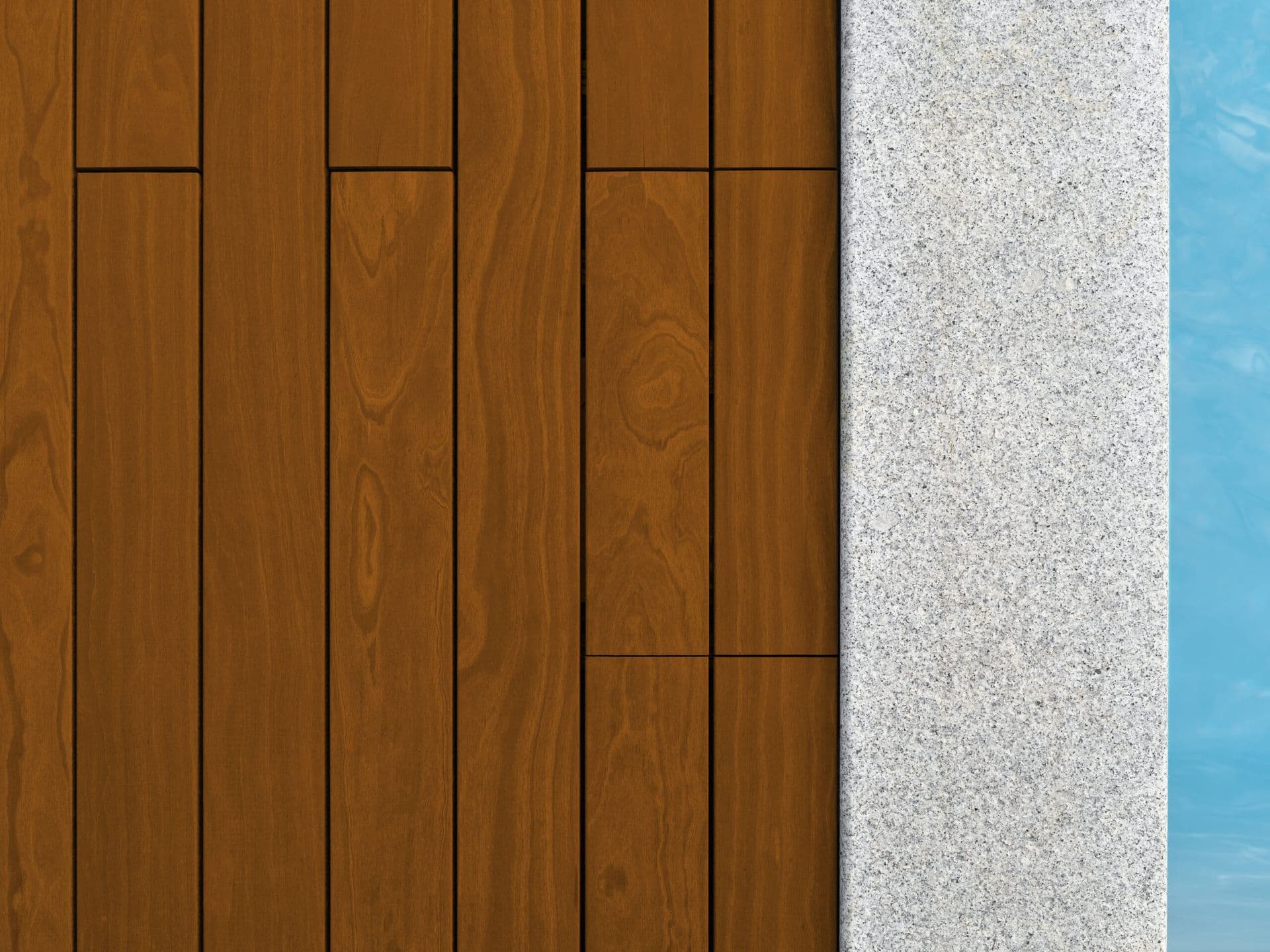
Another option is the "Ipe Brown" finish. This offers a warm brown tone, designed for designs that call for the visual depth often associated with tropical hardwoods. While a darker tone, the wood grain remains visible, contributing to a rich, natural look that can pair well with other natural materials like stone.
It is important to remember that digital representations of color are for reference only. Always confirm your final selection with a physical sample before ordering, as lighting and surrounding materials can influence the perceived color.

Selecting Profiles for a Natural Aesthetic
The profile of the siding boards also plays a significant role in achieving a natural look. Profiles with clean lines and minimal detailing tend to emphasize the wood material itself. Common profiles like shiplap or tongue-and-groove can create a subtle shadow line that enhances the natural texture and depth of the facade.
When planning, consider how the chosen profile will interact with light and shadow throughout the day. A profile that creates distinct shadow lines can accentuate the individual boards and the natural variations within the wood, contributing to a dynamic and authentic appearance.
A Hypothetical Project Example: Natural Look Facade
Consider a hypothetical residential project for a single-story home with a 40-foot wide front elevation and a height of 10 feet. The homeowner desires a natural wood aesthetic that will retain its appearance over time. They choose Maximo Accoya siding in the "Natural" finish, with a standard shiplap profile, where each board has a visible face width of 5.5 inches and comes in 12-foot lengths.
To calculate the approximate quantity needed for this 400 square foot (40 ft x 10 ft) wall: Each 12-foot board with a 5.5-inch face covers (12 ft * 12 inches/ft) * 5.5 inches = 792 square inches, or approximately 5.5 square feet (792 sq in / 144 sq in/sq ft). Therefore, approximately 400 sq ft / 5.5 sq ft/board = 72.7 boards are needed. Accounting for cuts, waste, and ensuring full board lengths where possible, a purchase of 75-80 boards would be a prudent starting estimate. This allows for clean transitions and minimizes visible joints.
The natural finish allows the subtle variations in the wood grain to become a key design element, providing visual interest without relying on strong colors. The shiplap profile creates a clean, linear pattern that emphasizes the horizontal flow of the natural wood across the facade.
Long-Term Appearance and Maintenance
Even with a natural finish, all exterior wood will undergo some changes in appearance over time due to exposure to UV light and weather. Maximo Accoya's stability helps mitigate warping, twisting, and cupping, but the surface color may still develop a silver-gray patina if left untreated with a UV-protective finish or regularly maintained.
For those who wish to preserve the initial "Natural" wood tone, regular application of a clear, UV-inhibiting finish will be necessary. If a weathered, silver-gray appearance is desired, less frequent maintenance may be suitable, allowing the wood to naturally develop its patina. Discuss these options with your contractor and review manufacturer guidelines for specific maintenance recommendations.
Before you order
- Desired level of wood grain visibility: prominent or subtle?
- Preference for initial wood tone: original light wood, weathered grey, or warm brown?
- Consideration of long-term patina: embrace natural weathering or maintain original color?
- Siding profile choice: how will it enhance the natural texture and shadow lines?
- Compatibility with other exterior materials: will the natural wood complement stone, stucco, or metal?
- Maintenance commitment: willingness to reapply clear finishes to preserve initial color?
- Request physical samples: confirm chosen finish and profile in person.
Confirm installation details, approved uses and warranty terms in the current instructions for the exact product and profile. Your installer should verify the substrate, structure and applicable project requirements.
Questions to help you decide
Does Maximo Accoya look like plastic or composite material?
No, Maximo Accoya is real wood that has undergone a modification process. It retains the natural grain, texture, and feel of wood. The modification enhances its durability and stability but does not turn it into a composite or plastic material. Its authentic wood appearance is a key reason for its selection in natural-look elevations.
Can I stain Maximo Accoya a custom color if I want a natural but specific tone?
Maximo Accoya can be stained, but it's important to consult with a finishing professional and review the manufacturer's guidelines for compatible products. While the product comes with pre-finished options like "Natural," "Grey," and "Ipe Brown," custom stains can be applied. Always test any custom finish on a scrap piece of Maximo Accoya to ensure the desired outcome and adhesion before applying it to the entire project.
How does Maximo Accoya's natural finish compare to other wood siding options?
Compared to many traditional wood siding options, Maximo Accoya's natural finish offers enhanced dimensional stability and resistance to rot and insect damage due to its modification process. This means a natural wood appearance can be achieved with potentially lower long-term maintenance related to wood degradation. However, like all wood, it will still require surface maintenance to preserve its initial color against UV exposure if a weathered look is not desired.
Ready to Plan Your Natural-Look Elevation with Maximo Accoya?
Request a material quote for Maximo Accoya. Provide your project dimensions, desired profile, and ZIP code to confirm current availability and service options for your project.
Request a material quote →