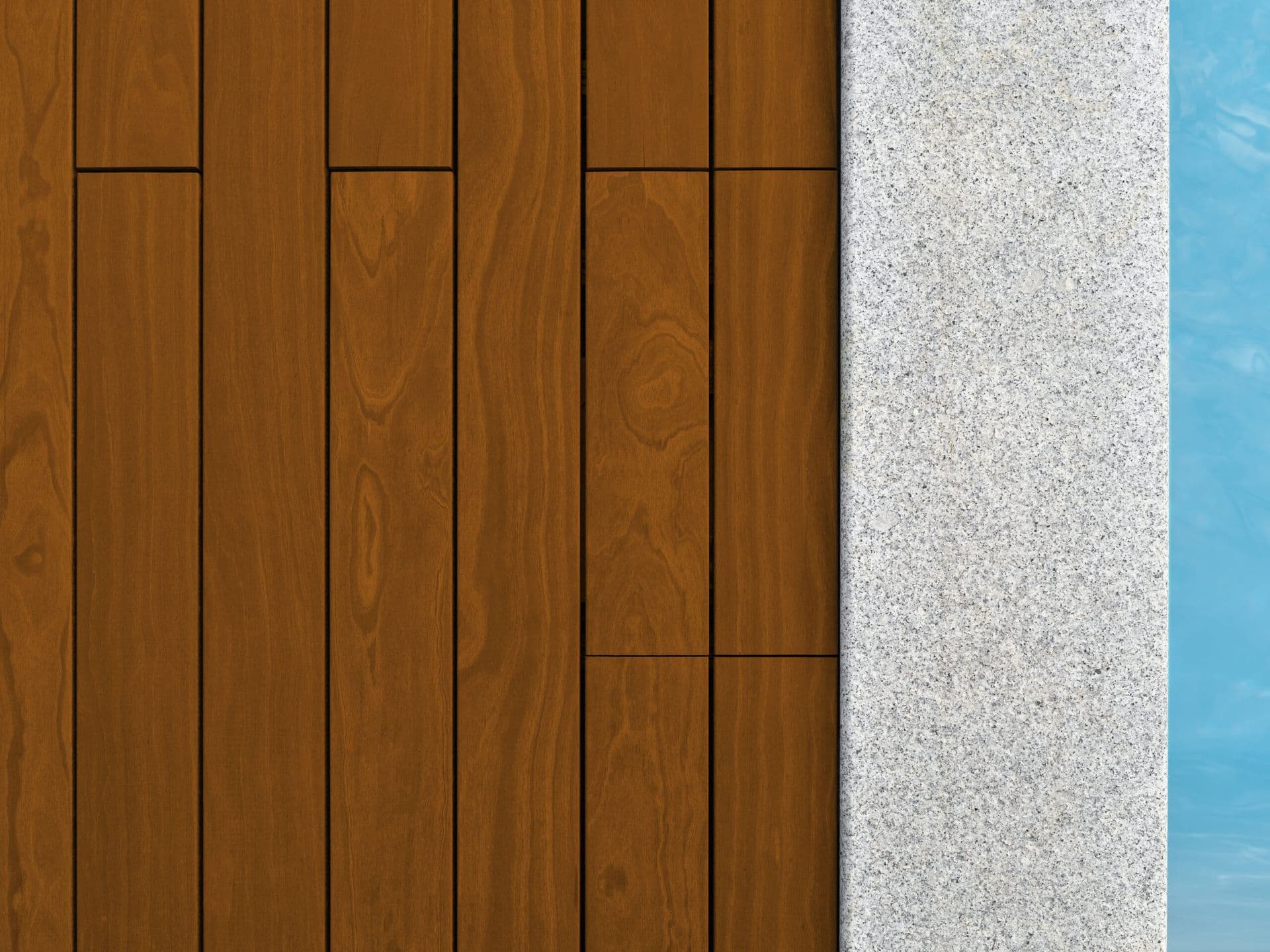
The Distinct Hospitality Wall Decision
Hospitality walls are more than just partitions; they are integral to the guest experience, contributing to the ambiance, brand identity, and overall comfort of a space. The decision to use Maximo Accoya for these applications stems from a desire to combine the natural warmth and texture of real wood with advanced performance attributes.
Consider a hotel lobby with a prominent feature wall or a restaurant exterior facade. These surfaces are subject to constant public interaction, potential scuffs, and varying environmental conditions (indoors or out). Maximo Accoya's enhanced stability and resistance to warping, twisting, and cupping make it a practical choice for maintaining a pristine appearance over time, reducing the need for frequent repairs or replacements. This contributes to the operational efficiency and guest satisfaction critical in hospitality environments.
Available Profiles and Visual Character
Maximo Accoya is available in various profiles suitable for cladding and siding applications. These profiles dictate the shadow lines, texture, and overall visual rhythm of the wall. Common options include tongue-and-groove, shiplap, and board-and-batten, each offering a distinct aesthetic.
The choice of profile should complement the architectural style of the hospitality venue. For a contemporary look, a clean, tight-gap shiplap profile might be preferred. For a more traditional or rustic feel, a wider board-and-batten can provide depth and character. Lumber Plus can work with project specifications for custom milling, allowing designers to achieve precise visual effects.
Reviewing physical samples of different profiles is crucial, as digital representations may not fully capture the material's texture and how light interacts with the profile's contours.
Selecting Finishes: Grey, Ipe Brown, or Natural
Maximo Accoya offers several pre-finished options that can significantly influence the wall's appearance and maintenance profile. The available finishes include Grey, Ipe Brown, and Natural.
The 'Grey' finish provides a weathered, contemporary aesthetic often favored for modern designs seeking a calm, subdued palette. The 'Ipe Brown' finish offers a warm, rich tone reminiscent of tropical hardwoods, adding visual depth. The 'Natural' finish presents the original Accoya appearance, providing a clean and adaptable base for projects where a specific stain or natural weathering is desired.
When selecting a finish, it is essential to consider the overall design scheme, lighting conditions, and the desired long-term appearance. While pre-finished options offer immediate aesthetic appeal, understanding their maintenance requirements and how they might age is important for hospitality projects. Always confirm the final selection with a physical sample before ordering, as digital colors serve only as a reference. This is especially true for hospitality where brand consistency and guest perception are paramount.

Application Suitability: Interior vs. Exterior Hospitality Walls
Maximo Accoya is engineered for demanding applications, including both exterior and interior use. For exterior hospitality walls, such as restaurant facades, hotel entrance accents, or outdoor dining area cladding, its resistance to warping, twisting, and cupping is particularly valuable in varying weather conditions.
For interior hospitality walls, like lobby feature walls, reception desk cladding, or corridor accents, Maximo Accoya offers the natural beauty of wood with enhanced stability, reducing concerns about movement due to indoor climate fluctuations. Its performance focus simplifies ownership without abandoning the aesthetic of real wood.
The specific application will influence the choice of profile, finish, and installation method. For instance, exterior applications may require a rainscreen assembly for optimal performance and longevity, while interior applications might focus more on fire ratings and acoustics, which should be verified with project-specific documentation.
Worked Example: A Hotel Lobby Feature Wall
Consider a hypothetical hotel lobby measuring 40 feet wide by 30 feet deep, with a ceiling height of 10 feet. The design calls for a feature wall behind the reception desk, measuring 20 feet wide and 10 feet high, using Maximo Accoya with an Ipe Brown finish in a shiplap profile. The shiplap planks are specified at 6 inches wide (nominal) and 12 feet long.
To calculate the material needed for this 20-foot by 10-foot area (200 square feet):
1. **Determine plank coverage:** A 6-inch nominal plank, once installed with its overlap, might have an exposed face of approximately 5.5 inches (0.458 feet).
2. **Number of planks needed horizontally:** The wall is 10 feet high. 10 feet / 0.458 feet/plank = approximately 21.8 planks. Round up to 22 planks for full coverage.
3. **Length of planks needed:** Each plank needs to cover 20 feet. Since planks are 12 feet long, each 20-foot run will require two planks with a butt joint. This means 22 planks * 2 sections/run = 44 sections of 12-foot planks.
4. **Total lineal feet:** 44 sections * 12 feet/section = 528 lineal feet.
5. **Ordering considerations:** Always add a waste factor, typically 10-15%, for cuts, unforeseen issues, and potential damage. For this example, 528 lineal feet * 1.15 (15% waste) = 607.2 lineal feet. Therefore, approximately 608 lineal feet of 6-inch wide, 12-foot long Maximo Accoya shiplap in Ipe Brown would be a starting point for the order. This translates to 51 individual 12-foot planks (608 / 12 = 50.67, rounded up).
This example highlights the need for careful measurement and waste calculation, especially with specific profile dimensions and project lengths. Reusable offcuts from one section can sometimes be used for another, but this requires a detailed cut plan.
Before you order
- Identify if the wall is interior or exterior.
- Determine the desired aesthetic: contemporary (Grey), warm (Ipe Brown), or natural (Natural).
- Select the appropriate profile (e.g., shiplap, tongue-and-groove, board-and-batten) to match the design.
- Confirm the required dimensions of the wall area.
- Calculate the square footage and lineal footage, adding a waste factor.
- Review physical samples of the chosen finish and profile.
- Consider the substructure requirements and approved fasteners for the chosen application.
- Plan for any required movement joints, especially for large exterior walls.
- Verify local building codes and fire ratings for commercial hospitality applications.
Confirm installation details, approved uses and warranty terms in the current instructions for the exact product and profile. Your installer should verify the substrate, structure and applicable project requirements.
Questions to help you decide
What makes Maximo Accoya suitable for hospitality projects?
Maximo Accoya undergoes an acetylation process that significantly enhances its dimensional stability, making it resistant to warping, twisting, and cupping. This durability is crucial for high-traffic hospitality environments where maintaining a consistent, refined appearance is important. It offers the aesthetic appeal of real wood with enhanced performance, simplifying long-term ownership. It is a long-term modified-wood option backed according to the selected application and product terms.
Can Maximo Accoya be used for both interior and exterior hospitality walls?
Yes, Maximo Accoya is engineered for demanding applications in both exterior and interior settings. Its enhanced stability makes it suitable for exterior facades exposed to weather and for interior feature walls where consistent appearance is valued despite indoor climate fluctuations.
How do I choose the right finish for my hospitality wall?
Maximo Accoya is available in Grey, Ipe Brown, and Natural finishes. The Grey offers a contemporary, weathered look, Ipe Brown provides a warm, rich tropical hardwood aesthetic, and Natural is an adaptable base. The choice depends on your project's overall design scheme and desired ambiance. It is always recommended to review a current physical sample to confirm the final selection before ordering, as digital representations can vary.
Request a Material Quote for Your Hospitality Wall Project
Ready to enhance your hospitality space with Maximo Accoya? Request a material quote by providing your project dimensions, exact profile, desired finish, and ZIP code. Confirm current availability and service options with our team.
Request a material quote →