Assessing Your Existing Facade: Beyond Surface Appearances
Before considering new materials, a thorough assessment of your existing facade is crucial. This involves looking beyond surface-level aesthetics to identify any underlying issues. Start by examining the current cladding for signs of wear, such as cracking, warping, rot, or detachment. Pay close attention to areas around windows, doors, and rooflines, where water intrusion is common. Document any visible damage with photographs and detailed notes.
Beyond the cladding itself, evaluate the condition of the underlying wall assembly. This includes checking for moisture penetration, insulation integrity, and the structural soundness of the sheathing and framing. A facade refresh offers an opportunity to address these issues, improving the building's thermal performance and moisture management. For example, if you observe water stains on interior walls or condensation issues, these indicate deeper problems that must be resolved before new cladding is installed. Consulting with a qualified building professional for this initial assessment can provide a comprehensive understanding of your building's needs.
Why Maximo Accoya for Facade Refreshes?
Maximo Accoya modified wood offers a performance-focused material choice for exterior applications like facade refreshes. Its modification process enhances stability, aiming to resist common issues such as warping, twisting, and cupping that can complicate demanding exterior installations. This inherent stability can contribute to a facade that maintains its appearance over time.
Available in Maximo Accoya Grey, Ipe Brown, and Natural finishes, this material provides aesthetic versatility. The Grey option offers a contemporary weathered look, Ipe Brown provides the visual depth of tropical hardwood, and Natural presents a clean, adaptable starting point. This range allows for integration into various design palettes. Maximo Accoya is a real wood option engineered for demanding applications, simplifying ownership without abandoning the material's natural character. Lumber Plus can assist with selecting profiles, quantity, and project-specific finishing.
The material is designed to offer a long service life, making it a consideration for projects prioritizing durability. When planning, it's advisable to review the catalog finish and request a physical sample to confirm the final selection, as digital colors serve as a reference only.
Planning for Repairs and Substructure Improvements
Once the existing facade has been assessed, the next step is to plan for any necessary repairs and substructure improvements. This phase is critical because the longevity and performance of your new Maximo Accoya facade depend heavily on the integrity of the underlying structure. Addressing issues like rotted sheathing, damaged framing, or inadequate moisture barriers before installing new cladding is more cost-effective and ensures a more durable result.
Consider upgrading your wall assembly during this refresh. This might include adding a rainscreen system to promote drainage and ventilation behind the new cladding, or improving insulation for better energy efficiency. A rainscreen assembly can significantly enhance the performance of a wood facade by creating a continuous air gap that helps manage moisture and equalize pressure. This step helps protect the Maximo Accoya from prolonged moisture exposure and contributes to the overall health of the wall.
Ensure all penetrations, such as windows, doors, and utility pipes, are properly flashed and sealed. This prevents water from entering the wall assembly at vulnerable points. The substructure, including furring strips or strapping, must be sound, level, and securely fastened to support the new Maximo Accoya cladding uniformly. Any unevenness in the substructure can lead to an inconsistent appearance or affect the stability of the cladding over time.

Designing Your New Facade: Profiles and Layouts
With the substructure prepared, you can focus on the design of your new Maximo Accoya facade. Maximo Accoya is available in various profiles suitable for cladding, allowing for different visual effects and shadow lines. Common profiles include tongue-and-groove, shiplap, and board-and-batten, each offering a distinct aesthetic. The choice of profile will influence the overall character of your facade, from sleek and modern to more traditional.
Consider the orientation of the cladding (horizontal, vertical, or diagonal) and how it interacts with the building's architecture, window placement, and overall landscape. Horizontal cladding can make a building appear wider, while vertical cladding can emphasize height. Diagonal layouts offer a unique, dynamic look. Experiment with different layouts in your design plans to visualize the impact on your building's proportions and curb appeal.
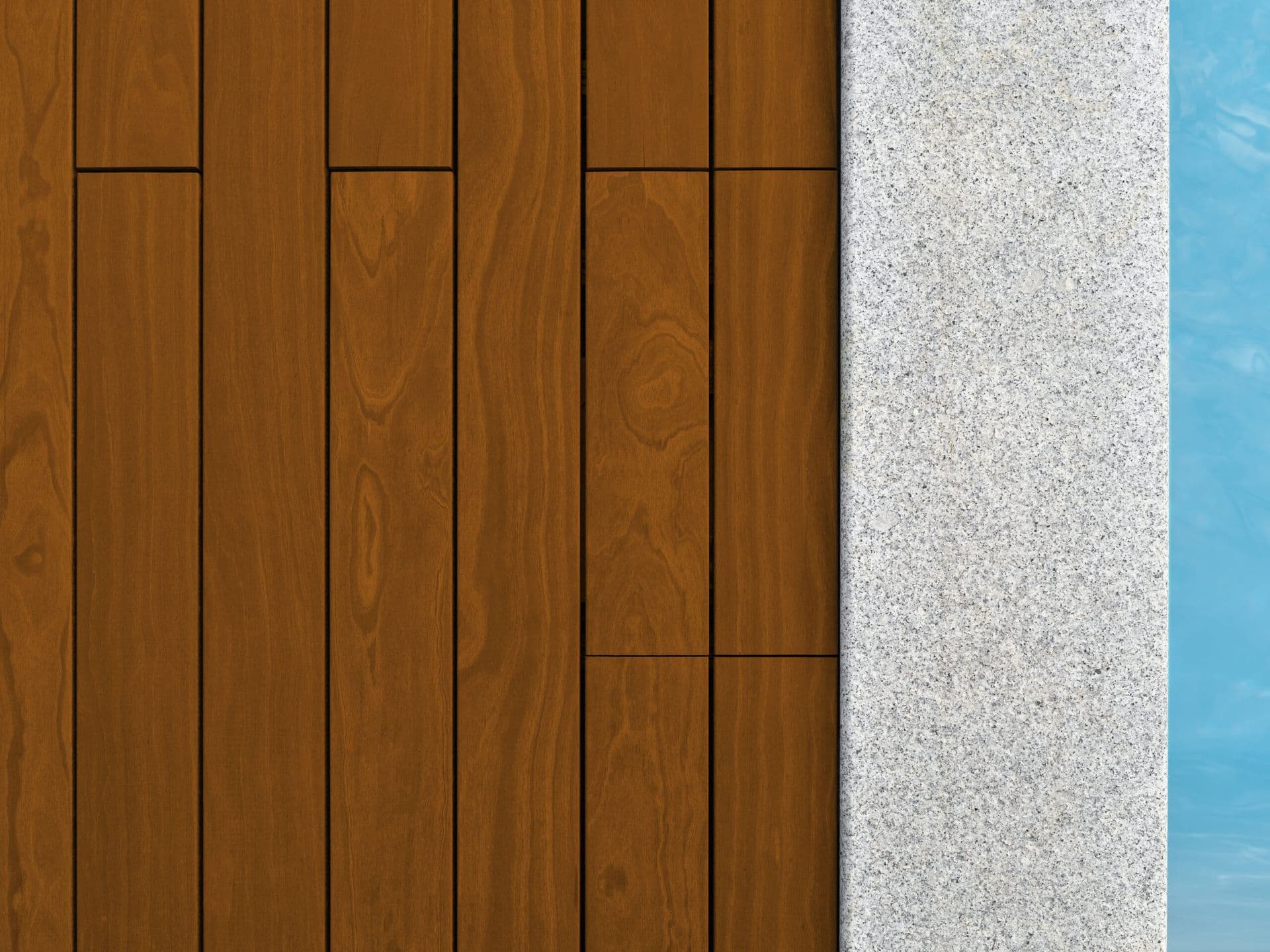
Also, think about how the Maximo Accoya will integrate with other materials on your facade, such as stone, stucco, or metal accents. The natural wood appearance of Maximo Accoya can provide a warm contrast to cooler materials or complement other natural textures. Planning these transitions and corner details is essential for a cohesive and professional finish.
Worked Example: Facade Refresh for a 20-foot by 10-foot Wall
Let's consider a hypothetical facade refresh for a single wall section measuring 20 feet wide by 10 feet high. The existing facade has deteriorated vinyl siding, and the underlying sheathing shows minor water damage near the base. The plan is to replace it with Maximo Accoya cladding.
First, the existing vinyl siding is removed. The sheathing is inspected, and a 2-foot section along the bottom edge is replaced due to water damage. A new weather-resistive barrier (WRB) is installed over the entire wall, extending from the foundation to the soffit. These strips are securely fastened into the wall studs.
For the Maximo Accoya cladding, let's assume a shiplap profile with an effective coverage width of 5.5 inches (0.458 feet) and available in 12-foot lengths. To cover the 20-foot width horizontally, we'll need multiple pieces per row. For the 10-foot height, we'll need approximately 10 feet / 0.458 feet/board = 21.8 boards vertically, so 22 boards (rounded up to ensure full coverage).
For each 20-foot row, we would need two 12-foot lengths per row, with an 8-foot offcut from the second board. This means 20 linear feet of coverage per row requires 24 linear feet of material, assuming the 8-foot offcut is usable in the next row. With 22 rows, the total linear footage needed is 22 rows * 20 feet/row = 440 linear feet of coverage. Since each 12-foot board provides 12 linear feet, and we need to account for cuts and waste, we would typically order in full lengths. 22 rows * 2 boards/row = 44 boards. However, we can use the 8-foot offcuts. We need 22 rows. For the first row, we use a 12-foot board and an 8-foot board. For the second row, we also use a 12-foot board and an 8-foot board (using the offcut from the first 12-foot board cut to 8 feet). This continues for 22 rows. This means we essentially need 22 boards that are 12 feet long and 22 boards that are 8 feet long. Since Maximo Accoya is sold in specific lengths (e.g., 12 feet), we would purchase 22 * 12-foot boards and then cut them down as needed, generating some waste or usable offcuts for other sections. However, with the 5.5-inch width, 22 rows are needed. For each row, we need 20 feet of coverage. If we buy 12-foot lengths, we would need two 12-foot lengths per row, cutting one to 8 feet. This would mean 2 x 22 = 44 boards if we assume no offcut reuse across rows. If we can reuse the 8-foot offcut from the first 12-foot board to complete the next row, then we would need 22 x 12-foot boards + 22 x 8-foot boards. If only 12-foot lengths are available, this means 22 full lengths are needed, with careful planning of cuts to maximize material usage. For this example, we would estimate needing 44 full 12-foot lengths to cover the 20-foot width for 22 rows, accounting for cuts and potential waste without assuming perfect offcut reuse across all rows. The total area is 200 sq ft. At 0.458 ft width, this is 440 linear feet. If 12-ft boards are used, 440/12 = 36.67 boards, so 37 boards. However, the 20-ft width requires cutting, so roughly 2 boards per row, 22 rows = 44 boards total.
Finishing and Maintenance Considerations
Maximo Accoya can be specified with different finishes, including grey, ipe brown, or natural. The choice of finish affects the facade's initial appearance and how it will age. The natural finish will gradually weather to a silver-grey patina over time if left untreated. The pre-finished options offer a more consistent initial appearance. It is recommended to request a current physical sample to confirm the final selection before ordering, as digital representations may vary.
While Maximo Accoya is designed for low maintenance, understanding the specific maintenance requirements for your chosen finish is important. Regular cleaning to remove dirt and debris can help preserve the facade's appearance. If a pre-finished option is selected, periodic reapplication of the finish may be necessary to maintain its color and protection. Discuss these details with your supplier or contractor to ensure long-term satisfaction with your refreshed facade.
Before you order
- Assess existing facade for damage (cracks, rot, detachment).
- Inspect underlying wall assembly for moisture, insulation, and structural issues.
- Consult a building professional for a comprehensive assessment if needed.
- Identify necessary repairs to sheathing, framing, and moisture barriers.
- Consider upgrading to a rainscreen system for improved performance.
- Ensure all penetrations (windows, doors) are properly flashed and sealed.
- Verify substructure is sound, level, and securely fastened.
- Select Maximo Accoya finish (Grey, Ipe Brown, Natural).
- Choose a Maximo Accoya profile (e.g., shiplap, tongue-and-groove).
- Plan cladding orientation (horizontal, vertical, diagonal).
- Integrate Maximo Accoya with other facade materials.
- Request physical samples to confirm color and finish.
- Understand specific maintenance requirements for the chosen finish.
Confirm installation details, approved uses and warranty terms in the current instructions for the exact product and profile. Your installer should verify the substrate, structure and applicable project requirements.
Questions to help you decide
What makes Maximo Accoya suitable for a facade refresh?
Maximo Accoya modified wood is designed for demanding exterior applications. Its enhanced stability helps resist warping, twisting, and cupping, which can be beneficial for maintaining the appearance of a facade over time. It also offers various aesthetic options and a long service life, making it a performance-focused choice for revitalizing building exteriors.
Do I need to make structural repairs before installing Maximo Accoya?
Yes, a thorough assessment of the existing facade and underlying wall assembly is crucial. Any structural damage, rot, or moisture issues must be addressed and repaired before installing new Maximo Accoya cladding. The integrity of the substructure directly impacts the longevity and performance of your new facade.
How do I choose the right Maximo Accoya finish and profile?
Maximo Accoya comes in Grey, Ipe Brown, and Natural finishes, each offering a distinct aesthetic. Profiles like shiplap or tongue-and-groove also create different visual effects. Consider your building's architectural style and desired look. It is highly recommended to request physical samples to confirm your color and finish selection, as digital representations can vary.
Ready to Transform Your Facade?
Request a material quote for Maximo Accoya today. Provide your project dimensions, desired profile, and ZIP code to confirm current availability and service options.
Request a material quote →