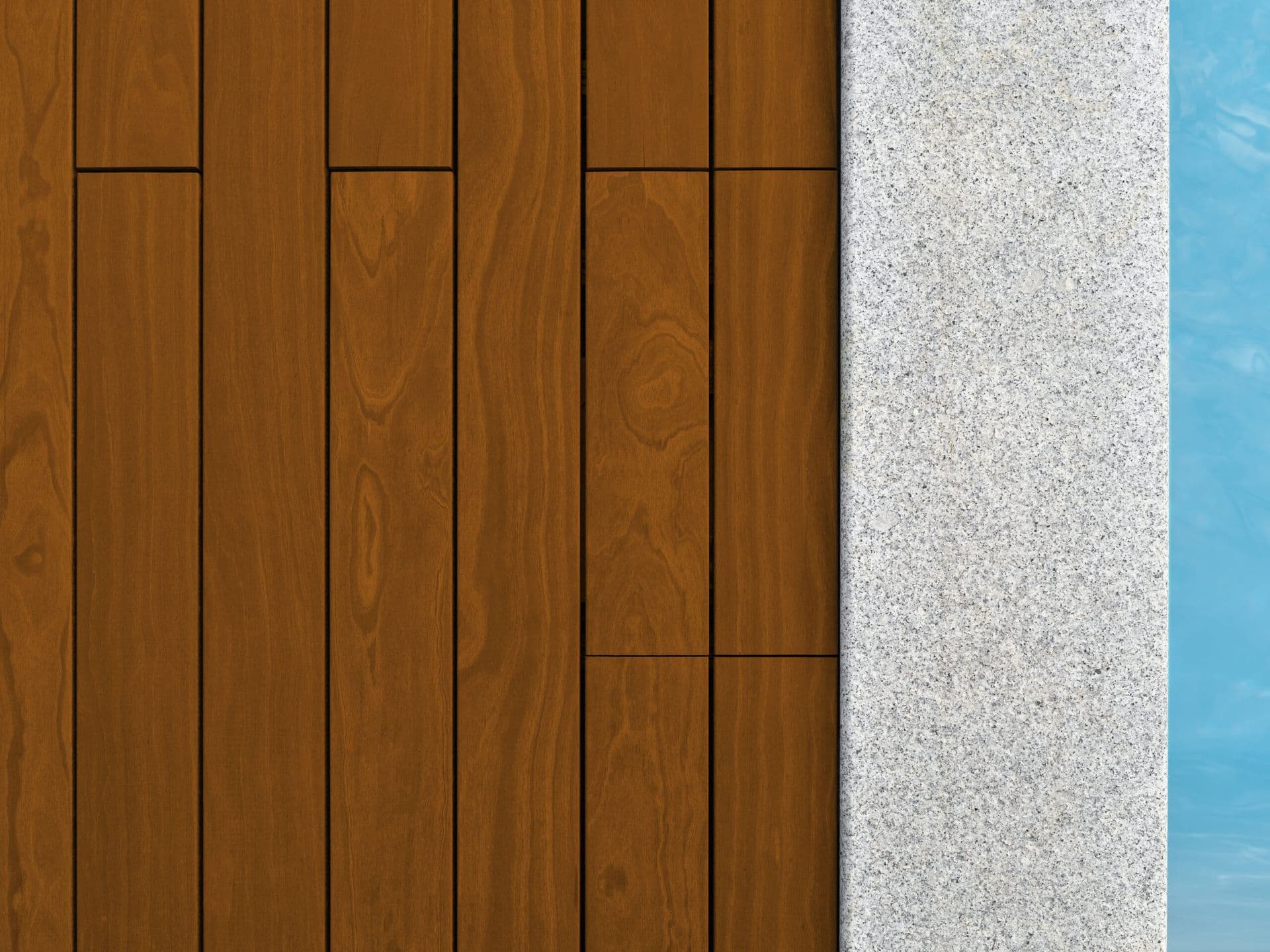
Why Movement Joints Are Essential for Maximo Accoya Cladding
Even with its advanced modification process, Maximo Accoya is still a wood product. Wood naturally expands and contracts with changes in moisture content and temperature. While Maximo Accoya is designed to resist significant warping, twisting, and cupping, this inherent movement needs accommodation in the overall cladding system.
Movement joints provide the necessary space for individual cladding boards or panels to expand and contract without putting undue stress on adjacent elements, fasteners, or the substructure. Proper planning of these joints helps to prevent cracking, buckling, and other common issues associated with uncontrolled material movement, contributing to a long service life for the facade.
Types of Movement Joints for Cladding
Movement joints in cladding typically fall into a few categories, each serving a specific purpose:
Expansion Joints: These are designed to accommodate the expansion of cladding materials. They are essentially gaps left between sections of cladding that allow the material to swell without causing compression stress. For Maximo Accoya, expansion joints are primarily horizontal and vertical gaps.
Control Joints: Often used in conjunction with expansion joints, control joints help to direct where movement will occur, preventing random cracking or deformation. In larger cladding fields, these might be strategically placed to break up continuous runs of material.
Isolation Joints: These separate cladding elements from other building components, such as window frames, door frames, or dissimilar materials, preventing stresses from transferring between them.
Placement and Sizing of Movement Joints
The placement and sizing of movement joints depend on several factors, including the length and width of the cladding boards, the overall dimensions of the facade, the expected environmental conditions, and the specific installation method. While general guidelines exist, always refer to the manufacturer's specific recommendations for Maximo Accoya for precise dimensions.
For vertical cladding, expansion gaps are typically needed at horizontal intervals and at the ends of boards where they meet other building elements. For horizontal cladding, vertical gaps are crucial. The width of these gaps should be calculated based on the maximum anticipated expansion of the material, which can vary depending on the local climate and exposure to sun and moisture. Consider factors like material length, anticipated temperature swings, and humidity variations.
A common practice is to allow for a minimum gap size, then adjust based on the length of the runs. Longer runs of cladding will require wider or more frequent movement joints. It is also important to consider the orientation of the facade; south-facing walls exposed to direct sunlight may experience greater temperature fluctuations and thus require more generous allowances for movement.

Design Considerations for Aesthetics and Function
Movement joints, while functional, also contribute to the aesthetic of the facade. They can be subtly integrated or used as a deliberate design element. Here are some considerations:
Shadow Lines: Properly sized and detailed movement joints can create intentional shadow lines that enhance the visual rhythm of the cladding. This can be particularly effective with Maximo Accoya's various profiles.
Joint Fillers and Backer Rods: For certain applications, especially where weatherproofing is paramount, movement joints may incorporate backer rods and sealants. Ensure any sealant chosen is compatible with Maximo Accoya and suitable for exterior exposure.
Concealed vs. Exposed Joints: Some designs might aim to conceal movement joints using overlapping profiles or specific detailing, while others might feature them as distinct, visible elements. The choice impacts both aesthetics and long-term maintenance.
Consistent Spacing: Maintaining consistent spacing for all movement joints across the facade is crucial for a professional and visually appealing finish.
Worked Example: Planning Movement Joints for a Maximo Accoya Facade
Let's consider a hypothetical wall section, 20 feet wide and 10 feet high, clad with Maximo Accoya horizontal siding boards. Assume the chosen boards are 12 feet long and 6 inches wide, installed with a rainscreen system.
If the facade is 20 feet wide, two 12-foot boards will cover 24 feet, requiring a cut. A practical approach is to install a 12-foot board, then an 8-foot board. A vertical movement joint would be placed where these two boards meet, and potentially at the ends where the cladding abuts corners or other architectural elements. For a 20-foot run, you might have a vertical joint at 12 feet. The width of this joint might be specified as 1/4 inch to 3/8 inch, depending on manufacturer guidelines and anticipated movement.
While individual board-to-board gaps (shadow lines) account for some movement, additional horizontal expansion joints may be needed for very tall walls or where the cladding meets different materials. For a 10-foot high wall, a horizontal expansion joint might be considered every 8-10 feet, or where the cladding transitions to a different material like a foundation or soffit. This joint would also need a specified width, perhaps similar to the vertical joints.
Around Openings: If there were a window in this 20x10 foot section, isolation joints would be required around its perimeter to prevent stress transfer from the cladding to the window frame. These gaps would typically be sealed with a flexible sealant compatible with both materials.
Before you order
- Consult the latest Maximo Accoya installation guidelines for specific movement joint recommendations.
- Determine the maximum length of continuous cladding runs, both horizontally and vertically.
- Identify all areas where the cladding abuts other building elements (corners, windows, doors, foundations, soffits).
- Calculate the required width of movement joints based on board dimensions, expected temperature/humidity ranges, and manufacturer specifications.
- Plan the aesthetic integration of movement joints: will they be subtle shadow lines or distinct design features?
- Select appropriate backer rods and sealants if required for weatherproofing and compatibility with Maximo Accoya.
- Ensure consistent spacing and detailing of all movement joints across the entire facade.
Confirm installation details, approved uses and warranty terms in the current instructions for the exact product and profile. Your installer should verify the substrate, structure and applicable project requirements.
Questions to help you decide
Can I omit movement joints if I'm using Maximo Accoya, given its stability?
No, movement joints are still essential. While Maximo Accoya offers dependable stability and is engineered to resist warping and twisting, all wood products will experience some dimensional change with fluctuations in temperature and humidity. Movement joints provide the necessary space for this natural expansion and contraction, preventing stress on the cladding system and ensuring its long-term performance and appearance.
How wide should movement joints be for Maximo Accoya cladding?
The exact width of movement joints for Maximo Accoya cladding depends on several factors, including the length of the cladding boards, the overall dimensions of the facade, and the expected local climate conditions. Always refer to the specific installation guidelines provided for Maximo Accoya products, as they will offer precise recommendations.
Do movement joints affect the weather resistance of the facade?
Properly designed and executed movement joints, especially when integrated into a rainscreen system, should not compromise the weather resistance of your facade. In fact, they contribute to it by preventing material stress that could lead to cracks or gaps. For enhanced weatherproofing, movement joints can be detailed with appropriate backer rods and flexible, compatible sealants, ensuring that moisture is managed effectively.
Request a Quote for Maximo Accoya Cladding Materials
Planning your facade project requires precise material specifications. To get started, request a material quote with your project dimensions, desired Maximo Accoya profile, and project ZIP code. We can also confirm current availability and service options for your location. Explore our related products like Siding and Cladding, Thermally Modified Wood, and other NORX brand solutions.
Request a material quote →