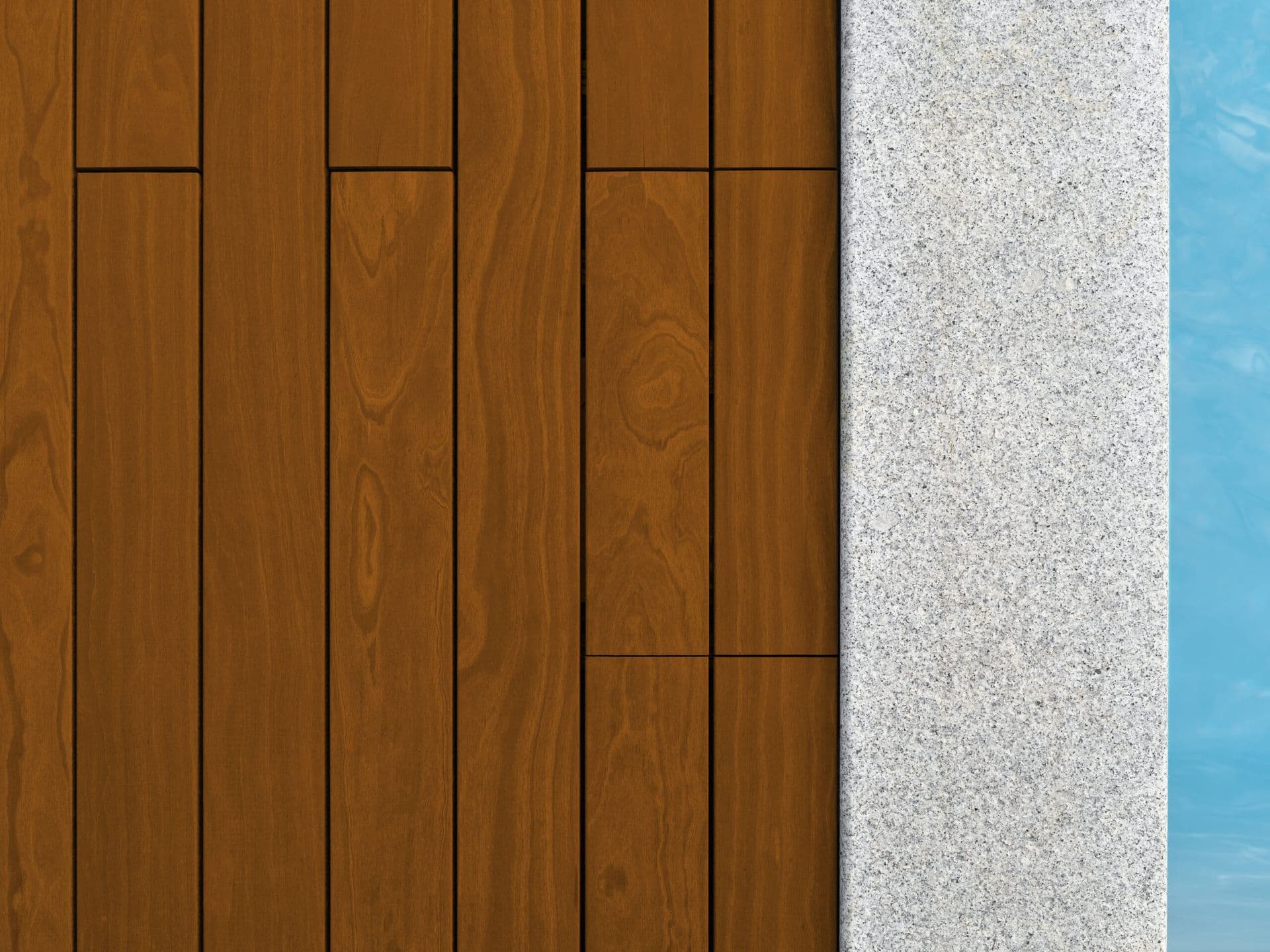
Understanding Maximo Accoya and Its Properties
Maximo Accoya is a modified wood product designed for stability and durability in demanding applications, including exterior cladding. Its modification process enhances resistance to warping, twisting, and cupping, which are common challenges with traditional wood. This stability is a key benefit, simplifying installations where dimensional consistency is important.
While Maximo Accoya is engineered for performance, any cuts made during installation, known as field cuts, create new exposed surfaces. These surfaces need appropriate treatment to maintain the material's enhanced characteristics, particularly its resistance to moisture and decay. Neglecting these steps can compromise the integrity of the cladding over time.
Why Cut End Treatment Matters
The modification process applied to Maximo Accoya penetrates the wood, enhancing its entire cross-section. However, a fresh cut exposes end grain that, while modified, can still absorb moisture at a different rate than the sealed faces. Proper end grain sealing helps to prevent localized moisture absorption and maintain the material's dimensional stability.
For aesthetic reasons, treating cut ends also helps to ensure a uniform appearance, especially if the cladding is finished or allowed to weather naturally. Untreated ends may show a different rate of weathering or absorb finish inconsistently, leading to a patchy look.
Selecting the Right Tools for Field Cuts
Accurate and clean cuts are essential for Maximo Accoya. Using sharp, appropriate woodworking tools is recommended. For straight cuts on cladding boards, a miter saw or circular saw with a fine-toothed blade designed for hardwoods can yield the best results. A clean cut minimizes splintering and provides a smooth surface for end grain treatment.
When making intricate cuts or notches, a jigsaw or router may be necessary. Always ensure blades are sharp to avoid damaging the wood fibers, which can compromise the effectiveness of any subsequent end treatment.

End Grain Sealing: Best Practices
After making any field cut, the newly exposed end grain should be sealed. The specific sealant recommended may vary depending on the chosen finish and the project's exposure conditions. Generally, a high-quality end grain sealer or a compatible exterior-grade primer/sealer designed for modified wood is applied.
The application should be generous, ensuring the sealer fully penetrates the exposed wood fibers. Allow adequate drying time as specified by the sealer manufacturer before proceeding with installation or applying any additional finishes. This step is crucial for protecting the cut ends from moisture ingress.
Worked Example: Cladding an Exterior Wall with Maximo Accoya
Consider a hypothetical exterior wall section, 10 feet wide and 8 feet tall, to be clad with Maximo Accoya boards that are 6 inches wide and supplied in 12-foot lengths. The design calls for a horizontal installation with a 1/2-inch overlap and a clean vertical edge at both ends.
To cover the 10-foot width, each horizontal board will need to be cut to size. Assuming no waste for the overlap, each 12-foot board can yield one 10-foot section. This means for every 10-foot run, there will be two freshly cut ends (one at each side of the board). For an 8-foot height with 6-inch wide boards and a 1/2-inch overlap, approximately 16 boards are needed vertically (8 feet / (6 inches - 0.5 inches overlap) = 96 inches / 5.5 inches = ~17.45 boards, so 18 boards to ensure full coverage and account for starting and ending points).
Total boards required: 18 boards * (10 feet / 12 feet per board) = 15 full boards, plus additional for cuts. A more practical approach is to calculate total linear footage: 18 boards * 10 feet = 180 linear feet. Since boards come in 12-foot lengths, you would need 180 / 12 = 15 boards. However, to account for cuts and potential errors, ordering an additional 10-15% is advisable, so about 17-18 boards.
For each of the 18 boards installed horizontally, the two ends cut to 10 feet must be treated. This means 36 cut ends will require sealing for this small section of wall. The offcuts (2 feet from each 12-foot board) may or may not be reusable depending on the project's specific needs for shorter sections around windows or doors. Each of these offcut ends also counts as a newly exposed surface if they are to be used.
Before installation, each of these 36 cut ends should be liberally coated with an appropriate end grain sealer, ensuring complete coverage of the exposed wood fibers. This step prevents moisture from penetrating the ends, maintaining the dimensional stability and longevity of the Maximo Accoya cladding.
Before you order
- Identify all areas where Maximo Accoya cladding will be cut on-site (field cuts).
- Determine the type of cut (cross-cut, rip cut, notch) and select appropriate sharp tools.
- Source a compatible end grain sealer or exterior-grade primer for modified wood.
- Plan for a dedicated workspace for making cuts and applying end treatment, allowing for drying time.
- Include the cost of end grain sealer in the project budget.
- Educate installers on the importance of end grain sealing and proper application techniques.
- Consider how offcuts will be managed: either treated for reuse or disposed of.
Confirm installation details, approved uses and warranty terms in the current instructions for the exact product and profile. Your installer should verify the substrate, structure and applicable project requirements.
Questions to help you decide
Is end grain sealing always necessary for Maximo Accoya?
Yes, end grain sealing is always recommended for Maximo Accoya when making field cuts. While Maximo Accoya is highly stable, sealing the end grain helps to prevent localized moisture absorption, which can lead to swelling or uneven weathering over time. This step contributes to the material's long-term performance and consistent appearance.
What kind of sealer should I use for Maximo Accoya cut ends?
You should use a high-quality, exterior-grade end grain sealer or a compatible primer specifically designed for modified wood products. It's best to consult the manufacturer's recommendations or a Lumber Plus representative to ensure compatibility with any chosen finish (e.g., paint, stain, or natural weathering) and the specific Maximo Accoya product.
Can I paint or stain Maximo Accoya after sealing the cut ends?
Yes, after properly sealing the cut ends and allowing the sealer to dry according to the manufacturer's instructions, Maximo Accoya can typically be painted or stained. Ensure that the chosen paint or stain is compatible with the end grain sealer and suitable for exterior use on modified wood. The sealing process helps ensure a more uniform absorption of the finish across the entire board.
Ready to Plan Your Maximo Accoya Project?
Request a material quote with your project dimensions, desired Maximo Accoya profile, and ZIP code. We can help confirm current availability and service options for your project.
Request a material quote →