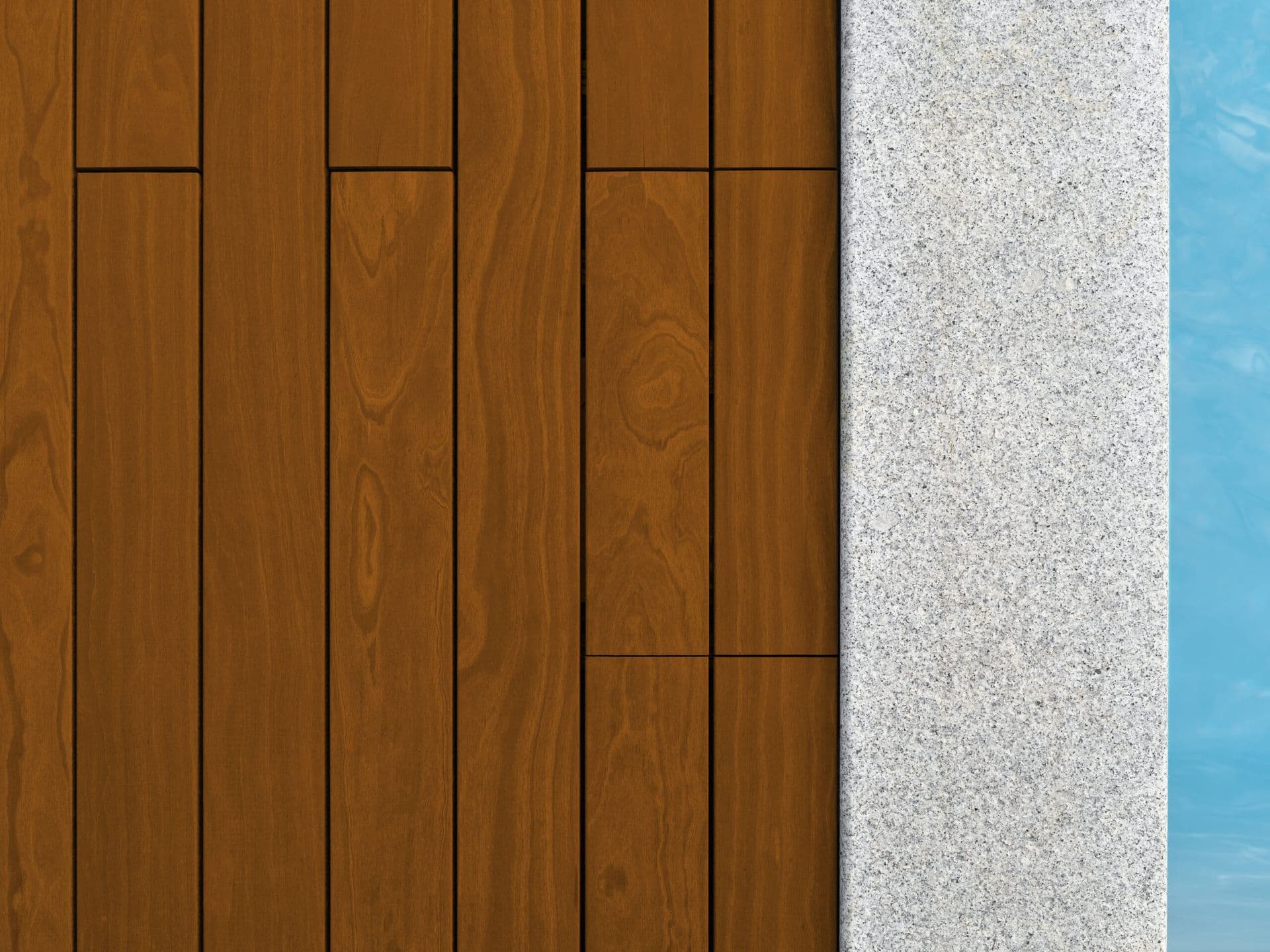
Understanding Covered Outdoor Wall Conditions
A covered outdoor wall is not entirely an interior wall, nor is it a fully exposed exterior wall. It experiences temperature fluctuations, humidity changes, and indirect UV exposure, but typically avoids direct rainfall, snow, and the most intense sunlight. This sheltered environment influences material choice, finish longevity, and even installation methods.
The protection offered by a roof or overhang means that the wood is less prone to the rapid moisture cycling that can lead to significant expansion and contraction in fully exposed applications. However, it still interacts with ambient moisture, which can affect its appearance over time, particularly if left unfinished. Ventilation behind the cladding remains important to manage moisture and prevent condensation buildup.
Why Maximo Accoya for Covered Outdoor Walls?
Maximo Accoya is a modified wood that offers dependable stability, making it a candidate for applications where dimensional consistency is valued. Its modification process is designed to resist warping, twisting, and cupping, which can be beneficial in outdoor settings, even when covered.
The material provides the visual depth and texture of real wood, which can contribute to the aesthetic of a patio, porch, or outdoor living space. Maximo Accoya is available in various profiles suitable for cladding, allowing for design flexibility in creating shadow lines or a smooth surface.
Choosing Maximo Accoya can simplify ownership compared to some other wood options, as it is engineered for demanding applications. While it is a performance-focused material, its appearance can still evolve with exposure to the elements, even in a covered setting, depending on the chosen finish.
Maximo Accoya is offered in three primary appearances: Maximo Accoya Grey, Ipe Brown, and Natural. These can serve as a starting point for different design palettes, from contemporary to warm, traditional looks. The final appearance should always be confirmed with a physical sample.
Selecting Profiles and Finishes
Maximo Accoya is available in profiles suitable for siding and cladding. The choice of profile, such as tongue-and-groove or shiplap, will influence the wall's texture and shadow lines. For covered outdoor walls, the aesthetic impact of the profile can be a significant design consideration, as it contributes to the overall character of the space.
When it comes to finishes, a covered application offers more options than a fully exposed wall. While Maximo Accoya can be left to weather naturally, a finish can protect its initial color and provide an additional layer of defense against indirect UV and humidity. Consider how the finish will interact with the overall design, including adjacent materials and lighting.
The three primary appearances—Grey, Ipe Brown, and Natural—can be further customized with project-specific finishing. It is important to review the catalog finish and request a current physical sample, as digital representations are for reference only. Confirming the final selection with a physical sample before ordering is recommended.

Planning for Appearance and Maintenance
Even in a covered outdoor setting, Maximo Accoya's appearance can change over time. If left unfinished, the wood will naturally weather to a silvery-grey patina due to UV exposure, even indirect. Applying a finish can help retain the initial color longer, but all finishes require periodic reapplication.
Maintenance for a covered outdoor wall typically involves cleaning to remove dust, pollen, and any mildew that might form in humid, shaded conditions. The frequency and type of cleaning will depend on the local environment and the chosen finish. Always consult the manufacturer's recommendations for specific cleaning and re-finishing procedures.
The low-maintenance aspect of Maximo Accoya refers to its inherent stability and resistance to decay, not necessarily a lack of aesthetic upkeep if a specific look is desired. Planning for ongoing maintenance, even if minimal, ensures the wall retains its intended appearance over its service life.
Worked Example: Covered Patio Wall Calculation
Let's consider a hypothetical covered patio wall project. Imagine a patio with a wall section that is 10 feet wide and 8 feet high, situated under a protective roof overhang. We plan to clad this section with Maximo Accoya siding planks, each measuring 6 inches wide and 12 feet long (actual coverage width may vary slightly based on profile).
First, calculate the total area: 10 feet (width) * 8 feet (height) = 80 square feet. Next, calculate the area of one plank: 0.5 feet (width) * 12 feet (length) = 6 square feet. To get an initial estimate of planks needed, divide the total area by the plank area: 80 sq ft / 6 sq ft/plank = 13.33 planks.
However, this doesn't account for cuts, waste, or specific installation patterns. For a 10-foot wide wall, using 12-foot planks means each plank will yield one 10-foot section with a 2-foot offcut. If these offcuts are too short to be reused elsewhere, they become waste. If we assume a horizontal installation, we'd need 8 feet (height) / 0.5 feet (plank width) = 16 rows. Each row is 10 feet long, so we'd need 10 feet of plank per row. Since planks are 12 feet long, each plank covers one row with a 2-foot offcut. Thus, we would need 16 planks. Always add an additional 10-15% for waste and cuts, especially for intricate patterns or unforseen errors. So, 16 planks * 1.15 (15% waste) = 18.4 planks. Round up to 19 planks for purchase.
This example assumes a simple horizontal installation. Vertical installations or diagonal patterns would require different calculations and potentially more waste. Always measure precisely and account for the specific profile's coverage width and any required spacing or overlaps.
Before you order
- Confirm the specific exposure conditions: Is the wall truly covered from direct rain and prolonged sun?
- Select the Maximo Accoya profile that matches your aesthetic and installation requirements.
- Choose a finish (or decide to let it weather naturally) and plan for its long-term maintenance.
- Verify the actual coverage width of the chosen profile for accurate material takeoff.
- Plan for ventilation behind the cladding to manage moisture.
- Request physical samples to confirm color and texture before ordering.
- Account for waste factor (10-15% typically) when calculating material quantities.
Confirm installation details, approved uses and warranty terms in the current instructions for the exact product and profile. Your installer should verify the substrate, structure and applicable project requirements.
Questions to help you decide
Does Maximo Accoya need a finish for covered outdoor walls?
While Maximo Accoya is stable and decay-resistant, a finish can help preserve its initial color and provide an extra layer of protection against indirect UV exposure and humidity. If left unfinished, it will naturally weather to a silvery-grey patina over time, even in a covered setting. The choice depends on your desired aesthetic and maintenance commitment.
How do I clean Maximo Accoya on a covered outdoor wall?
Routine cleaning typically involves removing dust, cobwebs, and any organic growth like mildew that might occur in humid, shaded areas. A soft brush or cloth with mild soap and water is often sufficient. Avoid harsh chemicals or high-pressure washers, which can damage the wood or finish. Always follow the manufacturer's specific cleaning recommendations for your chosen finish.
Can Maximo Accoya for covered outdoor walls be installed directly to the framing?
Even for covered outdoor walls, proper installation typically involves creating a rainscreen gap or ventilation space behind the cladding. This allows for air circulation and drainage, which helps manage moisture, prevents condensation buildup, and contributes to the longevity of the wall assembly. Consult installation guidelines for specific details on furring strips or other methods to create this gap.
Ready to Plan Your Maximo Accoya Covered Outdoor Wall?
Request a material quote with your project dimensions, desired Maximo Accoya profile, and project ZIP code. Our team can help confirm current availability and service options for your project. Explore related products like our general siding and cladding options, other thermally modified wood products, or the full range from NORX.
Request a material quote →