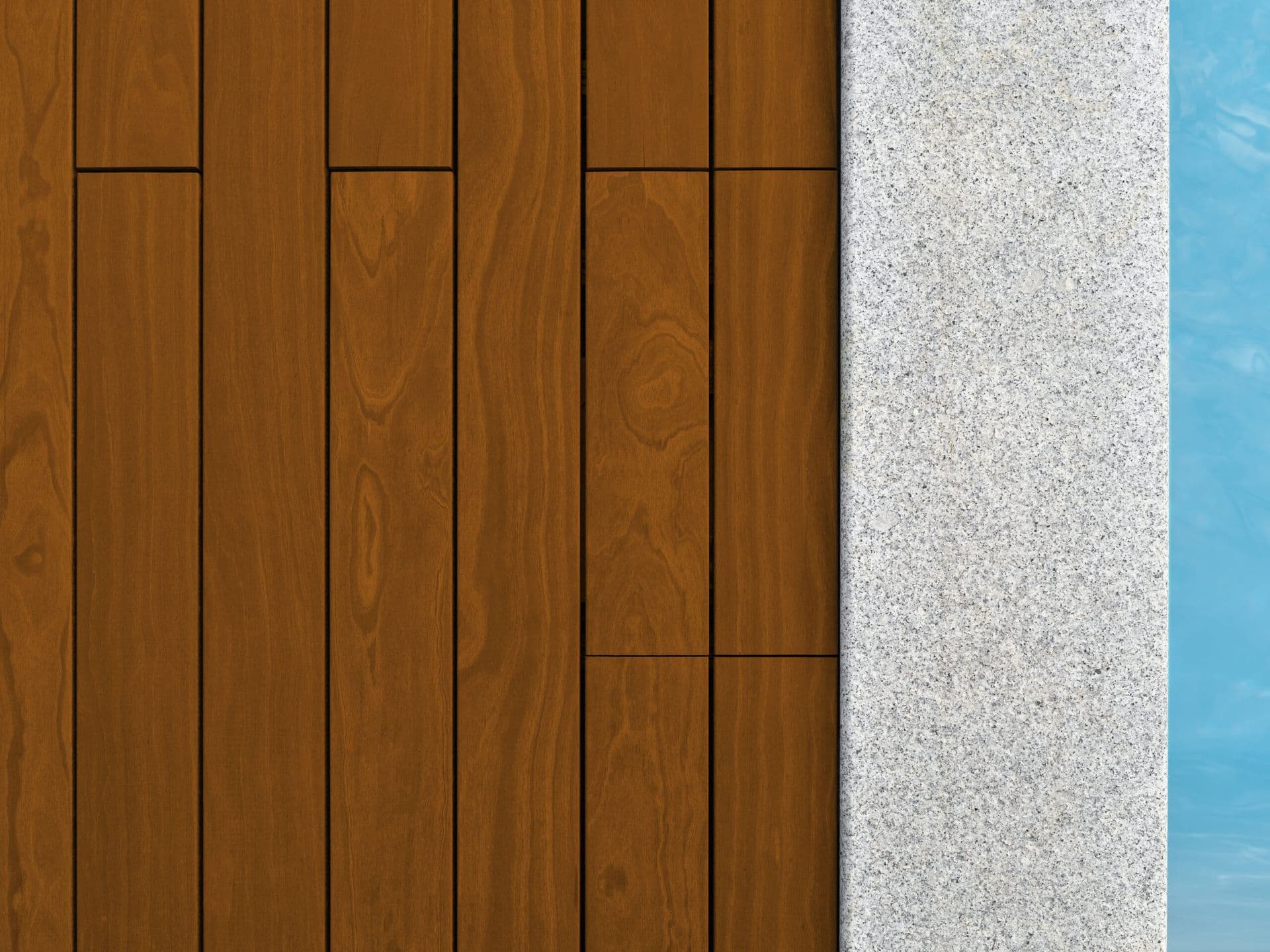
Understanding Maximo Accoya for Corner Details
Maximo Accoya is a modified wood product known for its dependable stability and resistance to warping, twisting, and cupping, which are common challenges in demanding exterior installations. This inherent stability makes it a suitable material for various corner finishing techniques, as it is less prone to movement that could compromise joint integrity over time.
Available in profiles suitable for cladding, trim, and molding, Maximo Accoya offers flexibility in design. Its color options, including Grey, Ipe Brown, and Natural, can influence how corner details are perceived, whether they are designed to blend in or create a subtle visual break. Always confirm your final selection with a physical sample, as digital color is a reference only. Maximo Accoya's long service life also means that chosen corner details should be robust and maintainable.
Common Corner Finishing Approaches
Several methods exist for finishing exterior corners with wood cladding. Each has distinct aesthetic and practical implications for Maximo Accoya installations:
**Mitered Corners (45-degree cuts):** This approach involves cutting the ends of the cladding boards at a 45-degree angle to meet perfectly at the corner, creating a seamless, sharp edge. Mitered corners offer a clean, contemporary look, often preferred when a continuous wood grain appearance is desired around the corner. Due to Maximo Accoya's stability, mitered joints are less likely to open up compared to less stable wood species, though precise cutting and careful fastening are still crucial.
**Butt Joints with Trim:** In this method, cladding boards are cut square and butt against each other at the corner. A separate piece of trim, often a flat board or a specially milled profile made from Maximo Accoya, is then applied over the joint. This creates a framed look for the corner, adding architectural detail and providing an additional layer of protection against weather. This method can simplify installation for field cuts.
**Overlap Joints:** One board extends past the corner, and the adjacent board butts into its edge. This creates an overlapping effect, often seen in more rustic or traditional designs. While less common for modern Maximo Accoya applications, it can be a design choice, though it requires careful detailing for weather resistance.
Selecting the Right Maximo Accoya Profiles for Corners
The specific Maximo Accoya cladding profile chosen will influence how corners are best detailed. For example, a tongue-and-groove or shiplap profile will require different considerations than a simple square-edge board.
When using a profile that creates a distinct shadow line, such as a shiplap, a mitered corner can maintain the continuity of that line. Alternatively, a trim piece can be selected to either complement or contrast with the main cladding profile. Maximo Accoya is available for trim and molding applications, allowing for a consistent material choice throughout the exterior. Review the catalog for available trim profiles or discuss custom milling options with Lumber Plus to ensure compatibility with your chosen cladding profile.

Worked Example: Detailing a Mitered Corner
Consider a hypothetical project where a modern facade utilizes Maximo Accoya Natural cladding in a horizontal, square-edge profile. The design calls for crisp, seamless corners.
**Project Dimensions:** An exterior corner on a wall section measuring 10 feet in height. Each cladding board is 6 inches wide and 12 feet long. The desired corner finish is a mitered joint.
**Material Calculation (for one corner, per course):** Each course of cladding will require two pieces of Maximo Accoya for the corner, each cut at a precise 45-degree angle. If the wall extends 8 feet in one direction and 15 feet in the other, and the boards are installed horizontally, the first board approaching the corner on one side would be cut at 45 degrees, and the first board on the adjacent side would also be cut at 45 degrees to meet precisely. The required length for each board section at the corner depends on the total wall length; for a miter, the cut reduces the effective length of the board by the thickness of the material at the corner point. For a 6-inch wide board, careful planning of cuts is essential to minimize waste. Always plan for extra material (typically 10-15%) to account for cuts, waste, and any potential adjustments.
**Installation Considerations:** Achieving tight mitered joints requires accurate measurements and precise saw cuts. Using a high-quality miter saw is recommended. Fastening needs to secure both sides of the mitered joint to the substructure, often requiring blocking or specific fastening schedules to prevent separation. Proper sealing of the joint is also critical for weather resistance, even with Maximo Accoya's inherent stability.
Weather Resistance and Structural Support
Regardless of the chosen corner detail, ensuring adequate weather resistance and structural support is paramount. Maximo Accoya's modified wood properties contribute to its durability, but the assembly itself must be designed to manage moisture.
For all exterior cladding, a rainscreen assembly is generally recommended. This involves a drainage plane and air gap behind the cladding, allowing any moisture that penetrates the outer layer to drain away. At corners, this means extending the weather-resistant barrier and ensuring that any trim or mitered joints do not create points where water can accumulate. The substructure behind the corner must provide solid backing for fastening, especially for mitered joints that require secure attachment to maintain their integrity. Consulting with a professional on specific local building requirements for weather protection and structural detailing is always advised.
Before you order
- Determine the desired aesthetic: seamless (mitered) or framed (trim)?
- Select the Maximo Accoya cladding profile and color for the main facade.
- Identify if matching or contrasting Maximo Accoya trim/molding profiles are needed.
- Review manufacturer guidelines for specific fastening and sealing recommendations for corners.
- Plan for a rainscreen assembly that extends consistently around corners.
- Account for material waste when calculating quantities for precise corner cuts.
- Consider the skill level required for the chosen corner detail (mitered corners demand higher precision).
- Confirm current availability of desired Maximo Accoya profiles and trim with Lumber Plus.
Confirm installation details, approved uses and warranty terms in the current instructions for the exact product and profile. Your installer should verify the substrate, structure and applicable project requirements.
Questions to help you decide
Can Maximo Accoya be painted or stained at the corners?
Yes, Maximo Accoya can be painted or stained. If you choose to apply a finish, it's generally recommended to finish the individual pieces before assembly, especially for mitered corners, to ensure complete coverage of all surfaces. Any field cuts at the corner should also be sealed or finished according to the product's recommendations to maintain consistency and protection. Always confirm the compatibility of your chosen finish with Maximo Accoya.
Are there pre-fabricated Maximo Accoya corner pieces available?
While Maximo Accoya is available for trim and molding applications, specific pre-fabricated corner pieces for cladding might not be standard. Most corner details are achieved by cutting and assembling standard cladding and trim profiles on-site. It is best to inquire with Lumber Plus about the availability of specific trim profiles that can be used for corner finishing, or discuss custom milling options if a unique profile is desired for your project.
How do I ensure the durability of Maximo Accoya corners in a coastal environment?
For coastal environments, the inherent stability of Maximo Accoya is a significant advantage. However, detailing for weather resistance becomes even more critical. Ensure all corner joints are meticulously sealed with appropriate exterior-grade sealants. A robust rainscreen assembly is essential, providing ample drainage and ventilation. Consider using a trim detail that offers an extra layer of protection against wind-driven rain and salt spray. Regular inspection and maintenance of corner joints can help ensure long-term performance in demanding coastal conditions.
Ready to Plan Your Maximo Accoya Corner Details?
Request a material quote with your project dimensions, exact Maximo Accoya profile, and ZIP code. We can help confirm current availability and service options for your project.
Request a material quote →